Monday, 5 December 2016

Animal Influencers: The Stories Behind 11 Famous Pets on Instagram

They command international attention, have amassed millions of followers on social media, and collaborate with the world's biggest brands.

But you still have to pick up their poop.

Animal influencers are undeniably on the rise. These pampered pets (and their owners/handlers/entourages) enjoy a level of social media fame usually reserved for well, human celebrities, and bring in real revenue through their high-profile partnerships with brands like Zappos, Mercedes-Benz, Purina, and even Google. 

In other words, these adorable fluff balls make more money on a single Instagram post than you, a human, will probably ever make on a single Instagram post. Let that sink in for a minute.

According to Create&Cultivate, social media influencers (animal or otherwise) can expect to earn around $3,000 per sponsorship deal when they hit between 150,000 and 250,000 followers. Many of the pets on this list have over one million followers.

So why the sudden demand for four-legged brand ambassadors?

"People have this innate perception that pets generate warm, happy, fuzzy feelings," said Loni Edwards -- owner of Chloe (as in Instagram-famous @chloetheminifrenchie) -- to Digiday. "Brands are starting to reach out because they make people genuinely happy, and they want their ads to make people happy."

It turns out people really like cute animals -- even if those animals are promoting things. "You don't notice that you are getting advertised to, or you don't care, because you're seeing a super cute dog," Katie Sturino (owner of another famous pooch, @toastmeetsworld) explained to Fortune. 

In addition to sponsorship deals, many of these pets generate income from their own branded products, such as books, calendars, apps, clothing, mugs ... you name it, and somebody has plopped a cute animal on it and sold it on the internet.

Is this whole thing a little weird? Maybe. Did I follow all of these animals on Instagram? Absolutely I did.

Read on to see how 11 of these furry social celebrities are building their brands and growing their empires.

11 Famous Animal Influencers

1) Harlow, Indiana and Reese: @harlowandsage

Number of Instagram followers: 1.4m

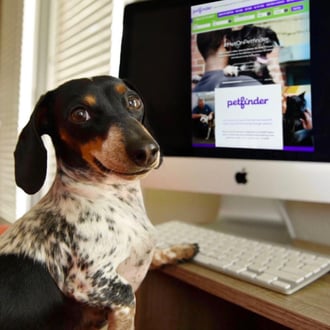
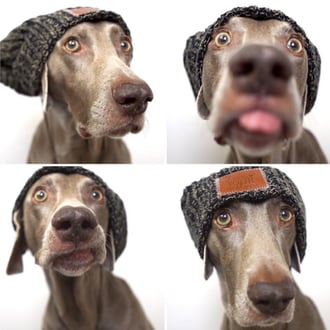
This adorably photogenic trio consists of one very tolerant Weimaraner (Harlow) and two rambunctious Miniature Dachshunds (Indiana and Reese). In what is possibly the cutest rise-to-fame story ever, the three pups became an international internet sensation by snuggling.

Their owner, Brittni Vega, has made sure the cuddly canines use their fame for good. They recently partnered with dog food brand Purina to benefit the Canine Health Foundation, and have worked with Love Your Mellon, a cancer charity.

Harlow, Indiana, and Reese have also worked with Clorox to raise awareness about Parvovirus, a potentially fatal virus for dogs, and Petfinder, to help shelter dogs find homes. Other promotional clients include Petco, Figo Pet Insurance, and the Subaru Puppy Bowl.

Vega even spun the dogs' popularity into a second Instagram account, @harlowandfriends, which exclusively features photos of dogs available for adoption.




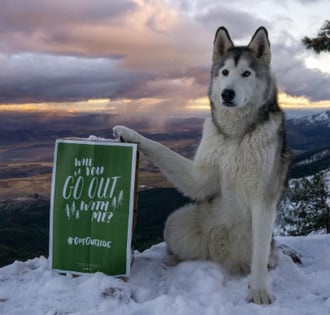
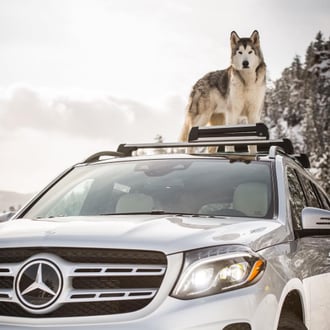
2) Loki: @loki_the_wolfdog

Number of Instagram followers: 1.3m

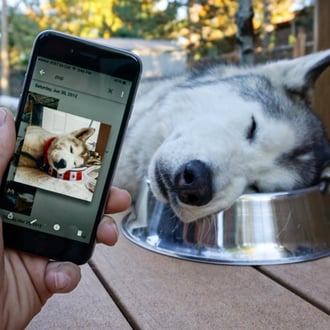
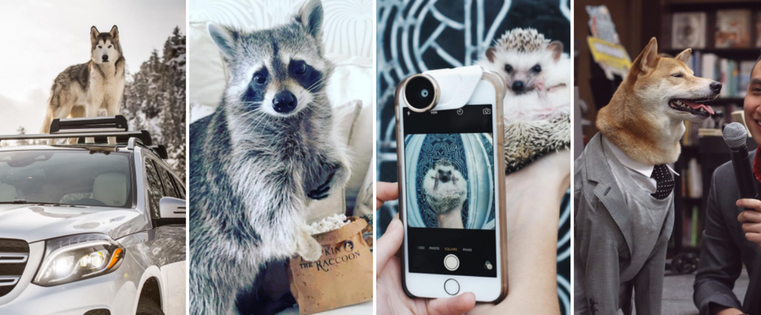
When Mercedes-Benz needed a rugged, handsome new spokesmodel for the 2017 GLS SUV, they didn't reach out to any old movie star -- they got Loki, a Husky/Arctic Wolf/Malamute mix, to be the face of their latest campaign (Move over, John Hamm).

"Loki and his story aligned particularly well with our SUV portfolio," said Mark Aikman, general manager of marketing services for Mercedes-Benz USA, to Digiday. "Our research has shown that a large number of SUV owners have pets."

Known on Instagram as "Loki the Wolfdog", this gentle giant spends his days traversing the great outdoors with owner Kelly Lund, who donates the revenue generated from Loki's merchandise and sponsorships to two animal charities: Canine Support Teams and Eagle Trail Mountain Wolf Sanctuary.

Loki has become a magnet for brands looking to promote an outdoorsy lifestyle, including REI (he's a social media sponsor for their annual #OptOutside campaign), GoPro, Rigid Industries LED Lighting, and Google Photos.


3) Nala: @nala_cat

Number of Instagram followers: 3.1m

This cross-eyed feline is closer to matching Kim Kardashian's 88.3m Instagram follower count than you, probably.

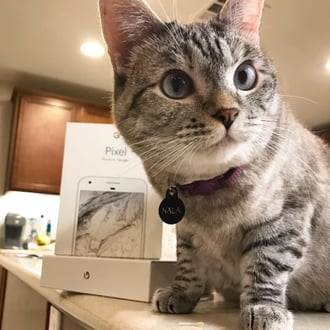
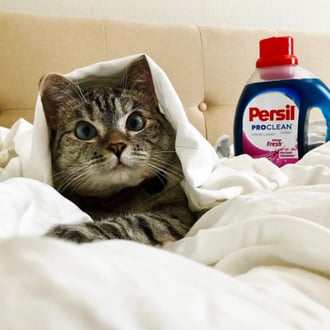
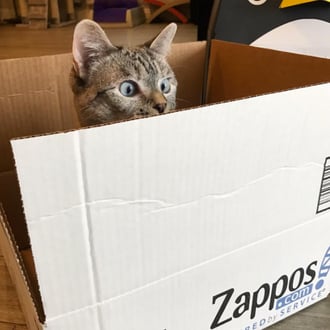
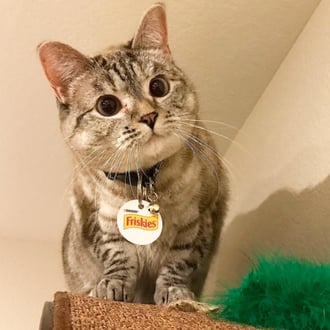
Meet Nala, a six year old Siamese and Tabby mix with baby blue eyes and short, chubby legs. Since she first popped up on Instagram back in 2012, this remarkably photogenic cat has been racking up followers and brand sponsorships left and right.

She's been featured on media outlets like BuzzFeed and Daily Mail, and has sponsorships with major brands like Friskies, Persil ProClean, and Zappos. She even recently ran a giveaway for Google's new Pixel smartphone, which the brand gave her as a gift. 

It doesn't hurt that Nala's owner, Los Angeles resident Varisiri Methachittiphan (known by her nickname "Pookie") has an MBA and strong business acumen. She's even started an empire for her other cat, Mr. White, who has a respectable 1.3m Instagram followers of his own under the handle @white_coffee_cat_.


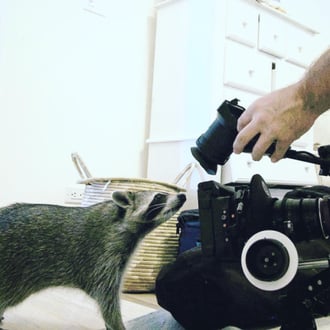
4) Pumpkin: @pumpkintheraccoon

Number of Instagram followers: 1m

How does it feel to be less popular than a raccoon? Because unless you have one million Instagram followers, you're losing the social media rat race to a plump raccoon named Pumpkin. 

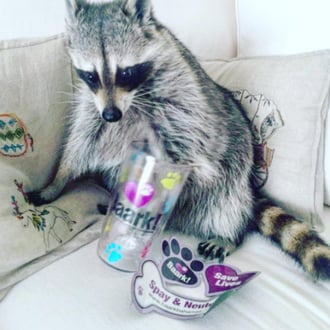
Pumpkin is a domesticated raccoon living a charmed life in the Bahamas with her owner, Laura Young, and canine siblings Toffee and Oreo. Her favorite activities include lounging on the couch, eating avocados, and petting dogs.

While her Instagram account is noticeably devoid of sponsored posts for now (besides a few posts promoting animal rescue charity BAARK), Pumpkin is a personal branding machine. She has a book -- Pumpkin: The Raccoon Who Thought She Was a Dog -- and has been featured on CBS, ABC, EW, and TV specials for BCC and Animal Planet.

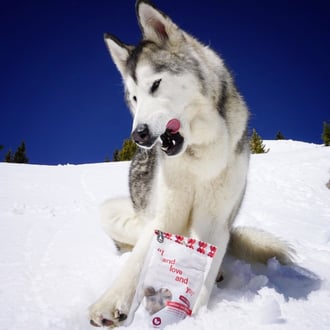
And yes, Pumpkin is eating popcorn out of a Pumpkin the Raccoon branded bag in one of the below photos.



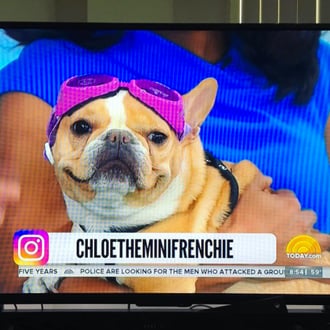
5) Chloe: @chloetheminifrenchie

Number of Instagram followers: 147k

A burgeoning fashion icon, Chloe has been featured in major publications like Martha Stewart and Vogue. She has her own line of fancy dog scarves (a collaboration with luxury human scarf brand Donni Charm) and Pawtty Bags, which her website describes as "essentially little dog purses to hold poop bags."

For her second birthday, Chloe's owner/manager, Loni Edwards, went all out, throwing a charity bash to raise money for the Humane Society of NY. The party was sponsored by BarkBox, Kind Bars, and Bloomingdale's, among many others.

Edwards, a lawyer turned entrepreneur, started Chloe's Instagram initially as a way to share photos of the ridiculously cute pup with her friends and family. In just a few short years, managing Chloe's social media presence and endorsements has evolved into her full-time job.

"It became more than me and my friends following her -- there were strangers appreciating her cuteness," Edwards said to Racked about Chloe's rapid rise to stardom.



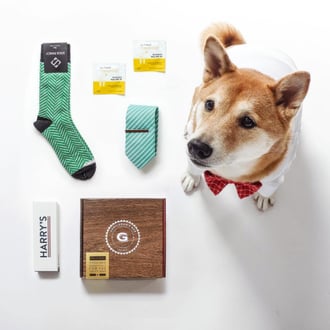
6) Bodhi: @mensweardog

Number of Instagram followers: 289k

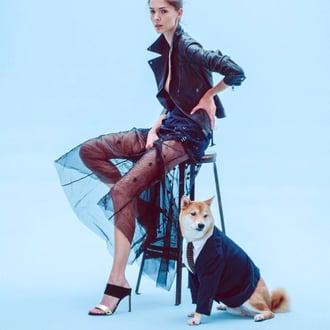
Clothing brands like Coach, American Apparel, and Brooks Brothers have a new muse: a gentlemanly Shiba Inu named Bodhi. Thanks to his affinity for perfectly tailored suits and brooding stare, this photogenic pooch has made a big splash in the fashion world, starring in major campaigns and even posing for exclusive fashion spread in the New York Times.

Bodhi's fame was no accident. His owner and full-time handler, Yena Kim, quit her job at Ralph Lauren to focus on building her dog's brand online. What seemed like a gamble at first has really paid off for Kim and her husband, graphic designer David Fung. 

Bodhi's big break came in the form of a viral Tumblr post, and soon brands were reaching out to Kim and Fung as if they were like any other human fashion blogger seeking promotions. Today, Bodhi is sponsored by brands like Rockport Shoes and Gentleman's Box on Instagram, and has his own fashion book. 

"He's the dog version of the Dos Equis guy," Fung said to Business Insider, "the most interesting dog in the world."


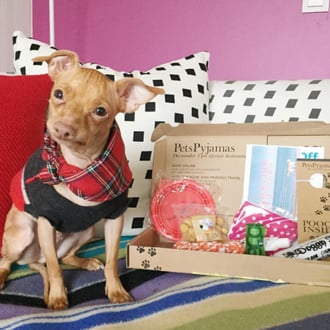
7) Tuna: @tunameltsmyheart

Number of Instagram followers: 1.8m

Just like many human social media influencers, Tuna, a Chihuahua Dachsund mix with an undeniably endearing overbite, strives to project an authentic image across his many social platforms. And that means being very selective about the brands he chooses to work with.

"It's enticing when you are offered big posting deals," Tuna's owner, Courtney Dasher, told Vice. "But if I'm not at peace with the idea or think it's not a good fit with Tuna and the brand of Tuna, then I politely decline."

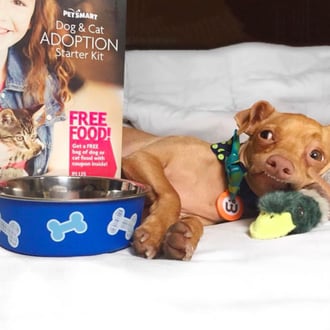
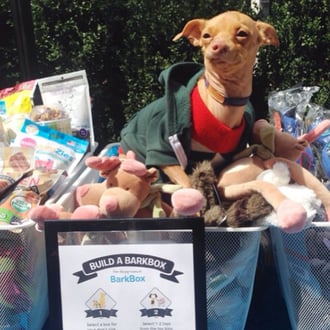
The pint-sized pup mainly partners with animal rescue organizations and charities, but he also has an online shop that sells mugs, shirts, and other goods emblazoned with his toothy visage. If you're really feeling that Tuna fever, you can even purchase an oxidized bronze ring shaped like his entire head. Because why not.



8) Toast: @toastmeetsworld

Number of Instagram followers: 370k

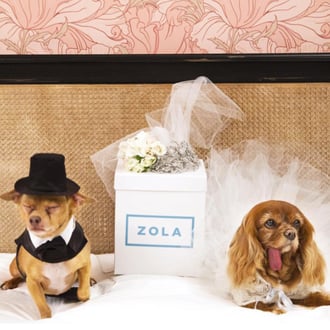
Toast, who is a dog, reportedly wore a custom Marchesa gown and $139,000 diamond necklace to her wedding, which was covered by Newsweek, People, and Town & Country. Toast (who, again, is a dog) married Finn Hearst (also a dog) after the two met at a charity gala and really hit it off, apparently.

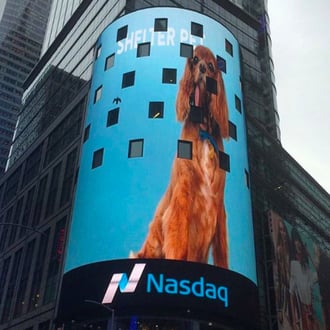
The wedding was a charity fundraiser and promotional stunt for Zola, a wedding registry site, and it was hardly Toast's first foray into the realm of brand promotions. Toast, who is represented by DBA (Digital Brand Architects), is an eyewear spokesmodel for Karen Walker, and has promoted big brands like Febreeze and Swiffer. She's also currently the face of The Shelter Pet Project's latest campaign, appearing in print ads and billboards around the country.

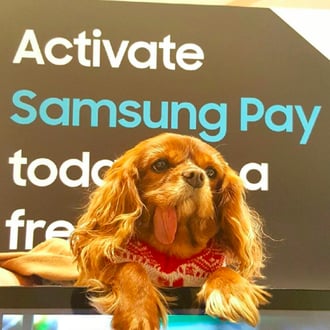
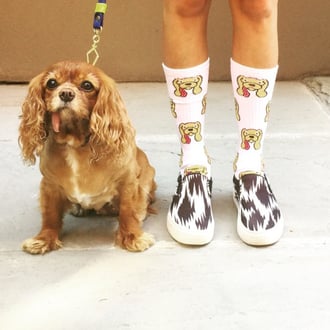
The toothless Cavalier King Charles Spaniel -- who was rescued from a puppy mill -- gained popularity on Instagram for her iconic floppy tongue and apparent tolerance of being dressed up.

Toast's owner, Katie Sturino, told Newsweek she's aware some people might find her profession a bit strange, but she's managed to use her dog's fame for good, raising awareness for the deplorable conditions at puppy mills.


8) Hamlet: @hamlet_the_piggy

Number of Instagram followers: 305k

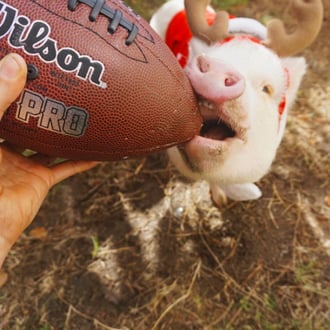
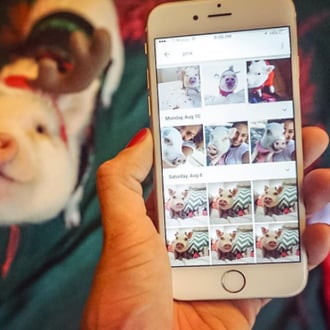
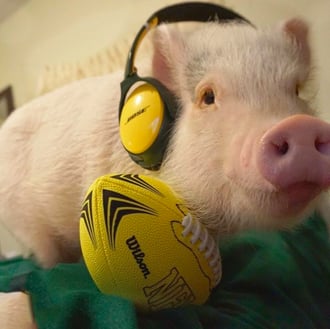
While the vast majority of animal influencers are dogs and cats, some pigs are getting in on the action too. Hamlet, a charismatic mini pig who enjoys wearing wigs and having maple syrup poured directly into her mouth, has found unexpected fame on Instagram and Snapchat.

Hamlet's owner, Melanie Gomez, adopted the unusual pet as a support companion after her epilepsy became hard to handle on her own (her husband is extremely allergic to dogs, so a pig was the next best option). She began posting Hamlet's photos online as a way to make others happy, and never expected that the petite piglet would become an internet superstar.

Now a few years into her social media career, Hamlet has been spotted showing off a handful of products on Instagram, including Tostito's snacks, Bose's line of NFL headphones, and the Ollo Clip iPhone lens.


9) Lil Bub: @iamlilbub

Number of followers on Instagram: 1.4m

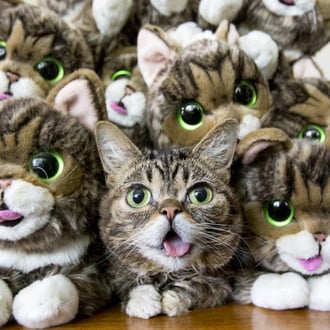
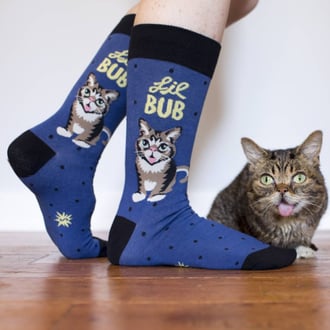
It would be an understatement to call Lil Bub a viral social media celebrity. The toothless tabby cat -- born with a short lower jaw which exposes her tongue -- was arguably one of the first big animal influencers on the scene, right up there with the ubiquitous Grumpy Cat.

Just a quick scan of Lil Bub's extensive Wikipedia page reveals just how weirdly famous the quirky, stubby-legged cat has become. Here are a few highlights:

  • In 2015, a group of scientists crowdfunded $8,225 to sequence Lil Bub's genome. The project was called LilBubnome.
  • Lil Bub is credited on the 2015 electronic album Science & Magic as a vocalist.
  • Vice produced a feature length documentary on Lil Bub in 2013 called Lil Bub & Friendz. It premiered at the Tribeca Film Festival, and Lil Bub got to meet Robert DiNero.

Name any object, and it's probably sold with Lil Bub's face on it. The cat has a series downloadable ringtones, a weather app, and a line of watches. Way to go, Lil Bub -- you're more successful than most startups.



10) Doug the Pug: @itsdougthepug

Number of followers on Instagram: 2.2m

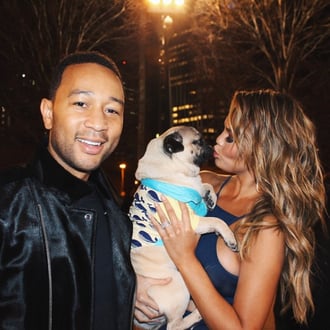
Doug the Pug, the self-declared "King of Pop Culture", is just like us. He likes to unwind after a long day with a hot bubble bath and a glass of pinot noir.

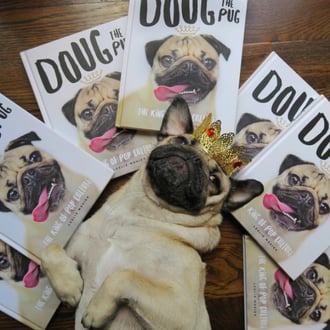
Unlike us, Doug the Pug has millions of followers on social media, a book deal, and a close friendship with Chrissy Teigen.

Doug's owner, Leslie Mosier, got her start in the music industry before becoming a full-time "momager" for her dog. She applied her PR background to Doug's career, and the pug was quickly featured on Mashable and BuzzFeed. One Facebook video in particular -- a 16-second clip of Doug playing with a pug balloon -- went viral overnight, skyrocketing Doug to 2.2 million followers on Instagram and over five million Facebook likes.

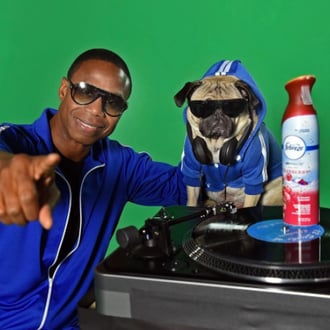
When Doug isn't promoting his book, calendar, or collection of stuffed animals, he can be found promoting brands like Febreeze and repping Dentastix at the Country Music Awards.


11) Lionel: @lionelthehog

Number of Instagram followers: 95.9k

Instagram does not discriminate by species. If you are a cute animal and you like wearing little hats or holding little umbrellas, the followers will come.

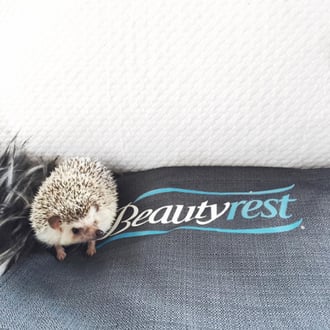
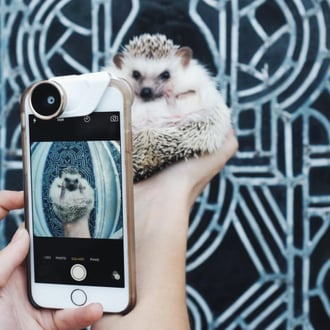
Say hello to Lionel, an adventurous hedgehog with a taste for the finer things in life. Lionel's owner, Anna Mathias, works full-time in PR, and began Lionel's Instagram account as a side project to show off her social media chops. In a few short weeks, he was featured on BuzzFeed, and the rest is history.

On Instagram, Lionel represents brands like The Book of the Month Club, Daniel Wellington watches, and Style&co, a (human) clothing retailer. This year, he even collaborated with West Elm and the ASPCA to release a custom holiday ornament and tea towel.



Who are your favorite animal influencers? Let us know in the comments.
ad-icons


from HubSpot Marketing Blog https://blog.hubspot.com/marketing/animal-influencers

Friday, 2 December 2016

Using Kissmetrics to Find Your Most Valuable Marketing Campaigns

So you converted 3.1% of your visitors last month?

Awesome! How many of them spent more than $100 on their purchase? Or how many were on your Enterprise plan?

And how many of the 3.1% added a coupon to their order?

How many of them came from your Facebook ad campaign?

Don’t know?

That’s a problem.

Here’s why surface-level analytics can lead to bad decisions, and how the Kissmetrics Funnel Report can answer some questions that lead to better analysis and decision making.

How Bad Marketing Decisions Can Get Made

Let’s take this scenario:

You, the Director of Marketing for an e-commerce company, recently launched a Fall ad campaign on Twitter, Facebook, and AdWords. A month later you notice that your purchase conversions increase 1%, so you pour more money on all three ad platforms without knowing which campaigns led the most to conversion.

90% of the boost in conversions may be because of the Facebook ad campaign, but without doing research you’ll put more money on the effective campaign and burn money on the 2 ineffective marketing campaigns.

In another scenario, you see that most of your large purchases ($150+) come from AdWords, yet neglect that channel because it brought fewer conversions (when what you’re missing is fewer conversions but higher total purchase volume).

Here’s how to see the whole picture with the Kissmetrics Funnel Report.

Viewing a Funnel With Revenue Data

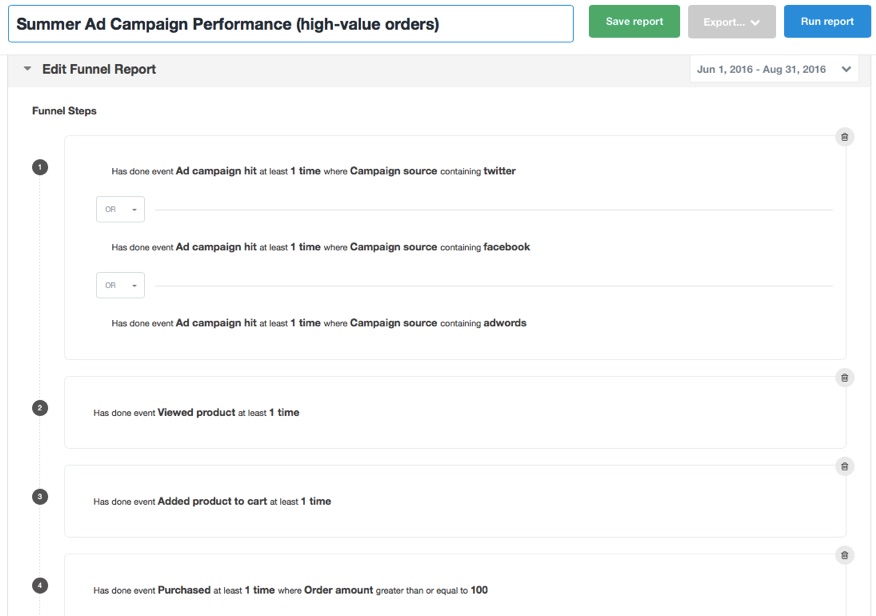
Continuing with the e-commerce marketing director scenario, let’s say we just ran our Summer advertising campaigns. We had campaigns on Twitter, Facebook, and AdWords. We’ve tagged all three with UTMs, which makes for pretty easy tracking across Kissmetrics and other SaaS platforms. We want to see which campaigns brought customers who spent at least $100.

We’ll need to create a fairly elaborate funnel. Here’s what we’ll do.

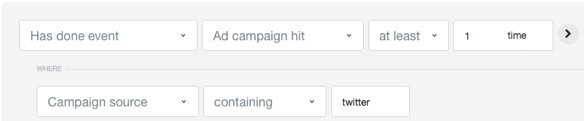
The first step is to look for people who came from an advertisement. We’ll have the first event be “Ad campaign hit”.

has-done-event-ad-campaign-hit

We’ll add additional conditions to this event. This is where we’ll narrow in on these three campaigns and be able to distinguish between each. We’ve tagged each campaign with a respective Campaign source. Twitter has campaign source twitter, Facebook is facebook, and AdWords is tagged as adwords.

Let’s first enter the Twitter campaign source:

campaign-source-twitter-funnel-report

We’ll add an Or condition by clicking here:

campaign-source-twitter-add-condition

We’ll then do the same thing, but this time enter the Facebook campaign source:

campaign-source-facebook

Finally, the + button you see on the right allows us to add another condition. We’ll click it, create the same condition but this time use the AdWords campaign source:

campaign-source-adwords

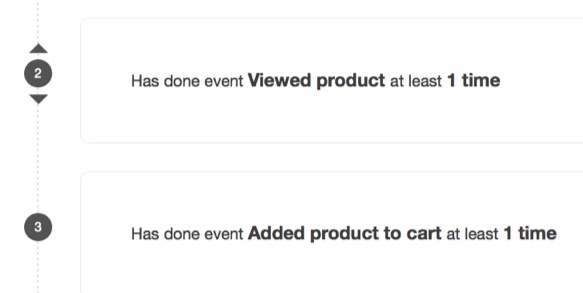
Next we’ll add a step the funnel. Since most people visiting an ecommerce website visit a product page before adding an item to their cart and purchasing, we’ll add those next two steps:

viewed-product-added-product-to-cart

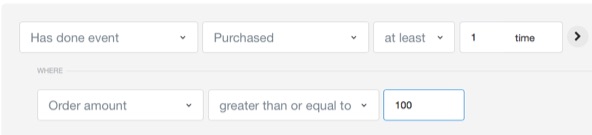
The final step, Purchased, needs some conditions added to it. We’ll look for the customers that have made a purchase of at least $100.

First we’ll add the step:

has-done-event-purchased-funnel

Click that arrow button on the right and we’ll add that we’re looking for purchases being at least $100:

purchased-order-amount-funnel-report

Keep in mind that your naming of events and properties will probably differ than what I’m showing in this example. We don’t have any default events or properties named Purchased, order amount, added item to cart, etc. You can set this up with a little help from a developer.

UTMs and Ad Campaign Hit are tracked automatically, however.

So here’s how our funnel looks:

summer-ad-campaign-funnel-setup

That’s it! Now it’s time to run the report and see our data:

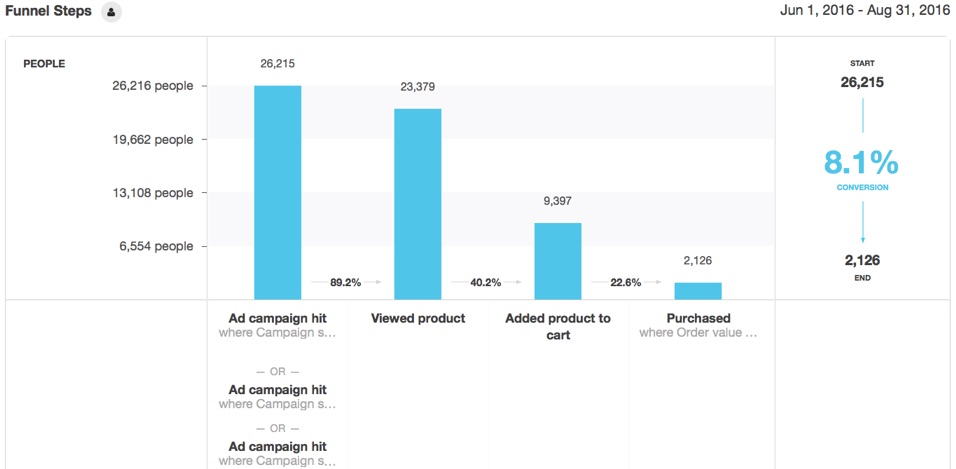
summer-ad-campaign-funnel-performance

This is looking at all the ad campaigns together. We have pretty good traffic – a little over 26k people, of which about 2k converted to purchasing. Given that all of these people are spending at least $100, we’ve likely made some solid returns on these campaigns (if we were able to keep costs down).

To select each campaign’s performance, we’ll simply click on each of the three Ad campaign hits. Let’s click the top one, which is Twitter’s ad campaign:

ad-campaign-hit-1

The first couple steps of this funnel perform well, but falls off pretty quickly. Only 88 people purchased, leading to a putrid 1.1% conversion rate. This means that the other campaigns are likely performing better. Let’s check Facebook’s campaign performance:

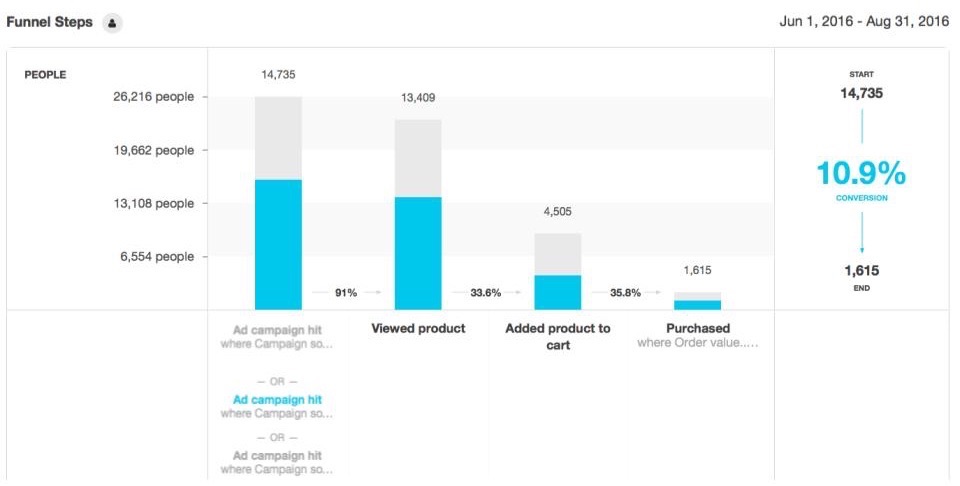
ad-campaign-hit-2

We can see that this campaign is performing much better than our Twitter campaign, with about 10x the conversion rate. We’ll have to check what we’ve spent on both campaigns. If we’ve spent more on Twitter (with fewer views) we know we should definitely cut off ad spend there or try new a new ad set.

Finally, let’s look at the AdWords campaign performance:

ad-campaign-hit-3

This one is performing even better than AdWords (although both are performing very very well). We achieve a 12.3% conversion rate off about 3,400 visits, making this the highest-converting campaign of the three. We’ll see what we’re spending to see if it delivers a better ROI than the Facebook (and keep in mind that each of these orders are over $50).

What to do with This Data

This data provides great information – we see which campaigns are performing well and which are falling short. We can cut off the ineffective campaigns or try different ads on the platform.

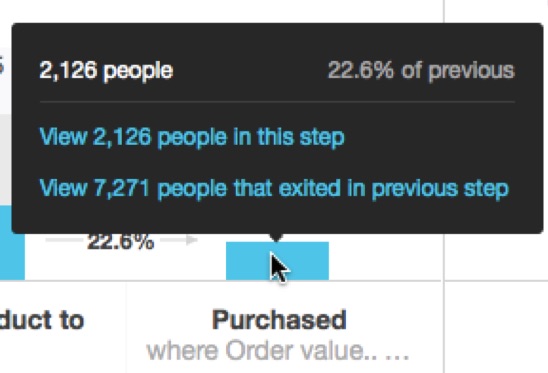
And since these are valuable customers, we’ll want them coming back to purchase again. To remarket to them with ads or drip campaigns, we’ll just click on the Purchased button to find all the people that have purchased:

purchased-viewed-people-funnel-step

We’ll click those 2,126 people and we can export the list to MailChimp, a CSV, or create retargeting ads.

Where Are Your Marketing Dollars Best Spent?

Want to get more high-paying customers?

First find out where they’re coming from.

With the Funnel Report, you’ll be able to breakdown each marketing campaign and easily track the performance of each. And with the ability to further drill down by only viewing campaigns with high or low revenue from each, you’ll be better able to track ROI.

About the Author: Zach Bulygo (Twitter) is the Blog Manager at Kissmetrics.


from The Kissmetrics Marketing Blog https://blog.kissmetrics.com/most-valuable-campaigns-with-kissmetrics/

How to Automate Your Account-Based Marketing Strategy

how-to-automate-your-account-based-marketing-strategy

Author: Patrick Groover

Marketers are always looking for the next best thing. So it’s no surprise that with the evolution of account-based marketing and technologies that enable it, B2B marketers are paying attention and trying to figure out how they can implement an account-centric approach. But as most marketers already practice broad-reaching demand generation, adding ABM to their overall marketing strategy can often seem like the tyranny of ‘or’ versus the genius of ‘and‘.

At the center of an effective ABM strategy is the need to aggregate contacts and accounts into continuously updating audiences that are easily accessible without having to create tons of additional work for your marketing team. Thanks to a marketing automation platform that supports ABM, you can practice both, or just focus solely on ABM, at scale.

Audience Management for Account-Based Marketing 

In today’s digitally-empowered world, buyers are developing their own conclusions about your products and services long before they reach out to your sales team. This means that influencing specific audiences within the evaluation phase is a mission-critical component to delivering on your revenue objectives. As a result, it’s essential to have a solution that will automatically guide marketing interactions based on segments and sub-segments from the very beginning of the customer lifecycle.

With ABM, you’re targeting and engaging specific accounts and prospects within them, so you may need to segment based on multiple dimensions to reach the right people with the right message at the right time. For example, your campaign might target multiple criteria such as verticals, sub-verticals, product-fit, employee size, and more. Without a proper ABM solution, managing, engaging, and measuring audiences on difference channels for each of these dimensions usually means increased manual setup and list management.

Let’s say an organization wants to target the technology vertical with high-level messaging, but also wants to carve out specific sub-verticals like ‘microprocessor’ or ‘semi-conductor’ manufacturers for heightened focus. Without an ABM tool, marketers would need to target the technology vertical, then sort through and route responses on each channel based on sub-verticals once prospects have engaged.

A similar story is true for key account targeting and on-the-spot initiatives. While companies may be able to easily build out a solid vertical focus, carving out the top accounts to go after within it can be a tricky endeavor. This is often the result of challenges with updating account categorization to match your objectives.

The symptoms of audience management for ABM without the right solution are all-too-familiar:

  • Hours of pulling and re-pulling lists to match category-after-category of new verticals and sub-verticals
  • Disconnected messaging that does not consistently support or connect with the right audience
  • Last minute requests for strategic messaging and marketing support that cannot be fulfilled in a timely manner

All of these are symptoms of manual work that cannot be scaled across an organization or over time. Are you turning away the idea of adding new channels to your programs unless you have additional marketing staff? It is essential for the future growth of an ABM strategy to have a marketing automation platform that can manage, engage, and report on audiences while reducing the amount of time needed to support campaign management.

In this blog, I’ll cover three features of a sophisticated marketing automation platform that supports the latest go-to-market ABM strategies:

1. Nimbleness in Building Aggregate Audiences

How many times do you receive last-minute requests to target new trends or hot accounts? How quickly can you respond to the latest movements within your industry and connect relevant messaging to the right audience?

A marketing automation platform gives you the flexibility and nimbleness to respond to requests for account-based initiatives within hours rather than weeks. By decoupling the dependence on pre-coded categorization and assignments, marketers can target the best audiences for their messaging without having to worry about disrupting the day-to-day strategy. As a result, it is possible to align lead-routing, call-center support, and consistent messaging with the right audiences.

Let’s break down the typical process for building and managing an ABM audience to see where sophisticated marketing automation platforms help deliver on your strategy while reducing the amount of manual work. Below is a comparison of ABM execution without automation versus with a sophisticated automation platform:abm-automation-comparisonThere are a couple of major distinctions here. With automated account-based marketing, you can build rules that automatically associate the right leads to the right accounts as new contacts are identified over time. This, along with the ability to group audiences based on identified criteria, allows you to create self-maintaining and accurate audiences that support your business objectives over time.

Instead of using Excel spreadsheets or rebuilding lists every time a new ABM focus is identified, a sophisticated marketing automation platform with ABM capabilities will allow you to create and then perfect the aggregate self-updating audiences that support your campaign objectives. Since these audiences can be created without a dependency on current relationship mappings in your CRM, it is possible to then deliver and measure focused multi-channel ABM marketing based on historic and new marketing initiatives while removing a lot of the manual work.

2. Lead-to-Account Matching

Targeting high-value accounts requires identifying accounts that may be outside of the standard territory distribution and CRM assignments. Chasing down and managing data outliers within your strategy often makes list management and campaign execution very time-consuming. However, marketing automation can help marketers address this issue by automating the ongoing aggregation and attribution of leads-to-accounts-to-groups.

Think of the last time you developed a vertical strategy and all of the logic that went into grouping individuals with the right target accounts. Imagine setting the right rules, then having to update your lists consistently over time to include new contacts from tradeshows, webinars, and forms. A marketing automation platform that supports ABM leverages user-defined rules and contact-to-account matching logic that maintain audience relationships over time.

Additionally, cleaning and associating leads to the right companies is often challenging. Many times, the marketing team is responsible for normalizing contact-provided information so that all of the right variations on the same company are grouped into the same account—for example, Acme Inc., Acme Co., and Acme International may be the same company. If you are currently manually correcting these associations, there is a much better way to automate this one time with marketing automation, rather than having to clean your lists over-and-over-and-over again.

3. Self-Updating Accounts and Account Groups

While many companies have built very sophisticated methods for grouping lists of target accounts, it is worth considering how easily these groups can be updated, modified, or used for tracking and responding to engagement. While it is possible to manage groups of accounts through basic lists, automating the updates across marketing channels by making a single adjustment to a centralized list can be a huge time-savings and results accelerator for your ABM efforts. Not to mention, your ABM reports will accurately reflect the latest data, without having to spend hours updating them.

While it’s possible to implement account-based marketing without a solution designed for it, it won’t allow you to scale or optimize as your needs and focus shift. By automating your ABM programs, you can reduce the amount of time and stress on your entire marketing team. And with the added capability of self-updating account lists and account groups, you can cohesively engage audiences across channels and consistently report results without having to manually rebuild lists and reconfigure settings for each new campaign.

Are you currently implementing ABM with a marketing automation platform? Share your experience in the comments below!

Marketo Summit 2017 - Nov Banner


How to Automate Your Account-Based Marketing Strategy was posted at Marketo Marketing Blog - Best Practices and Thought Leadership. | http://blog.marketo.com

The post How to Automate Your Account-Based Marketing Strategy appeared first on Marketo Marketing Blog - Best Practices and Thought Leadership.


from Marketo Marketing Blog http://blog.marketo.com/2016/12/how-to-automate-your-account-based-marketing-strategy.html

How to Build a Memorable Personal Brand on Twitter

Memorable-Twitter-Presence-compressor.jpg

Imagine that you’re within 140 characters of connecting with a customer, prospect, or influencer. How can you afford not to reach out?

We’re talking Twitter, of course: the 300-million strong whirlpool of information that has emerged as a personal branding, relationship-building nirvana.

Twitter pros have found ways to use the platform to score business and media deals -- they've even built relationships through developing successful Twitter personal brands. Yet, too many people have joined the community simply because they know they should be there, not because they’re strategic or focused.

When it comes to those that have managed to scale their following and build a reputable brand on Twitter, there's a lot we can learn. To do this, I decided to go straight to the source, interviewing some well-known names with as many as hundreds of thousands of followers.

Thanks to their insights and generosity, I put together a eight-step road map for developing your personal brand on Twitter. Check it out below.

How to Build a Memorable Personal Brand on Twitter

Step #1: Follow the leaders.

Cheryl Burgess, author and CEO of Blue Focus Marketing, said she started off as a listener on Twitter, following people she admired like Kent Huffman, Tom Peters, and David Edelman, among others.

You see, the beauty of Twitter is that you don’t have to go far to discover a successful marketing playbook. The platform gives you free reign to observe how the pros do it.

Similarly, Neal Schaffer, CEO of Maximize Your Social and cofounder of The Social Tools Summit, says to follow people who are sharing a lot of content and who are omnipresent on Twitter. For Schaffer, that’s folks like Jeff Bullas, Mark Schaefer, Pam Moore, Lilach Bullock, Marsha Collier, and Glen Gilmore.

Over time, in addition to observing Twitter luminaries at work, start to engage them. Influencers, like anyone, appreciate praise. But don’t expect an immediate home run. If the influencer eventually follows you -- or even better mentions you -- you’ve scored a coup.

If you do directly reach out, see what you can offer in return – a mention in a blog post or article for instance. Burgess said she developed a relationship with Tom Peters by following him on Twitter and also recognizing him as part of a Twitter awards program she was running.

If you’re wondering what impact influencers can have, consider this: Nearly 40% of Twitter users say they made a purchase as a direct result of a tweet from an influencer.

Actionable Takeaways:

  1. Create Twitter lists of your mentors whom you can then easily monitor. Think of it as having a front row seat to your favorite performers. “Grouping my audience into categories, I see what’s happening across the world quickly and seek opportunities to help and respond,” says Mark Schaefer.
  2. Visualize your Twitter ecosystem using a tool like Mentionmapp. “Mentionmapp helps me decide whom to follow and the conversations I need to be part of,” says Burgess.

Step #2: Define your brand.

Clarify the type of person you want to be on Twitter. Think of this as an opportunity to showcase your capabilities, passions, and interests.

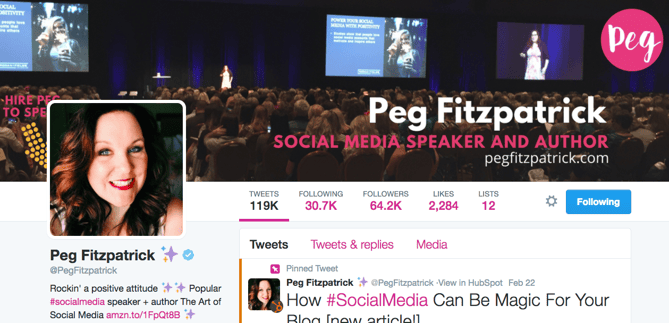
Peg Fitzpatrick, social media speaker, trainer, and author, refers to this exercise as “defining the seeds of your brand.” Fitzpatrick advises selecting two or three main topics for your brand content -- for her personal brand, she zeroes in on media, her role as author (and speaker), and marketing.

Peg Fitzpatrick Twitter.png

Mari Smith, social media speaker, trainer, consultant, and author, has done this beautifully, explaining that she shares “quality, cherry-picked content pertaining to social media, business development, and time and life hacks with a sprinkling of spiritual uplift and a daily dose of motivational quotes.”

Actionable Takeaway:

  1. Focus on three seeds, or go super-niche with one main focus. Do this and “you’ll build a solid Twitter following that will love your content,” says Fitzpatrick.

Step #3: Sharpen your profile.

Don’t leave your Twitter profile to chance or whim. It’s your face to the world on Twitter. While most people will find you through your content, they’ll then check out your Twitter profile.

Ensure that it defines your brand. Dump the default Twitter egg and use an image that highlights your brand, advises Burgess.

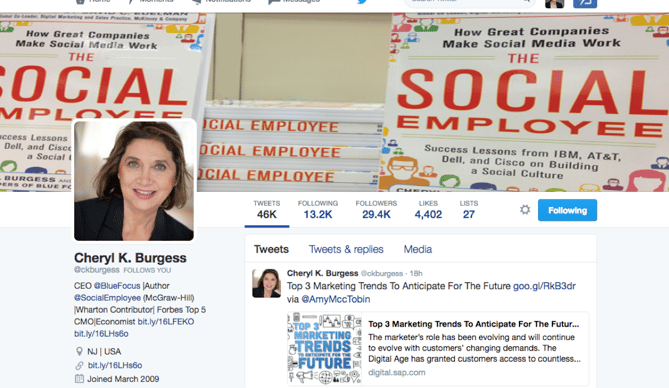
Burgess’ own profile leaves no doubts about her accomplishments and her focus:

Cheryl Burgess Twitter.png

Actionable Takeaway:

  1. Avoid the pet photos. “Unless you’re a veterinarian or your social media goals aren’t especially business related,” says Burgess, “it’s probably better to go with something else.”

Step #4: Create and curate great content. Repeat.

Tweet negative things and you’ll be seen as a naysayer. Tweet helpful, insightful content and you’ll grow your reputation. If there’s a common thread among those with impressive Twitter brands, it's that they all post a steady stream of valuable content.

“You can’t tweet enough,” urges Schaffer. This doesn't mean that you should aim for 100 tweets a day, but if you're seeing positive engagement, keep it going.

The lesson? Find your rhythm. For example, Michael Brenner, author and CEO of Marketing Insider, says he tweets every hour typically from his smart phone while reading. “I’m a big fan of email newsletters,” he says. “I scan the headlines and if I read the article, I share it.”

While it’s tempting to rely solely on curated content, if you’re serious about building your personal brand, try to post some original content. “The fuel of social media is content,” says Schaefer. “I devote an enormous amount of time to creating original content on my blog which then becomes something I can deliver on Twitter that is helpful and unique.”

Smith says she likes to spotlight up-and-coming bloggers and experts that not many people are tweeting about. “I want to give people a leg up and not just share the same super popular blog posts others were sharing,” she says.

Actionable Takeaways:

  1. Don’t share content without identifying the source or the author, says Schaffer. Don’t simply say via @HubSpot or @HuffingtonPost. Take the trouble to also identify the author, who will appreciate the mention.
  2. Tweet with an image whenever possible. Posts with images on social media are 40X more likely to get shared. “I tweet 100% of my tweets with images,” says Schaffer.

Step #5: Engage.

Twitter is a two-way street: If you reach out, people are likely to engage with you.

“Put aside some time to reach out and engage with the tweets of your followers as well as influencers you would like to build a relationship with,” says Melonie Dodaro, a social selling speaker and trainer and author.

Smith says she “takes a quick peek at someone’s bio and recent tweets to find something to compliment or talk about to create a connection.”

Don’t expect, however, that you can outsource your engagement and be effective. All of the experts I spoke to, despite having massive number of followers, handle responses themselves.

Keep this in mind: “The heart of the brand is you,” says Schaffer, “and your engagements are you.”

Brenner calls relating in social “Give to Get (G2G)": “Karma works in the social world,” he says. “Share the work of people you admire and they will take a second look at your own work. Over time, you will become an authority yourself.”

“Be yourself. It’s okay to mix business and personal,” adds Gini Dietrich, author and CEO of Arment Dietrich. “People want to know the person behind the brains. And you have to just do it. So many people overanalyze it and overthink it. Just jump in and start tweeting.”

Actionable Takeaways:

  1. Avoid tactics that look like spam on Twitter. “At first I thanked every single person who retweeted my content,” says Brenner. “But then I just felt like a robot, blindly sending ‘thanks for the RT’ messages. Now I focus on those people who really seem interested in connecting.”
  2. Don’t automate direct messages. Dietrich’s pet peeve is the auto direct message that encourages you to buy something from the person you just followed.
  3. Don’t be blatantly promotional. Don’t say something like “buy my stuff,” says Brenner. “That’s the quickest way to lose followers and anger people.”

Step #6: Test and analyze.

Twitter gives you practically instant feedback. Almost as soon as you post something, you can see how it performs.

“Twitter is my number one platform where I share the most content and also the platform where I test content,” says Schaffer. “When I see what resonates, I know what to share on my other platforms, for my newsletter, blog posts, books, and other projects.”

Schaffer says he aggressively uses hashtags on Twitter so he can be found and manage his content, and also so he can compare how tweets with a certain hashtag perform against other hashtags.

Actionable Takeaway:

  1. Take time to find the right tool for measuring and analyzing. “Find the one that makes sense to you and you’re comfortable with,” says Burgess, who uses Triberr for posting, RiteTag for finding the best hashtags, as well as several analytic tools.

Step #7: Outsource strategically, if at all.

According to Schaffer, you don’t need to outsource any of your Twitter efforts in the beginning. But once you start to scale your followers, consider outsourcing some of the administrative work.

“Outsourcing content curation is one of the first areas busy business owners ought to consider. It's highly worthwhile and ensures your Twitter presence stays active and relevant,” says Smith. "I'm the only one that replies and engages, though,” she adds, “as I never actually delegate my conversations. I also live tweet events."

At the same time, don’t outsource so much that your authenticity is lost, says Burgess. “To those that are considering outsourcing, first I’d recommend simplifying. You don’t need to tweet every five minutes and you don’t need to reply to every mention.”

Schaefer says, “I do 100% of my own tweets. I feel strongly that I don’t want to disappoint anybody. I never want to be in a position where somebody is engaging with me and then they discover that it’s not really me.” Schaefer says the only thing he outsources is some of the administration on his account, like managing followers.

Actionable Takeaway:

  1. Find a system to help you find, curate and share content, says Neal Schaffer, who personally uses Sprout Social. Schaeffer says you don’t need a monitoring tool unless you’re a well-established brand. “The @ mentions of your name are enough for most people.”

Step #8: Commit.

Now that you know what to do, you need to devote time each day to just doing it.

Brenner’s advice? “You have to find the time to make small investments in social every day,” he says.

“Tweet once a day. Blog once a week (if that’s all you have time to do). Do whatever works for you and be realistic. It’s amazing what happens after a year. You’ll have sent hundreds of tweets, created dozens of blog posts, connected with lots of great people and learned more than you would have ever imagined.”

Actionable Takeaway:

  1. Find your focus by following one course until successful and stick to it, says Smith. “Publish daily tweets around your chosen focus. But don’t forget to engage, too."

Building Your Brand

These Twitter brand experts have cracked the code. And so can you if you follow these seven steps. Remember the adage: Success is no accident. You have to work at it.

What are your best tips for building a memorable brand presence? Share them below.

free guide: how to get twitter followers

from HubSpot Marketing Blog https://blog.hubspot.com/marketing/personal-brand-on-twitter

How to Increase Engagement Using Video Thumbnails in Your Emails [Live Event]

Video-in-Email.jpg

Are you looking for new ways to experiment with your email marketing and increase engagement and conversion?

With video in general becoming a more and more important content format for marketers, we put our heads together with the folks at Wistia to see how using video thumbnails in your email marketing affects engagement. Spoiler alert: It makes a huge difference, and we want to share the results with you.

Join HubSpot Marketing Manager Chelsea Hunersen and Wistia Partner Coordinator Margot Mazur on Wednesday December 14 at 1 p.m. EST for the big reveal of brand new data. They'll show you how to successfully incorporate video thumbnails in your brand's email and marketing strategies.

More specifically, you can expect:

  • Never before seen data on video thumbnails in email
  • Wistia & HubSpot's own experiment results
  • Tips on how to include video thumbnails in your email and marketing strategy
  • Bonus: Answers to questions submitted by actual audience members!

Save your seat now, and don't forget to submit your questions.

email engagement using video

from HubSpot Marketing Blog https://blog.hubspot.com/marketing/using-live-video-in-email