Tuesday, 5 September 2017

12 of the Best College Logo Designs (And Why They're So Great)

What makes a college logo great?

Think about your alma mater for a second. Do you have a school bumper sticker with the logo emblazoned on it? A hat? A sweatshirt? A flag? Or perhaps all of the above?

If you still bleed your school colors and rock your school swag whenever possible, then chances are, your university did a pretty good job designing its logo. According to the principles of great logo design, the best logos are simple, memorable, timeless, versatile, and appropriate. New Call-to-action

Want to see some examples of awesome college logo designs? You're in the right place. I chatted with my colleague, Tyler Littwin, art director here at HubSpot, to choose 12 of the best college logo designs from American universities. Check them out and learn what about their design makes them stand out -- in a good way.

12 of the Best College Logo Designs

1) University of Texas

university-of-texas-logo.png

Source: University of Texas

University of Texas's longhorn silhouette is the hallmark of classic and timeless logo design. The logo hasn't changed since its introduction in 1961, and it remains one of the most iconic college sports logos in the world.

"Any logo that works as a single color design is fantastic," says Littwin. "It's simple, iconic, and has a great tie-in to the 'hook 'em horns' hand symbol."

hook-em-horns-hand-sign.jpg

Source: Awful Announcing

2) University of North Carolina

unc-monogram-logo.png

Source: Carolina Athletics

The interlocking NC, one of the University of North Carolina's athletics logos, features another timeless design -- this time with attention-grabbing colors. Walk into a packed crowd at the Dean Dome, and you'll see a sea of Carolina Blue, the official school color of UNC that dates back to the late eighteenth century.

Tyler gives UNC's logo two thumbs up. "Classic," he says. "A+ from me. Beyond the logotype, the color is a great bit of branding."

3) Ohio University

ohio-university-attack-cat-logo.png

Source: Ohio University

The "Attack Cat," which represents Ohio University's bobcat mascot, replaced a simple green paw print in 2002 as the school's official athletics logo. While many OU alumni were disappointed with the change -- citing it as too intense -- Littwin likes the new design.

As an objective observer, he says, "It's a good integration of an illustration with type. The whiskers create a nice baseline for the arced text. There’s also an overall nice balance: The bobcat is recognizable and 'Ohio' is still 100% legible."

4) University of Oregon

oregon-university-logo.png

Source: GoAbroad Blog

University of Oregon's "O" logo has hidden meaning: The inside of the "O" represents the shape of the school's track, Hayward Field, while the outside of the "O" represents the shape of Autzen Stadium, the school's football field.

"As iconic and simple of a logo as you could ask for," says Littwin. "I am also a huge fan of the yellow and green color scheme. It reminds me of the Oakland A’s, the Norwich Canaries, and so on."

5) University of Notre Dame

notre-dame-logo.png

Source: Wikimedia

The Notre Dame monogram is the university's most recognizable logo, and it's used for athletics and academics alike. The school's official brand standards call it "recognizable," "representative," "welcoming," and "approachable."

As for what Littwin thinks? "I’m a sucker for really basic logotypes like this one, UNC's, and Iowa State's. They're wonderfully old-school and no-nonsense. Always going to get my vote."

Even Notre Dame's trademarked "Fighting Irish" logo is impressively well-designed for such a unique mascot. "I prefer the stylized 'ND' logo, but there's something really vintage and cool about this surly Irishman," says Littwin. "Normally the more cartoony logos lose me, but this one is a keeper."

notre-dame-fighting-irish.png

Source: fathead

6) University of Miami

university-of-miami-logo.png

Source: Wikimedia

A reporter from the University of Miami's official student newspaper said it best: "There are thousands of universities across the nation, but only one gets to be The U."

The Miami athletics' iconic split-U logo wasn't created until 1973, several years after the student-athlete scholarship fund first commissioned a logo redesign. It was designed by publicist Julian Cole, the first graduate of UM’s radio and television department, and graphic artist Bill Bodenhamer, who both were also responsible for designing the Miami Dolphins' current logo.

“If you think about it, it was quite a stretch,” said Lisa Cole, one of Cole’s daughters. “They took the U and said, ‘This is the university.'"

But it worked, and a hype surrounding the "U" developed over the following few years. It was used for slogans like, "U gotta believe." Littwin calls it "minimalist and recognizable to a brilliant degree."

Even an effort to find a logo replacement in 1979 by Henry King Stanford -- the university's president at the time -- failed, thanks to heavy student campaigning against the change. Nowadays, as with the University of Texas' longhorn symbol, the "U" has its own hand symbol. "Throwing up the U" means holding your hands in the air like this:

throwing-up-the-u.jpg

Source: PalmBeachPost.com

7) Clemson University

clemson-university-logo.jpg

Source: UNC Charlotte

Clemson's tiger paw logo is another one of the most widely recognized collegiate logos in the United States. Although it seems timeless, it actually wasn't introduced until 1970 -- the end of a rebranding campaign that began when the school first admitted women and minorities in 1950.

The logo itself represents a tiger's paw print, rough edges and all. An actual tiger was chosen as the subject for the logo, and the print comes from a cast that was made for the design. In fact, do you see the slight indentation at the bottom of the paw print? According to Clemson's official website, that comes from "a scar that the tiger who had been chosen as the subject for the logo had received before the cast was made."

The genuine paw print makes for a cool design. "The rough paw print is great and somehow works when paired with the more formal-looking type lockup," says Littwin.

Another subtle intricacy of the logo? The 30-degree angle represents the 1:00 p.m. kickoff typical for football games at the time.

8) Bowdoin College
bowdoin-college-logo.jpg

Source: Bowdoin College

While Bowdoin's mascot has been the Polar Bear for over 100 years, this particular version of its logo is fairly recent: It was made official by the university in 2008. A student reporter for the school's official student newspaper explains: "The new logo is intended to serve as a consistent and timeless graphic identity for the College."

Previously, the polar bear logo had been unofficial -- and it had been represented by everything from a "cartoonish" running polar bear on student keycards, to a "more aggressive" profile of a bear with its mouth open as if it were snarling.

"Noting that in the wild, polar bears have no predators other than man, and that a ferocious, growling mascot was not the image the college was looking to project," wrote the student reporter, "[VP for Communications and Public Affairs Scott] Hood said that there's 'something appealing about having a mascot that is looking directly at you.'"

Littwin agrees -- that's what makes this logo so strong. "The polar bear seems remarkably calm and composed," he says. "I trust him."

9) Hofstra University
hofstra-university-logo.jpg

Source: CAA Sports

The Hofstra Pride logo was "developed to build a strong visual identity" for its athletic department, according to its official usage guide. It's represented by a pair of lions, male and female, that appear to be charging in the same direction. Furrowed brows and windswept manes give them a sense of determination and strength.

"The Pride conveys both the teamwork and togetherness that are traits of lions living in a pride, that have a close bond and work together for the good of the entire group," reads the guide. It was created for the university's athletic department in 2005.

"A very clever and awesome design," notes Littwin. "It's rare to see a university get both sexes of a mascot into the same logo. Well done, Hofstra."

10) Missouri Western State University

missouri-western-state-logo.jpg

Source: American Association of Colleges of Nursing

Missouri Western State University started using the Griffon logo in 1973, several years before the school became a fully funded four-year state college. Why a Griffon? Because "it was considered a guardian of riches, and education was viewed as a precious treasure," reads the school's official website.

The logo symbolizes more than just a mythical animal, though. Notice anything special about its shape? If you look closely, the outline of the Griffon resembles the shape of the state of Missouri. Check it out:

state-of-missouri-outline.jpg

Source: ArtFire

Littwin loves the hidden message. "It's a clever design that also works even if you don’t pick up on the geographic reference," he says.

11) Florida International University

florida-international-university-logo.jpg

Source: Florida International University

The Panthers (originally the "Golden Panthers") replaced the Sunblazers as Florida International University's nickname in 1987 when Roary the Panther became its official mascot.

The logo represents a cool perspective -- it seems to be coming out of the logo directly at the reader.

Littwin agrees. "I love the head-on perspective of this," he says. "There's something atypical and nicely menacing about it."

12) University of Hawai'i

university-of-hawaii-logo.jpg

Source: Miracle Mamaki

The University of Hawai'i "H" logo was created for the athletic department in 2000. While the "H" clearly stands for Hawai'i, the school's official website says it also represents the Hawaiian expression "ha," meaning "breath" in Hawaiian. "The spirit of life passed on to us from one person to another, generation to generation, with lessons and success," the website reads.

The cool patterns you see on either side of the "H" were inspired by Hawaiian kapa designs, which derive from native Hawaiian art. "I really like the kapa aesthetic and the simplicity of a one letter logo," says Littwin.

get inbound certified for free


from Marketing https://blog.hubspot.com/marketing/best-college-logos

How to Master Analytics like Will Smith and Amazon

Will Smith is not just a pretty face. Nor is he just a likeable, talented actor.

He’s a businessman and a master marketer. The only Hollywood star that predictably gets over $20 million per flick. Even his movies that didn’t get good reviews, like Hancock and Suicide Squad, grossed over half a billion each worldwide. Wouldn’t you just love the worst of your ventures to make half a bill?

So, what’s the secret to Smith’s success? How has he chosen just the right way to focus his time, attention and resources?

Is it down to luck? An innate knack for making good decisions? Or an unwieldy drive to succeed?

These factors have played their roles, I’m sure. But Will applied a much smarter, more calculated method to propel himself to stardom. One that your company can – and should harness the power of, in order to drastically increase your customer acquisition and retention.

The answer is: analytics.

It’s the skill of observing what your prospects and customers do and have done in the past, using this to predict what they will do, want and need in the future. Then make smart marketing decisions based on this info, to maximize your profits and dominate your market (just like Will Smith).

In short;

Glance back over your shoulder before you plan new things.

This article will reveal how Smith did it, how Amazon is doing it, and how your company should do it.

The Fresh Prince of Analytics

When Will Smith first ventured into the world of Hollywood movies (from within the clutches of Uncle Phil’s tyrannous reign) he and his manager sat down and analyzed the ten highest grossing movies of all time, looking for patterns.

They analyzed what moviegoers (his target customers) did in the past to determine what they would do in the future. So that they could put Will Smith right where the money would be.

At the time, they found that ten out of ten of the top movies had special effects, nine out of ten had aliens and eight out of ten had a love story involved.

Next stop – Independence Day and Men in Black.

In no time at all, Will Smith became a household name.

That’s a simple example of the power of this technique. In marketing today – especially digital marketing – it’s all-important. It really is the key to consistently better decisions.

Let’s look at exactly how effectively using your data to predict your customer actions can boost your revenue and profits.

Three Ways Analytics Impacts Your Bottom Line

1. It Increases Your Leads & Prospects

Analytics allows you to see, repeat and expand on what works best to boost:

a. Your Leads
You can find and qualify leads better to know which ones are most likely to become paying customers. We get this by observing patterns in firmographic data (data from the company your lead works for), demographic data, geographic data, psychographic data and through the analysis of the industry and economy.

In other words; who they work for, who they are, what’s going on behind the lights, where they live, and what’s up in their world. All five areas, will give you clarity on where to find the most and best leads.

b. Your Prospects
Once a lead starts showing active interest they become a prospect. It’s getting hotter. They’ve seen the trail of breadcrumbs and are on their way toward you.
Analytics can tell you how to maximize your prospects from the five data types plus extra information your sales team learns while interacting with your customers.
A 10% increase in leads or prospects is a 10% increase to your bottom line (if your conversion rate remains the same).

2. It Increases Your Conversions

Mastering analytics can help you polish the method, frequency, and quality of interactions with your prospects. Refining each piece, cranking those conversions up and up.

It takes qualifying prospects to a whole new level of detail. By turning all important factors into data (such as the prospect’s level of need for the service, their budget, their level of authority, and much more), your sales people can quickly focus where the focus is needed most.

As the skill and precision of your qualifying, sales and closing techniques increase, so does your revenue.

A 10% increase in sales conversions is a 10% increase to your bottom line.

3. It Increases Your Average Customer Value (Purchase Size & Lifetime Value)

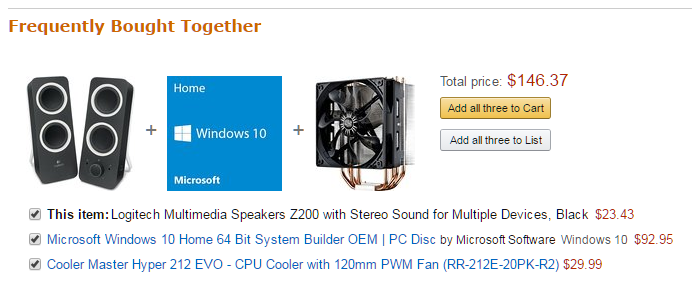
Amazon is the grand master of upselling and cross-selling.

Their ‘frequently bought together’ feature and recommendation system have arguably been one of the key ingredients in their world-dominating success story. Amazon uses data to automatically customize the browsing experience for its customers based on their past purchases, and optimize sales. So in a nutshell, Amazon’s analytics tells them what customers frequently buy together and they simply (and automatically) pass this info onto their customers, to help them out – which their customers absolutely love.

That’s right, good cross-selling is a service, not an imposition! So don’t be shy about it.

And that goes the same for upselling. Almost all customers are interested in at least knowing the options to upgrade.

Think how often you encounter this, from fast food restaurants offering super-sizing to high class airlines offering seat upgrades. If you don’t want the upgrades, that’s fine, but at least you’ll know what’s available and the cost to upgrade.

These successful upsells should give you some food for thought:

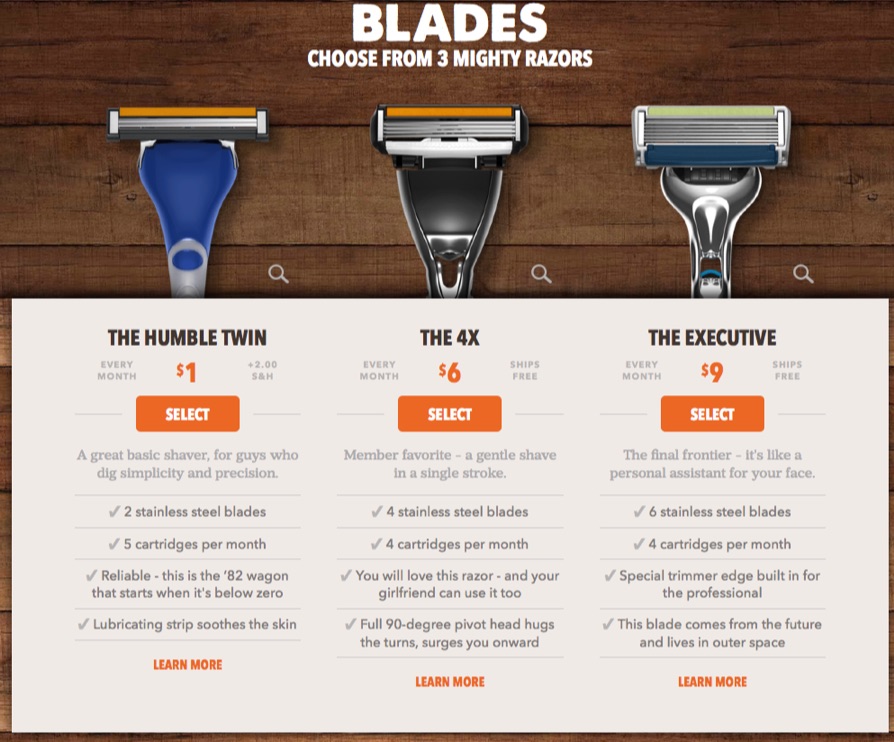
Dollar Shave Club

Dollar Shave Club lures its customers in with an incredibly clever name. But of course, they’d prefer you spend a little more than a dollar. And they encourage you to do exactly that, by lining up their “humble” one-dollar razor against some more appealing, more expensive options. Notice how they’ve dropped in some social proof to make this middle option even more enticing (using the words “member favorite”)?

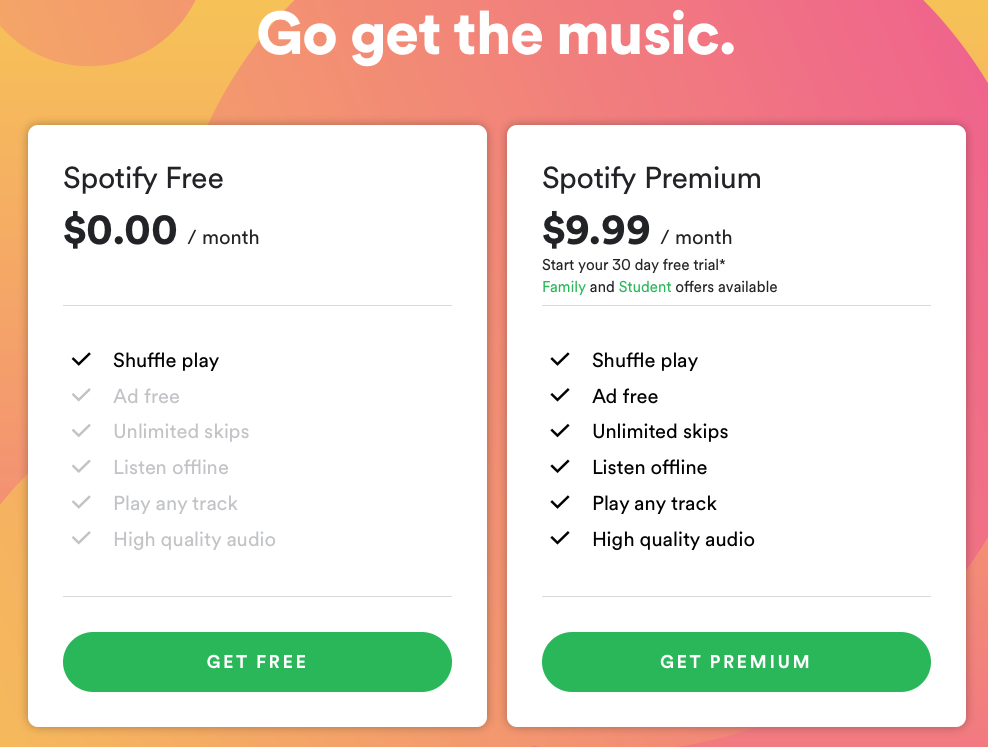
Spotify

Spotify uses a similar, common (and effective) technique. The ‘free’ option here seems pretty bleak next to that juicy ‘recommended’ Premium option, with its colorful design and that long list of ticks. Don’t you agree?

Like Amazon, if you use analytics well, you will know from past customers exactly what extra offers to show your customer, in a way the customer appreciates. These are people already buying from you, which means they like your company already. Of course some of them will be happy to buy a little more. And a little more. And a little more.

Again, a 10% increase in average purchase size is a 10% increase to your bottom line.

Plug that Leak

Two other ways to boost the average value of your customer are to increase how frequently they buy from you and also reduce the number of customers leaving you.

By analyzing your metrics – such as the conversion rates of your cross-sell email campaigns or social media ads – you can understand what methods of communication and marketing are enticing your customers to buy from you more often. So you can expand on this.

It’s an easy stat to boost as, again, these customers already trust and use your service. Customers buying from you five times a year on average, instead of four times a year, is a 25% jump in revenue. Yet without analytics, it’s an area of marketing most people neglect. Make sure you don’t!

And if your bucket has a hole, let’s plug it before pouring in more water.

According to the Harvard Business Review, the cost of acquiring a new customer is five to twenty five times that of holding onto an old one. Yet both have an equal impact on your revenue.

Analytics will help you refine your methods for keeping customers longer (for example, by identifying and getting rid of mistakes that are driving them away – showing you the spinach in your teeth) and bringing back those who have already left.

Once more – a 10% increase in average lifetime value is (yep, you guessed it) a 10% increase to your bottom line.

The Wonderful Power of Cumulative Increases

I love this part. If you hit all three of these figures with a 10% increase, you get a 30% boost to revenue, right?

Wrong!

You get a 33.1% increase.

The initial 10% increase makes your revenue 110% of what it was before. The next 10% increase on that makes it 121% of what it was before. And the next 10% increase makes it 133.1% in total.

That is the power of cumulative growth.

And that’s only a little 10% boost from your analytics. A 20% boost to each is a 72.8% total increase in revenue. A 30% boost to each is a 119.7% total increase. A 40% boost to each is…

Starting to look pretty cool, wouldn’t you say?

See how the little things add up and make your bottom line more buxomly?

Turbocharge your Content Strategy

Apart from the numbers at the top end of the funnel, analytics also make it very easy to improve and streamline your content marketing strategy. You can always know what to say and say it so that people love it.

By plugging into social media and analytics tools, you can quickly see patterns in what content gets liked, clicked, downloaded and shared the most. From ebooks to posts to videos to Tweets. The full shebang.

Always know what’s hot or not with a glance at your dashboard!

Because of this, knowing what to talk about just becomes easy. You become the conversational master of your industry. The heart of the party, not the awkward wallflower in the corner.

And of course, with a better understanding of what your target prospects actually want to read/hear/watch, you can create content which attracts, engages and converts more. And yes, that means faster growth, more leads, more conversions, more sales, more profits, more money, bigger houses, etc.

So, How Exactly Can You Start Making the Most of Analytics?

To put it simply, you need to set up systems that collect data for you – data about your prospects, customers, market trends, methods and sales techniques. Data about everything. You need to arrange this in a way that is simple for you to glance at and see helpful patterns emerge.

When you have this system set up, you can make decisions and then watch the impact on your bottom line. If the impact is good, you can go further in that direction. If it’s not, stop.

It’s that simple.

It’s really all about being able to see the 20% of customers, offers and activities that get you 80% of your results. Then focusing on that 20%.

It’s all about efficiency. If Mr. Pareto were still around, he would love analytics.

Two Tools that Nail It

There’s a lot of noise about analytics tools out there, so let’s keep it simple. Here are two useful tools you can start with. Check them out, test them out, and see what works for you.

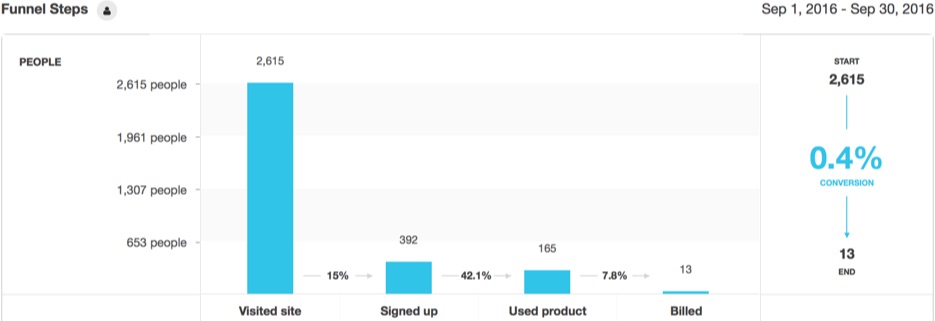
Kissmetrics
Kissmetrics is a great choice for detailed and easy analytics. It creates profiles for customers across all devices. It tells you about customer behavior, response to product features, etc. It tells you where people drop off in your funnel and how segment behavior changes over time, and more. A tiptop tool to start with.

The Kissmetrics Funnel Report

Google Analytics
Google Analytics works well as a simpler introduction to analytics. You can start with Goals, an underused feature of Google Analytics. You tell it even very specific actions on your site to track (time-on-page, opt-ins, video plays, add to carts, anything really), the tool tracks it and displays it in Google’s usual easy-to-follow format. That’s the free option, you can also upgrade to Google Analytics 360 for a more comprehensive online-only tracking platform.

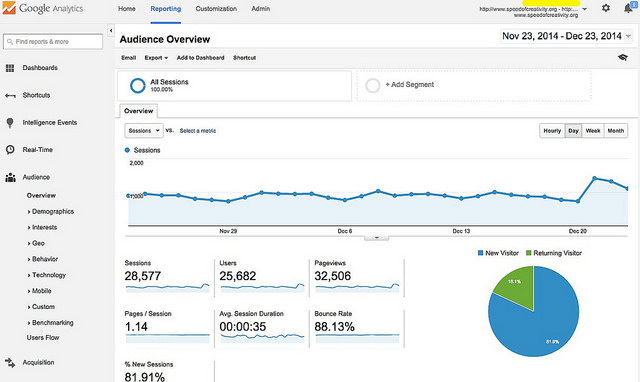
Audience Overview in Google Analytics

This is a Story All About How…

Let your journey of analytics analysis begin. I guarantee it will add a twist to your company story (a good twist, not a Game of Thrones twist).

It really is one of the surest ways to crank up your revenue, your content quality, and understand your customer and business better than your competition. Because when you have a solid system in place you can see patterns with ease that your competitors miss. Day in, day out.

And those three key revenue stats really are worth paying attention to! Making changes and measuring results is easy when you keep track of your leads, prospects and average lifetime values.

It makes you more secure too. You can understand and pinpoint profit problems, quick as an F1 mechanic fixing a Lotus, mid-race.

Don’t let the jargon around this topic put you off. Everyone is just trying to sound clever. Remember, you’re just doing it like Will Smith and Amazon – look to the past, take what works, put it into play, and watch your profits grow.

Good luck!

-Konrad

About the Author: Konrad is the CEO and Content Strategist at The Creative Copywriter, and has a pretty darn creative noggin on his shoulders. His gang of word-slingin’ cowboys know how to compel, convince and convert customers with words. Download his Fluff-Free Guide to Content Strategy here, for free.


from The Kissmetrics Marketing Blog https://blog.kissmetrics.com/analytics-like-will-smith/

Monday, 4 September 2017

Should I Quit My Job? 9 Signs It's Time

And that’s actually pretty great.

None of us will be happy in our careers every day of every year. If that’s what you’re looking for, good luck. But you should find satisfaction in the work you do regularly.

Because as nice as it is to talk about work/life balance, it’s also important to remember just how much of your life is actually spent at work (Spoiler alert: You’ll spend roughly 35% of your waking hours working). Shouldn’t you find contentment during that time?

Here are nine signs it might be time for a new job. They’re not hard-and-fast rules, but they are signals it’s time to consider a new position. Check the pulse on the rest of your life and explore how a new job might make that pulse stronger or weaker.

9 Signs You Should Quit Your Job

1) You’ve Been There More Than 5 Years (And Still Aren't Happy)

If you’ve been at your job for more than five years and are still totally happy, don’t panic. Instead, ask yourself if you’re still building skills, feeling challenged, and being rewarded accordingly. Getting comfortable at a job is one thing, getting complacent is another.

Powerhouse companies like Netflix actually believe job hopping is a good thing. Patty McCord, the former chief talent officer for Netflix, has said, “You build skills faster when changing companies because of the learning curve.”

According to entrepreneur and author Penelope Trunk, the learning curve flattens after about three years. Trunk believes that job hoppers learn faster, make better first impressions, and improve the bottom line quickly because they know they’ll be moving on within a matter of years.

Regardless of whether you’re pounding the pavement for a new job every five years, it’s important to routinely assess whether you’ve reached a growth ceiling in your current role.

2) You’ve Been There Less Than 5 Months

Starting a new job always comes with unique challenges. Maybe you’re not getting along with your boss as well as you thought you would. Or perhaps the daily tasks associated with your role are actually very different from what you discussed during your interview.

Before quitting a job you just started. Ask yourself three things:

Is there anything I can do to make this better?

Try talking to your boss about shifting your job responsibilities to be more in line with your expectations. Or take your boss to coffee and get to know them better.

How will I explain this short tenure to future employers?

Before you quit or start looking for a new job, decide how you’ll explain your short stint at X company to potential employers. Simply saying, “I didn’t like what I was doing” or “I didn’t get along well with my boss” might cause interviewers to pause.

Can and should you give the position more time?

Are you really sure that things won’t get better? Can you make it to the one-year mark so that you avoid some raised eyebrows on your resume in the future? Ask yourself if the challenges of leaving after a short time are worth the benefits of getting out of a negative work environment ASAP.

3) Your Job is Affecting Your Mood Outside of Work

A recent study found that about three quarters of “the weekend effect” (the increase of your happiness on the weekends) comes from the quality of your workplace.

How happy you are at your job is directly correlated to whether or not you view your boss as a partner and whether you believe you work in a trusting environment, according to the research. If you answer positively to both of those questions, your mid-week mood will more closely match your mood on the weekends.

This is another great area to regularly check in with friends and family about. Ask them if they notice you talking about work with increasing negativity, or if you’re coming home in a frustrated mood more weeks than not. Everyone has bad days, and even bad months, but if the majority of your days are ending under a cloud, it’s time to take control of your life and either adjust your attitude or your job.

4) You’re Not Learning

If you’re not learning from the people around you or solving new problems in your job, it may be time to look for something new.

In today’s fast-moving and competitive job market, it’s important to continually expand your skillset to advance in your career. If you’ve been solving the same problems for a few years, you’re likely not growing too much.

Share your frustrations with your manager and ask if there are ways you can take on more or different responsibilities within your team. Can you grow the headcount you manage or take over the new video initiative your team has been on the verge of implementing for years? If that answer is no or a vague “we’ll see in a few months,” it’s probably time to move on.

5) You’re Not Earning

In 2014, the average raise an employee could expect was 3% of their overall salary, and the actual raise they received was less than 1%. The average raise an employee received when taking a new job, however, was between 10% and 20%.

It’s important to track the monetary growth potential you have at your current company. Sure, you’re likely not going to receive a 20% raise every year you stay at your job. But if you’re not going to receive a similar raise over the course of three to four years, it might be time to look for something new or talk to your boss.

Talking about a raise can be awkward, so do your homework ahead of time to build confidence and a strong case for your argument. Research median salaries in your field on sites like Glassdoor, and adjust numbers for cost of living in your city and state, and for inflation.

6) You Don’t Align with Team or Company Culture

It happens. Maybe your company was acquired or you have a manager you don’t see eye to eye with. Regardless of the cause of the shift, it’s important that you align with the new direction. If you don’t, it can be easy to lose faith in your boss and your company, making it much harder to excel at your job.

If your new manager’s strategy includes buying email lists and spamming them like there’s no tomorrow, it may be time to look for a new position. Talk to your boss and tell them you’re having a difficult time understanding the reasons behind this new direction.

7) Your Company is Change Averse

Is your company tracking MQLs like it’s 1999? Are they unwilling to implement any fresh marketing strategies you suggest? It’s tough, but it might be time to hit the job boards. 

A company that isn’t changing with or leading the industry is one that is likely to stunt your career development and maybe even your professional reputation. If you’re working for a team that refuses to evolve, it’s easy to fall behind on industry trends your peers (and future job competition) are becoming well versed in.

8) You’re Daydreaming About Your Side Hustle

Ah, the side hustle. Maybe you teach a couple of night classes at the local community college. Maybe you offer consulting advice to young entrepreneurs. Or perhaps you make soap out of wood bark in your backyard.

Whatever your side gig, it can be a great way to develop professionally and personally. But what happens when you can’t think about anything but your side hustle? What happens when your day job isn’t satisfying you enough?

This is another time to get really honest with yourself. Poll your close advisors, family, and friends, and get to the bottom of why you’re devoting so much brainpower to your hustle right now. Whether it’s a phase, a funk, or a change you need to make, it’s important that you have enough motivation to bring the best to your day job.

9) It’s Affecting Your Physical Health

Did you develop an ulcer from last year’s Black Friday marketing campaign? Have high blood pressure at 25? If work is so stressful that it’s having a physical manifestation in you, it’s definitely time to reevaluate whether your job -- or even a career in marketing -- is right for you.

No job is worth taking a long-term toll on your body. Start by talking to your boss about the cause of this stress. Ask about lightening your workload, vacation, or even shifting to a less taxing role on the team. If none of that’s possible, it might be time to look for a job that’s less demanding. Acknowledge what your body needs. Own it. And never be ashamed of it.

Leaving your job is a big deal. Make sure that it’s the right choice. Never act too quickly, and be honest with yourself about the motivation behind the move. But whenever possible, choose to work for a place the empowers, challenges, and supports you. That’s a job you’ll never regret taking.

master inbound marketing hubspot academy class


from Marketing https://blog.hubspot.com/marketing/should-i-quit-my-job-9-signs-its-time

I Tried These Productivity Hacks for a Month So You Wouldn't Have To

I'm not ashamed to admit that I'm not the most together person in the world.

I eat three meals a day, but one of them is usually takeout. I hit snooze so often it should be considered a nap. And I definitely don't drink enough water. But I imagine I'm not alone.

There are plenty of productive members of society like myself who work and go to school and have fulfilling lives -- those lives just don't always involve waking up at 5 a.m. for morning meditation or listening to stimulating podcasts on their commutes the way so many famed morning routines do.

So here's to the snoozers, the night owls, and the TV binge-watchers. I celebrate you, and I want to help you figure out if any of the most dreadful-sounding productivity hacks will actually work for you.

Over the course of a month, I spent each week trying out a different productivity hack to see if it made me more productive -- in the morning, and throughout the day. Some of these techniques were brand new to me, while others had been feebly attempted (and abandoned) before.

Keep reading for a detailed explanation of why I went on this productivity journey, or skip ahead to the hacks you want to read more about:

Why I Tried Out Productivity Hacks

I spent a month this summer testing out different productivity hacks as part of a larger initiative my fellow HubSpot Blog team members participated in. Traditionally, during the summer months, we experience a slight dip in traffic due to seasonality -- after all, we want you to enjoy summer vacations away from your email inbox, even if it means missing some of our blog posts.

With that in mind, we decided to take a month to run different experiments and report on the results -- and I decided to devote time to testing out different productivity hacks so I could report on the results to you fine people, our readers.

I spent each week trying out a new hack -- with varied results. Read on to learn more about how I became the most productive woman in the world in just 30 days (just kidding).

4 Productivity Hacks (& Results)

1) Eating Breakfast Every Day

Before the Experiment

Don't get me wrong, I love food. But between the aforementioned snoozing and my lengthy commute time to work, eating breakfast before work was darn near impossible for me.

And by the time I got to work, which was usually slightly later than I wanted for the previously mentioned reasons, I would dive right into my to-do list -- only to find myself ravenous and ready for lunch by 10:30 a.m. Or worse, scarfing down a Pop-Tart to tide myself over until my immediate sugar crash as a direct result of eating said Pop-Tart.

But starting your day with a healthy breakfast can have a huge impact on your productivity. The food we choose throughout the day impacts not only our productivity, but also our moods, focus, and energy. In fact, a study found that the more servings of fruits and vegetables people ate throughout the day, the more engaged, happy, and creative they were.

As it turns out, 31 million Americans (roughly 10% of the population) end up skipping breakfast every day -- probably for reasons like mine. So I committed to a full week of making -- and eating -- a healthy breakfast.

During the Experiment

I quickly realized that changing the way I sleep and get up in the morning would require a lot longer than a month to complete, and I needed a healthy breakfast solution that also didn't take too long once I finally made it into the office.

The solution? Smoothies.

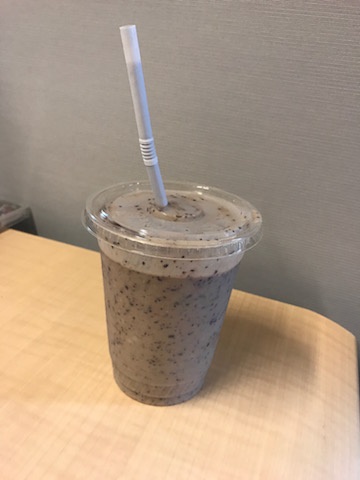
Luckily, HubSpot's Cambridge office has a fully-stocked kitchen with a lot of the materials and equipment needed to make a healthy breakfast. With the help of plant-based protein powder and spinach I brought from home, I was able to quickly make healthy smoothies that were easy to consume and fairly tasty. I can't, however, speak for their appearance:

smoothie is gray.jpg

Look, my smoothie matches my gray desk divider!

Gray smoothies notwithstanding, this was far and away my favorite productivity hack of the experiment.

Results of the Experiment

Ironically, my interest in smoothies was to save time so I could dive right into work, but dedicating time to making and consuming breakfast before I got started with every work day helped me be more productive. I ended up taking a few minutes before getting started to a) enjoy my breakfast, b) surf Twitter without feeling guilty for procrastinating and c) prioritize my day.

Besides the health benefits of eating healthful foods first thing in the morning, I think there's also something to be said for forcing yourself not to dive into work right away and reflect on your priorities. It's easy when you're swamped in to-dos to feel so stressed and overwhelmed that you start working the second your eyes open. But by making breakfast or spending your morning doing something not directly work-related, you can organize your thoughts, prioritize the mounting list of tasks we all have, and enjoy a little "me time" -- and debriefing on which projects and tasks to tackle to make your day as efficient as possible.

There were definitely days when I wanted a Pop-Tart (but I promise, I didn't have one). Also, one day that week, I decided to treat myself to a technically healthy but fairly enormous breakfast at a vegan diner. Delicious? Absolutely. But I also fell into a food coma shortly after and had a less productive day than my smoothie days.

2) Exercising Every Morning

Before the Experiment

For those of you already rolling your eyes, trust me -- I know how you feel. Working out is the worst.

But actually, it's not. Apart from the health benefits we all know and forget as our sneakers collect dust from the corners of our closets -- like decreased risk of chronic disease, weight control, better sleep, and stronger muscles and bones -- it can have a positive impact on your productivity all day.

Regular exercise can improve your memory retention, sharpen your concentration, help you learn faster, make you more creative, and lower stress. I don't know about you, but I wouldn't say no to literally any of those things.

I'm still in the process of recovering from an ankle injury, so I wasn't exercising at all before starting the experiment for a week -- let alone exercising in the morning. Saying I was not excited about trying out this productivity hack was an understatement, but I wanted to do it in the morning to get it out of the way -- and to achieve those promised benefits even sooner.

During the Experiment

I decided to work out using 30-45 minutes Pilates videos every morning -- mostly because I wanted to do something that would be low-impact on my ankle, but partly because I didn't want to actually have to leave my house to get a workout in.

On the first day of testing out this hack, as my alarm went off 45 minutes earlier than normal and I stared at my yoga mat, I said out loud to no one in particular, "I already hate this."

Luckily, I had a supportive family member who got up when I did and motivated me to keep going:

philates-2.jpg

We'll call our workout routine "Pilates with Phil"

Unfortunately, his support waned the longer the workout went on every morning.

philsleeping-1.jpg

Results of the Experiment

As a side effect of exercising and waking up early, I started getting tired and falling asleep much earlier, which definitely made me feel more productive at work. I felt more alert and focused at the start of my day -- having already been awake for a couple of hours -- and I found myself making healthier eating choices (see above) after starting my day off on the right foot. On a few of these days, I didn't even feel the need to drink coffee once I got to my desk!

I'll confess that, halfway through the week, I snoozed through my alarm and worked out in the evening instead -- but it definitely weighed on me as one more item on my to-do list, and getting it done early in the day was far superior.

So, while I don't think I can commit to daily morning exercise, I can confirm that getting up and moving once a day definitely made me feel more alert and relaxed, which lasted for the entire rest of the day.

3) Using the Pomodoro Technique

Before the Experiment

Before I tested out this productivity hack, I was familiar with the concept of blocking off time for specific tasks, as well as blocking off time for breaks, but I wasn't doing it with any particular rhyme or reason.

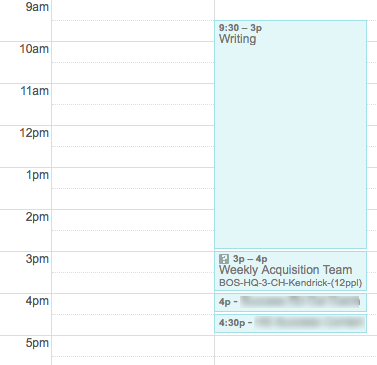
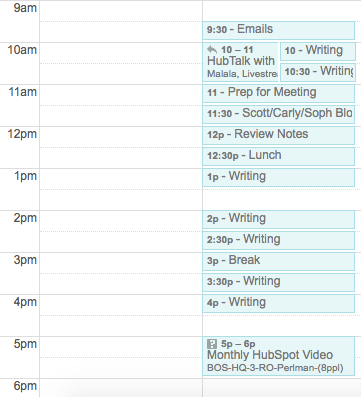
Simply put, I would totally disregard calendar appointments I'd set for myself and would stay in a groove if I hit one -- until I looked up from my computer, hours later, with bloodshot eyes, wondering what had happened to the rest of my to-do list.

old calendar example.png

Not exactly easy to follow.

So for the next week of my experiment, I decided to test out the Pomodoro Technique -- and no, it isn't a delicious cooking method as I previously thought. It calls for working in 25-minute bursts with short breaks in between. Once you've completed four Pomodoros (25-minute increments), you could take a longer break before starting work again.

It sounded like a great way to balance the demands of my writing workload writing several blog posts per week in addition to various other meetings and projects.

During the Experiment

I cannot overstate the degree to which this time management method did not work for me.

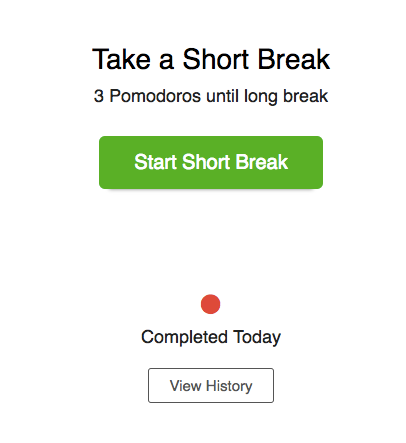
I downloaded the Pomodoro Technique Chrome extension to remind me of when to start working and to take a break, and I grew to hate that little tomato -- a real shame, since it's one of my favorite fruits/vegetables.

pomodoro break.png

Tomatoes will never be the same.

I really missed being able to get into the groove working on a project -- particularly when it came to writing blog posts, which typically takes more than 25 minutes.

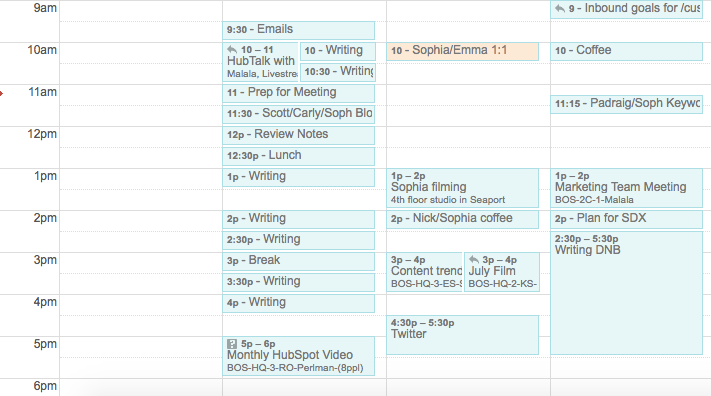
I even tried hacking together my own Pomodoro Technique calendar when I couldn't handle the tomato reminders, but the pop-up calendar reminders irked me even more.

pomodoro calendar.png

I was in notification hell.

By the Wednesday of the week I started testing out this productivity hack, I was back to my old ways -- and loving it.

pomodoro calendar 2.png

Writing blocks, how I missed thee.

Results of the Experiment

The Pomodoro Technique definitely didn't work for me, but I don't think it's the fault of the technique itself -- I think it doesn't work for my particular job requirements, which involve multiple daily deadlines.

When I write blog posts, I don't necessarily need (or want) my time split into 25-minute bursts -- I want to get blog posts out the door so I can get started on the next one.

My very unscientific assumption is that the Pomodoro Technique works better for people working on longer-term projects and daily tasks, rather than deadline-driven bloggers and creators turning things in every day.

4) Freewriting Every Morning

Before the Experiment

When I come home from writing blog posts all day, the last thing I want to do is sit down and write more -- even if it's creative writing on my own.

So when I read that morning freewriting can increase productivity, I was skeptical about whether or not it would work for me -- wouldn't it just be adding more work to my plate?

Before I tested this productivity hack, the closest thing I did that could be called morning freewriting was my morning tweeting. So I decided to try it out for a week.

During the Experiment

I blocked off 30 minutes each morning for freewriting when I got into the office each day and went to work. And let me tell you, it was hard.

It wasn't that I didn't have anything else to write about besides marketing topics for the blog -- it's that I didn't want to write paragraphs. I wanted to write lists.

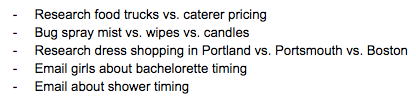
I'm in the process of moving, and I'm a bridesmaid in two upcoming weddings, and during these 30-minute blocks, I honestly couldn't stop myself from creating list after list of things I needed to do -- like this one:

bridesmaid list.png

A Maine wedding without bug spray is a non-starter.

apartment list.png

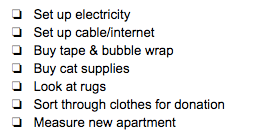
I learned from this experiment that a comfy rug is essential to at-home workouts.

Over the course of the week, I eventually started writing longer pieces with more sentences and fewer bullet points -- and freewriting shifted into journaling.

Results of the Experiment

I don't know that I did freewriting exactly correctly -- technically, it was freelisting. But going through the motion every morning got me in the right mindset to braindump -- which any blogger will tell you is a critical part of the writing process, when you write down any and everything you know about a topic before filling in gaps in knowledge with more research.

As a side-effect of the list-writing, I believe I was a more productive worker by handling and organizing my personal to-dos before getting started on work tasks. It was a lot less stressful knowing I had an organized game plan for calls to make and research to do on my lunch break and during personal time after work too.

There's No Such Thing as "Hacking" Productivity

Like many other things in life, there isn't an easy way out when it comes to working efficiently and successfully at your job every single day. There will be days when you crush your to-do list, and there will be days when you eat Pop-Tarts and get hit with a wicked case of writer's block.

My biggest lesson from this experience was that all hacks aren't created equal -- it's about figuring out how and when you work most productively, and optimizing your strategies from there.

My strategies could still use a little tweaking, and my next big experiment will be trying to change my disastrous sleep habits to kick the snooze button to the curb. But until then, I'll be drinking smoothies, attempting to work out, and avoiding every tomato I come across.


from Marketing https://blog.hubspot.com/marketing/productivity-hacks

Friday, 1 September 2017

The 10 Pillars of Successful Branding

Ask a new business owner to tell you about their brand strategy and most will stop at their logo, which means they have none. Small business owners consistently overlook the importance of branding and do so at their peril. This problem even persists across large organizations where the understanding and use of a strong brand can get diluted, distorted or miscommunicated. Understanding the role branding plays in your business, the strategies behind it, and the pillars of successful branding will vastly increase your chance of success.

In this blog, you’ll find the 10 pillars of successful branding that marketers can use to establish or re-evaluate their brand.

1. Purpose

Your brand purpose is the meaningful reason behind why your brand exists. To extract your purpose, you need to look at who you serve. Your business solves a problem for someone. Whether that problem is hunger, thirst, a flat tire, the need to get from A to B, or a lack of experience in a particular field, you provide a solution to a problem your ideal customer needs or wants, to solve.

Once your solution fills that void, there is a sense of satisfaction from your audience that evokes an emotion. Even an accountant filing tax returns provides satisfaction. They relieve their clients from the stress of tax responsibility for a year. Identifying the emotion that your client will feel on the back of your solution unlocks the meaningful purpose. Tapping into the impact that may have on their lives (even if just for a fleeting moment) and your brand purpose becomes not about how much profit your business can turn but how many people it can impact.

Take, for example, TOM’s, a primarily online shoe company. They have an online store, you pay with your card, and your new shoes are delivered to your door. Simple. What makes TOM’s different from other shoe companies is their brand purpose. The meaningful reason behind why they exist is to improve lives. For every pair of shoes you buy, TOM’s will help a person in need. Not only does that make the customer feel good about handing over their money, but also every individual working for TOM’s will feel they make a difference in the work they do.

2. Vision

Your vision is where you plan your business to be in the future. Thinking about where you want your company to be is a vital part of brand creation. It is about projecting your brand into the future and painting a picture of your future brand. We tend to do more for others that we do for ourselves. When you go back to the brand purpose and realize that your brand is about impacting other people’s lives, you can be a little more ambitious about the future.

Where do you want to be in 10 years and what does that future brand look like? How large is your expansion plan? Will you be expanding your product offerings? What does success look like for your company? These are all vital questions to ask yourself when building your brand. Your vision should be big enough to inspire but not too big for people (within the brand) to buy into it.

Microsoft’s vision was to put “A computer on every desktop in every home”. This vision was big enough to inspire a movement without being too big for the leadership team to buy into it.

3. Mission

Your mission is a statement of intent that encompasses both your company’s purpose and vision. It is a commitment to impact the lives of the people you serve and deliver on what you promise while you are on the path to your future brand. It shifts the paradigm of the vision and mission from what you want to achieve to what you want to give. In living your purpose, your mission becomes a self-fulfilling prophecy.

Brands on a committed mission aligned with their purpose and vision set the tone for a strong working culture. Those who come to work every day and feel like they are part of something bigger than themselves have meaning in the work that they do, which instills happiness. Brands boasting happy people radiate this through their interactions and become known as much for their attitude as the solution they offer.

Starbucks mission statement optimises a commitment that is filtered through purpose with a dash of vision: to inspire and nurture the human spirit – one person, one cup and one neighborhood at a time.

4. Values

Brand values are the rules of engagement and the moral compass for the way you do business. If your mission sets in place your overarching commitment in achieving your vision for the future, then your values are the behavioral commitments in your day-to-day activities.

Like all elements of branding, they are internal first and foremost. It goes without saying that your values should be aligned with your purpose, vision, and mission, but communication is key. Communicating core values often internally ensures that everyone is singing from the same hymn sheet and that there is a collective underlying message in every interaction.

People that know us, know what our core values are not because we tell them but because of our actions and behaviors over time. The same is true with brands. It is common practice today to list your core values on a dedicated page of your website, but without the actions to go along with the words they are little more than marketing.

Zappos, an online retailer, demonstrates the possibilities of a brand that lives its core values in the way it behaves. From the way they deal with customers to how they hire talent, all decisions and actions are filtered through their values.

Here are the core values that Zappos lives by:

  • Deliver WOW Through Service
  • Embrace and Drive Change
  • Create Fun and A Little Weirdness
  • Be Adventurous, Creative, and Open-Minded
  • Pursue Growth and Learning
  • Build Open and Honest Relationships With Communication
  • Build a Positive Team and Family Spirit
  • Do More With Less
  • Be Passionate and Determined
  • Be Humble

How does this impact how their audience sees them? By delivering on these core values they inspire customers, and advocates for life—see for yourself.

5. Position

The position your brand takes in the market comes down to your audience, competition, and differentiators. When you know the finer detail of who your audience is, what they like or dislike, their behavior is of the utmost importance. When you understand what their problems are, then you can begin to understand the best way to appeal to them.

Your competition is likely already serving your intended audience so understanding their appeal, as well as their strengths and weaknesses, allows you to uncover opportunities. Differentiators are why your audience will remember you. What is it that makes you different from your competition? Why should your audience choose you? Even if on paper, your competition is towering over you in term of capabilities, you can always find something that sets you apart and makes you memorable.

When Avis was entering the car rental market dominated by Hertz, they positioned themselves creatively with their tagline, “We’re only no.2, but we try harder.” In doing so, they established themselves in the market and took market share from the competition.

brand pillar- avis

6. Personality

Brand personality should be a reflection of who your audience is and what appeals to them, along with the position you want to take in the market. Your audience wants to see themselves, or the best version of themselves, in your brand so when a brand portrays the personality of their audiences’ aspirations, they resonate on a powerful level.

Take Mercedes as an example. The luxury car company’s personality communicates confidence, sophistication, and exclusivity, which appeal to the aspirations of their audience. Likewise, Red Bull has aligned themselves with extreme sports and project an energetic, youthful, and adventurous personality which appeals their audience’s aspirations.

7. Tone of Voice & Language

Tone and language choices are an extension of your personality and should also reflect your audience. Both have always been important but in today’s content driven era, its importance has been magnified. As people, we might use a different tone of voice and language set with different people, for example, your grandma vs. your best friend. If you reversed your communication and spoke to you grandmother as you would your best friend, chances are, your tone wouldn’t resonate with her. If, as a brand, you want to appeal to 18-24-year-old male skateboarders, the formality, and energy of the language that you use will be different than if your audience is 35-50-year-old female foodies.

When it comes to resonance, we must always trace it back to the source of who we want to resonate with and ask, “What do they want”?

Try to nail down your language and tone of voice, not with rigid rules but with flexible guides. Mozilla uses this strategy and within their guides, you’ll find applicable examples such as; “It’s okay to be clever, but not just for its own sake (or because we’re too in love with our own words).”

Your brand still needs to be authentic so give your personnel the autonomy to be human while directing them with flexible guides.

8. Core Message

Now that you know your audience, position, and personality of your brand, you have the information needed to craft an effective core message the cornerstone of which is your differentiator. In the mind of your audience, you get to be one thing. That one thing is your differentiator and your core message needs to be built around that.

Your core message is underlying and should be incorporated into all forms of communication. You can craft a concise and memorable tagline from this but the core message itself can be up to two sentences.

It should be short enough for internal personnel to memorize, but long enough to be impactful. It can be expressed in many different forms but should always drive home what you want your audience to remember you for.

Geico’s core message is succinct and to the point. It includes who it’s for, what the differentiator is and the benefit to the audience. “15 minutes or less can save you 15% or more on car insurance.”

This double’s down as a tagline with how concise it is but it can be applied and adapted throughout all communication with the underlying message: “we save you time and money when it comes to your car insurance”.

9. Brand Identity System

Your brand identity system is a collection of visual elements that work together to form the look and feel of your brand. A logo on its own has very little impact as it is a single visual representation and cannot provide a look and feel for the brand on its own.

The role of the visual identity is to trigger brand recall and a visual identity with numerous distinct visual elements working as a team to create a look and feel has a much greater chance of making that visual connection and triggering that memory.

A brand identity system includes:

  • Primary Logo
  • Secondary Logo
  • Lockup Variations
  • Colour Palette
  • Typography
  • Image Style
  • Graphics Library
  • Brand Style Guide

Take a look at the brand identity system from Tom Kerridge. It boasts a logo, color palette, image style, packaging, typography, all working together to create a unique and memorable style.

Tom Kerridge10. Brand Expression

As the richest man in the world, Jeff Bezos said, “Your brand is what people say about you when you’re not in the room”. In essence, your brand is your reputation and therefore any interaction with your audience, or brand expression is a building block of your brand.

Whether visually, audibly, or experientially, your brand needs consistency is its expression. Any instances of expression that are off-brand, whether a behavior that is not aligned with values, decisions that are not aligned with the vision or visual expressions that don’t follow brand guidelines, your brand is being damaged.

The key to brand expression is alignment. Every pillar mentioned above needs to be aligned with the one before it so there is a consistent message across every touch point.

The best example of consistency is the king of modern branding, Apple. Since Steve Jobs came back into the fold in 1997, Apple changed its trajectory. Everything was simplified. The purpose, vision, mission, values, personality, language, the tone of voice, core message, brand identity and expression. We all know who they are, we all know what they stand for and whether you are part of the cult following or not, you can’t help be in awe of their brand.

It’s safe to assume that most entrepreneurs start their business in the hope that it will be successful. There are very few who position themselves well enough to give that business the best chance for survival, establishment, and then success. Building a brand from the inside-out that has substance, meaning, values, personality, and visual appeal gives a business a starting point, a future brand, and a vehicle to get there.

I’d love to hear how you’re incorporating these 10 pillars into your own branding. Tell me about it in the comments!


The post The 10 Pillars of Successful Branding appeared first on Marketo Marketing Blog - Best Practices and Thought Leadership.


from Marketo Marketing Blog http://blog.marketo.com/2017/09/10-pillars-successful-branding.html

How to Create a Content Marketing Strategy for Virtual Reality

Customers are more inclined to engage with or purchase from brands they feel the strongest connection with. This isn't a new development. What is new is the definition of the term “engagement” itself, or more accurately, what defines a customer’s engagement.

For many customers today, an experience is inauthentic if it’s not interactive. Meaning, they have to be able to reach out and feel like they’re grabbing the thing you’re selling, which is a far cry from the days where leaving a comment on a blog post counted as a sufficient interaction.

71% of consumers think a brand that uses virtual reality is forward-thinking. And however you feel about the term “forward-thinking,” one thing is for sure: these brands stand out and gain consumer attention.Click here to sharpen your skills with the help of our content marketing workbook.

Despite what you might think about VR, it's not a completely inaccessible marketing tactic. Creating a content marketing strategy for virtual reality isn’t that different from a normal content marketing strategy, but it requires an understanding of engagement through interactivity.

How to Create a Content Marketing Strategy for VR

Keep Your Existing Audience in Mind

How does your ideal customer consume your content already? Is it through a weekly webinar or Q&A? Or maybe a daily vlog from the CEO’s desk? Whatever content routine you’ve created, you can continue that strategy while incorporating VR technology.

For example, if your primary medium is Facebook video, you can start producing virtual reality content on Facebook Spaces Although Spaces is still in beta, it’s poised to become a Facebook standard in the not-so-distant future. There’s no better time than the present to start thinking of ways to make it benefit your brand.

Does your business have an app? One emerging trend for app-based businesses is to infuse virtual reality content for use with a Samsung or iPhone paired VR headset. Take mega-ticket marketplace Stubhub as an example. They’ve now added a 360 degree virtual reality view to every ticket purchase, allowing customers to see the view from their actual seats.

Screenshot via Recode

These virtual views have been available on Stubhub.com for a while now, but used to be standard (rather than 360 degree) images. Thanks to the incorporation of VR, the brand has enhanced their customer’s existing experience, and helped them better navigate to a purchase.

Just think of how many times you’ve decided against buying tickets because you weren’t sure about the view. Stubhub is effectively solving this problem by tweaking their existing content to enable VR capabilities.

Don't Just Content, Create An Experience

The notion of a content marketing strategy combined with virtual reality might be misleading. After all, virtual reality is not about the content, it’s about the user experience. Thus, your content creation strategy should aim to be immersive for the consumer, giving them an in-depth view at your product offerings.

Store “Walk-Throughs”

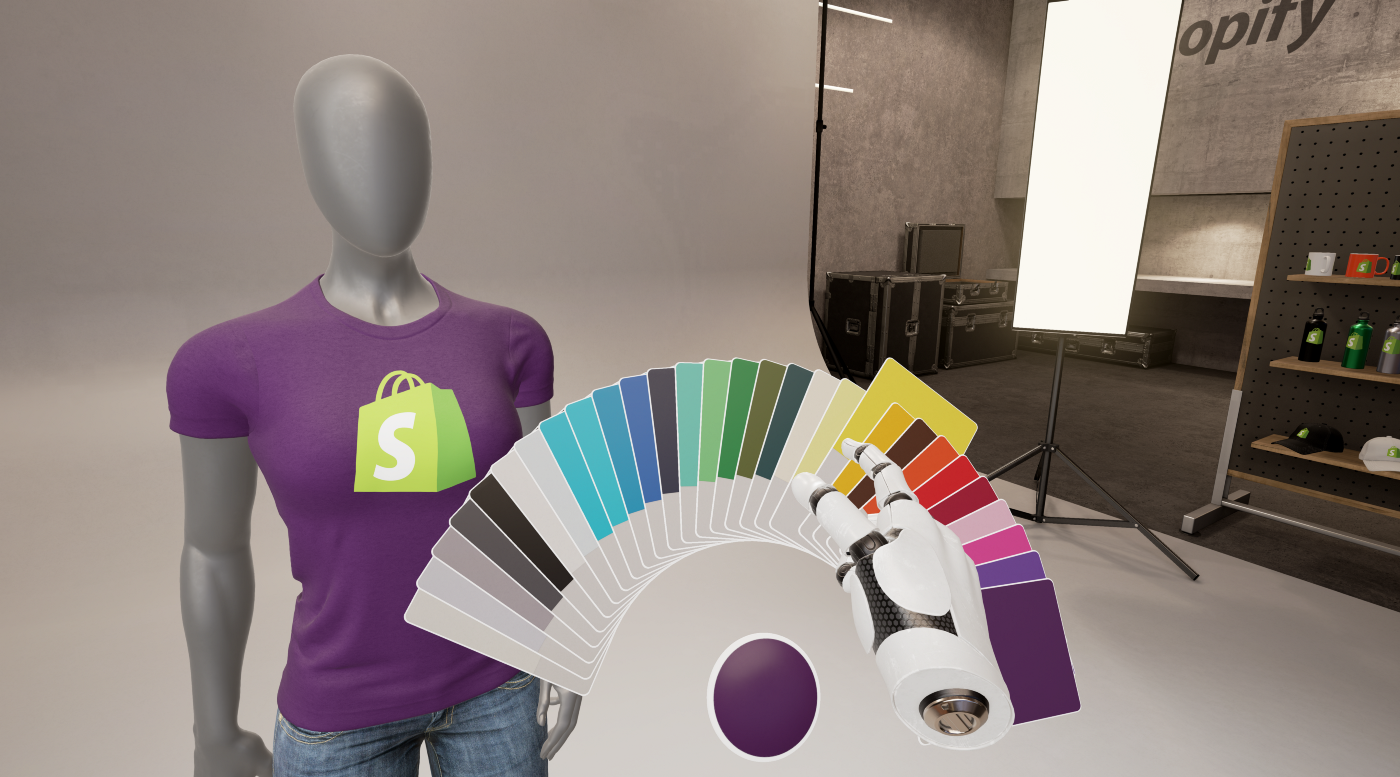
Take the customers through your store, showing them your best inventory and product offerings first hand, like Shopify. The e-commerce giant is about to release their all-new thread studio, which is a VR app that will take consumers into a virtual studio to view t-shirt designs and other apparel.

Image via Shopify

Once they’ve mixed and matched colors and found the design that’s best for their project, they are sent to Shopify’s print-on-demand provider, Printful. From here, they can turn their virtual vision into a real-life, tangible product. As brick-and-mortar stores continue to shut their doors, they’ll be replaced by these virtual stores that allow consumers to walk through and browse without leaving the house.

Seek Long Distance Customers -- Yes, Really

Not that you should only seek customers who live far away, but VR will make it easier to craft content to a more widely located buyer pool.

Just think about how VR will transform the home buying process. If you’re a realtor, you’ll be able to take potential buyers through a completely virtual tour of your property. People from around the world can see a home inside and out like they’re visiting in person.

Forbes writes about this in their article about VR in real estate, only they add another possibility to the mix. They posit that realtors would be able to allow their clients the ability to make custom changes to the home through the VR app, helping the user experience become more interactive, and giving clients a clearer vision of what it’d be like to live in the property.

Show Consumers What Products Will Look Like

Giving consumers a visual of what furniture and household items will look like is an important way to encourage them to purchase.

Home improvement giant Lowe’s has already added a VR element that mirrors the home customization idea. Called Holoroom, it takes customers through a model home to provide a look at what the space would look like with their products.

IKEA has been adopting a similar concept for years, in the form of an augmented reality product catalog. They also recently launched an augumented reality app called Ikea Place.

ikea-place.png

Image via: Architectural Digest

For the record, augmented reality is very similar to virtual reality, only the former layers artificial elements on top of a realistic background whereas the latter generates an entirely artificial environment.

Provide an Emotional Journey

Honor Everywhere provides a virtual reality experience to terminally ill military veterans, allowing them to “visit” the war memorials in Washington D.C. Volunteers are bringing VR headsets into assisted-living centers to give to the veterans and let them enjoy the experience.

honor-everywhere.jpg

Image via WTOP.com

Although there’s nothing quite as unique as this cause, you can still find ways to take customers on an emotional journey through your own VR content.

“Emotional” doesn’t have to mean sadness: think in terms of what your audience is most passionate about and produce content that addresses those areas.

For example, if you’re writing a travel blog that doubles as an affiliate site, your goal is to truly sell the one-of-a-kind experience a customer will feel by purchasing your vacation package. Through the immersiveness of virtual reality, you can take effectively transport them to the beaches of Rio de Janiero, or atop the Eye of London in a millisecond of time.

You can even take a page out of the always adventurous MythBusters’ playbook, and give consumers a first person tour of a wrecked ship that rests in shark-infested waters.

There’s nothing like a swim among sharks to rouse people's’ emotions.

Embrace Your Location

If the goal is to immerse your virtual audience into a new space, then it only makes sense to show them a fun location.

Offer them a virtual tour around your city, show them a famous landmark, take them to a special event. It’s mid-July at the time of this writing, so a San Diego company might want to show their audience around Comic Con -- just an example.

Use Outside Content

Perhaps the most underrated -- or under talked about -- aspect to content marketing is the cultivation of a community of users, many of whom can contribute their own content.

Thanks to tools like Facebook Spaces, Periscope, and now YouTube, your brand can easily integrate user-produced VR videos onto your website.

Reach out to consumers through channels like social media, email marketing campaigns, and calls-to-action on your website.

What to Do as a Content Creator?

Should you overhaul your entire content strategy to make room for virtual reality? For most of us, the answer is no.

But 2017 is the year we should at least start acknowledging its existence, and begin experimenting with it. Content creators should A/B test with and without virtual reality technology, then gauge the user’s response.

Rather than dedicating your entire site to VR, start with individual posts or pages, then begin building as you see fit.

Free Content Marketing Workbook


from Marketing https://blog.hubspot.com/marketing/content-marketing-strategy-for-virtual-reality

How to Identify Which Experiments to Run

The last time I made an appearance here on the HubSpot Marketing Blog, I wasn’t shy about my love of experiments.

At the same time, I wasn’t shy in my sense that, all too often, they’re conducted for the wrong reasons. We talked about how the purpose of online experiments is to answer questions about how people use your website.

But how do you know which questions to ask? And how do you know whether experiments are even a viable option to answer your questions in the first place? Before you jump in, you need to make sure you know these things.

soi-anchor-cta-2017

Not sure where and when you should start? Fear not -- we’re here to help. Let’s get to it.

How to Tell If You Can Run Experiments

Before you come up with experiments to run, you need to make sure you can accurately run them. Experiments should be completely off the table until you have an established online presence and means to track behavior. To do that, you’ll need five things.

1) Traffic

In order to trust that the results of an experiment are unlikely to be influenced by randomness, you need to have a high volume of traffic. Some experiments require larger sample sizes than others -- even hundreds of thousands, in some cases -- but typically, you'll need a minimum of 100 unique page views per day to reach statistical significance within a reasonable amount of time.

2) Goals

In an experiment, your hypothesis is the statement you’re working to prove. But what is it that you’re trying to improve as a result of this test? Those are your key performance indicators (KPIs) -- the quantifiable measures of the experiment’s success. Without those, you have no North Star to guide the purpose of your experiment, or the objectives behind it.

3) Tracking

In order to measure and observe the performance and results of your experiment groups, you’ll need to establish which data you’ll be tracking and monitoring. In the digital realm, that might include factors like:

  • Which pages are people visiting?
  • Where did they come from?
  • What are they doing once they arrive at those pages? Are they converting, bouncing, or taking another action?

4) Baseline Metrics

Even if you’re hoping to make improvements to your funnel, before you start an experiment, you should have an established, recorded funnel conversion rate (CVR). In other words, before you begin, you should be able to track:

Funnel visit -> retained customer

If you try to start an experiment without that information, you’ll have no benchmark to compare where you were prior to running it -- and therefore, you won’t know if you’re any better or worse off as a result.

5) You’ve picked all of the low-hanging fruit.

Make sure you’ve fully built out and iterated on all of the basic requirements for your funnel to work or even operate correctly. For example, in the ecommerce sector, you might want to do something like optimize your online product catalogue. But you can’t do so until you’ve made sure every product is listed there, you have a complete online checkout system, and have a way for visitors to contact you for customer service.

We have a phrase for this step: “Don’t start hanging up pictures before you paint the walls.”

How Do I Know If I Have These Five Things?

If you find yourself asking that question, we recommend running an A/A test -- an experiment where you go through all the motions of running and tracking an experiment, without actually changing anything. We do this in three steps:

  1. Run the dummy test for five business days.
  2. Take the test down.
  3. Analyze the results.
    • Do you have 500+ unique users enrolled in the experiment?
    • Can you track both experiment groups full funnel?
    • Is funnel CVR about equal for both experiment groups?

So, do you have those five things? Nice job -- you’re already ahead of the curve. But experimentation still only makes sense when you can identify questions worth answering through quantitative research.

Identifying experiments

First things first, you need to pick a funnel that you want to optimize through experimentation. Once you have your funnel, identify the unanswered questions you have about how your audience moves between its stages. To identify unanswered questions, we need to take stock of what we already know.

Identifying who moves through your funnel, and why

Do you know exactly who’s entering the funnel and from where, with quantitative and qualitative data to back it up? How about why they’re entering the funnel, with the same supporting data? If you don't know the answers to these questions, this is where you should start.

Next, if you look at your funnel, can you figure out why people aren’t converting between steps?

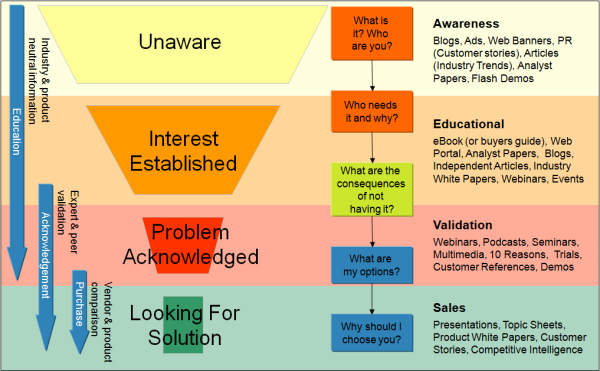
buyers_journey-resized-600-1.png Source: Apolline Adiju

Identifying knowledge gaps for how people move through your funnel

Let’s look at the following conversion:

Basic visit > purchase

Our goal is to identify why people do not convert between steps in our funnel. To find out, we need to list reasons why we think people are not converting, and seek out data to back up our claims. We will know that we have listed the right reasons when we can account for more than 100% of unconverted users, with supporting data.

  • Are people not purchasing because:
    • They have unanswered questions about the product? (Let's say this reason accounts for 5% of non-purchasing users.)
    • They aren’t ready to make a purchase yet? 10% of non-purchasing users
    • They don’t see how the product fits into their lives? 40% of non-purchasing users
    • The product doesn’t align with what they are looking for? 5% of non-purchasing users
    • There are better-priced alternatives? 10% of non-purchasing users
    • There are alternatives with more or better features? 10% of non-purchasing users
    • They lack confidence in the product or the company that sells it? 30% of non-purchasing users

Note: These percentages total >100% -- each given user often has multiple reasons for deciding not to purchase.

If you find that you're struggling to put together a list of reasons as to why people don't convert, you'll need to gather qualitative feedback from your customers.

Once you've put together a thorough list, take a step back and look for areas of opportunity. For example, on the list above, hone in on, "They don't see how the product fits into their lives," and ask, "Why?" Assuming we have product market fit, there must be something we don't understand here. Otherwise, how can 40% of non-purchasing users be unable to see themselves using the product? It could become a fundamental question that we aim to answer through quantitative experimentation.

To boil it down: Experiments answer questions. To identify experiments, you need to identify gaps in your knowledge, and to do that, list what you do know -- that will help you more easily identify what you don't.

Next Steps

We hope that this post has provided you with the tools to identify when you should run experiments. In my next post, we'll get into ways you can discover the unanswered questions about your funnel, and prioritize those questions to maximize your investment in a given experiment. Plus, we'll provide a helpful framework for doing so.

How do you identify which experiments to run? Let us know your approach -- and hey, we might even feature your experiment on our blog.

free trial of hubspot's social media software

from Marketing https://blog.hubspot.com/marketing/how-to-identify-experiments