Tuesday, 2 October 2018

Everything You Need to Know About Facebook's Recent Data Breach

When Facebook announced last Friday that 50 million user accounts had been compromised, many of us weren't sure what to think.

Did that mean 50 million users had been exposed to content from a coordinated misinformation campaign, a la the 2016 U.S. presidential elections?

Or did it mean that their personal data had been improperly harvested by an app developer, as was the case for 87 million users in the Cambridge Analytica scandal?

Neither. This time, the bad actors were hackers -- and they were able to take advantage of three separate site bugs in a way that allowed them to take over user accounts, and use them as if they were the account owners themselves.

But it seems as though there's a widespread misunderstanding around what exactly happened, and just how serious the implications might be. And that's understandable -- it's a complex hack about which not a ton of information has been revealed, especially by Facebook, leading to a mixed reaction among users.

Here's what happened -- as well as what our data shows about user sentiment in light of the latest breach, and what could be behind that reaction.

A Breakdown of What Happened

Facebook first reported the breach on Friday, September 28 -- approximately three days after the full issue was allegedly first discovered, according to an official statement written by VP of Product Management Guy Rosen.

There was an usual spike in activity detected by the site around the middle of September -- the 16th, according to remarks made by Rosen during a press call -- which led to an investigation and the full discovery on the 28th.

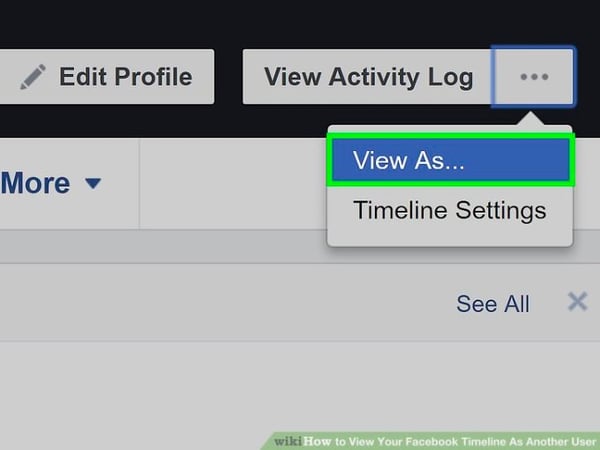
It began with a vulnerability in the site's "View As" feature, which allows users to see what their profiles might look like to another user.

Facebook-View-As

Source: TechCrunch

Using the View As feature should allow you to do only that -- and when functioning properly, it blocks out any ability to enter text into compose boxes or otherwise alter the profile being viewed.

However, due to this first bug, View As provided the opportunity to upload a video.

It's because of that video uploader being displayed that the second bug occurred.

For the second bug, the video uploader improperly generated an access token.

What's an access token? Essentially, an access token allows you to use one account (like Facebook, Twitter, or Google) to log into several different services or apps.

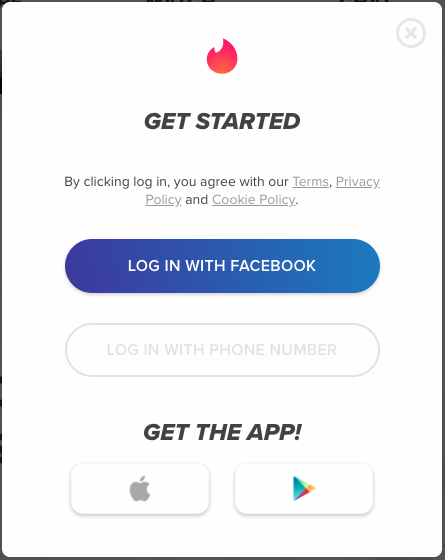
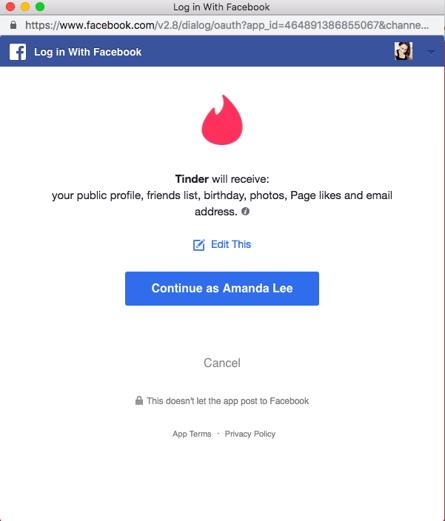
You might be familiar with Facebook Login, which allows users to log into an app using their Facebook credentials, whether it's Facebook itself or another app using these permissions, like Tinder. The images below show what a Facebook Login looks like on Tinder.

Screen Shot 2018-10-01 at 5.07.40 PM

Screen Shot 2018-10-01 at 5.07.50 PM

That access token then provides the third-party app with access to the user's Facebook data -- such as the public profile, friends list, birthday, photos, Page likes, and email address indicated in the Tinder login pictured above.

HubSpot Director of Web Development Dmitry Shamis describes an access token as "a password you don't have to reenter," which allows you to stay logged into both Facebook and these other apps without having to go through the process again.

And here’s where the third bug comes in. The access tokens generated by the first and second bugs were actually for the accounts of users whose names were entered in the "View As" box, and not the user whose profile was being viewed.

As Rosen put it: the access token generated "was not for you but the person being looked up. That access token was then available in the HTML of the page, which the attackers were able to extract and exploit to log in as another user."

Therefore, the hackers could "use the account as if they are the account holder," Rosen said. The access tokens of roughly 50 million users were taken. Facebook also said that an additional 40 million users were subject to a “View As” look-up over the last year -- though it is not clear if access tokens were taken for those accounts.

Why It Might Be Worse Than It Looks

Facebook has outlined the measures it's taken in response to the breach, starting with repairing the "vulnerability," removing the View As functionality (for now), and doing a full reset of the access tokens for the 50 million accounts affected by the hack.

According to remarks made by Rosen during a press call last Friday morning, that reset made the access tokens taken by hackers "not usable anymore."

But according to Jason Polakis, an assistant professor of computer science at the University of Illinois at Chicago, that might not be the case, based on findings from a study he and others at the university conducted.

According to the study's findings, if the hackers in this Facebook breach did, in fact, gain access to third-party apps as the users whose accounts were compromised -- there are ways for them to keep that access, even if the tokens are reset, as Rosen described.

Now, Polakis was sure to specify that this phenomenon might not be "applicable here." But Facebook has said itself that it has very little information about how these access tokens were used by the hackers, and is uncertain of when the tokens were first obtained.

According to Axios, Tinder has since said it hasn't found any "evidence to suggest accounts have been accessed based on the limited information Facebook has provided" -- but at the same time, Facebook hasn't provided the app with a list of users affected by the hack. Having that information, Tinder said, would be "very helpful" in determining how the stolen access tokens may have been used on its app.

Spotify, which also offers Facebook Login, also told the publication that it has not experienced a breach as a result of the hack. Facebook says that its investigation into the issue is still in its early stages.

Public Perception: Do People Care About the Hack?

On the Monday after news of the breach first broke, we ran two surveys.

The first survey asked 727 internet users across the U.S., UK, and Canada: "Following Facebook's site hack announced last week, are you more or less likely to trust Facebook with storing your personally identifiable information?"

Nearly half of the respondents said that they're less likely to trust Facebook with their personally identifiable information.

Following Facebook's site hack announced last week, are you more or less likely to trust Facebook with storing your personally identifiable information_ (1)

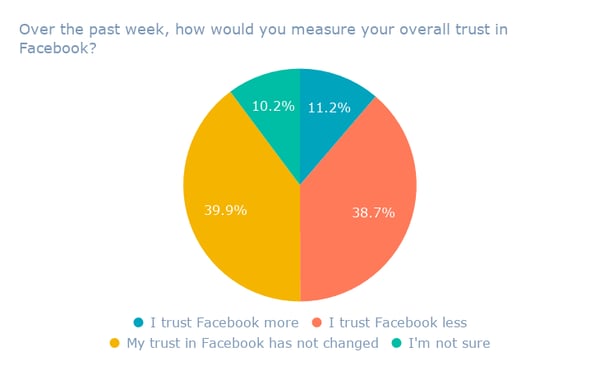
Then, we ran a second survey, where we removed any mention of a site hack. We asked a separate audience of 753 internet users across the U.S., UK, and Canada: Over the past week, how would you measure your overall trust in Facebook?

Over the past week, how would you measure your overall trust in Facebook_

Notice the difference in responses. This time, almost as many people who said that their trust in Facebook has decreased indicated that their trust levels in the company have stayed the same.

So what's to explain for the discrepancy?

Despite providing an option in the first survey for "I didn't hear about the site hack," I wondered how many respondents chose that answer before looking up the Facebook hack.

Was it possible that because we included the hack in the question, it prompted respondents to seek more information before answering the question? Do social media users have to be told that they should be outraged? Or is it just that people aren't really surprised, given Facebook's already tumultuous year?

If you ask HubSpot VP of Marketing Jon Dick, the answer may lie in the third answer.

"My feeling here is that people just assume that their data is constantly breached, so the Facebook news didn't even alarm people. You see that in your second results," he said. "But when we trigger people that something bad did in fact happen, we elicit more responses."

Combine that lack of alarm -- unless otherwise prompted -- with the fact that many users still rely on Facebook for a number of purposes. Monthly active user growth may have slowed, but globally, 223.4 million people are still on the site every month.

"My personal opinion is that people are making mental tradeoffs. It's a primary connection point to family members, to news, to society at large," says HubSpot VP of Marketing Meghan Keaney Anderson. "And for now, there is no viable replacement to that. The trade off I'd argue people are making is the very real value of that connection point, versus the not-yet-personally-actualized threat to privacy or security of data."

What's Next

As for what’s next, time will tell. As Facebook has said itself -- the investigation into the breach is still in its earliest stages.

That could mean that the full impact on users could be yet-to-be-determined or discovered -- and as more information is revealed, it could continue to impact the public perception of Facebook.

"I think some people are unlikely to change their behavior until they suffer an acute impact of the loss of privacy," says Keaney Anderson.

For now, what can the rest of us -- marketers included -- do to deal with and address the issue?

For her part, Keaney Anderson suggests that the main task is keeping audiences informed.

"Some of the work that could be done at this point is to educate people on what they should be watching out for as a result of this breach in data," she advises. "That could help people to calibrate their response."

We'll continue to cover the issue as more details come forward.


from Marketing https://blog.hubspot.com/marketing/facebook-account-hack

A Blog Isn’t a Blog, It’s a Business

blog

I wrote my very first blog post on July 24, 2005. That blog post is no longer live because it was terrible.

The post was called, “Winning the Search Engine Marketing War.”

It was 412 words long, contained no images, no external links, and it didn’t provide much value because it didn’t teach you anything.

But you know what, back in 2005, the blog post was pretty darn good.

See, I wasn’t competing with a lot of blogs back then. Currently, there are well over 440 million blogs and back in 2011, that number was 173 million. And in 2005, the web was still so small that there were only 64 million websites (with only a small portion of them being blogs).

In other words, my first blog post was pretty darn good because something is better than nothing. People were just happy to get some information, even though it wasn’t great.

But over the years, blogging has changed. What it used to be in 2005, isn’t what it is today.

What blogging used to be

A blog used to just be a blog.

It was a place where you would share your personal experiences with the world. From photos of the places you traveled to and blogging about the food you ate to even sharing personal information about your family life…

In 2005, social networks weren’t popular. Facebook launched in 2004, but it wasn’t what it is now. And sites like MySpace focused heavily on music.

As social networks evolved, people realized it was easier to share personal stories on Facebook and Instagram than it was to write a whole blog post.

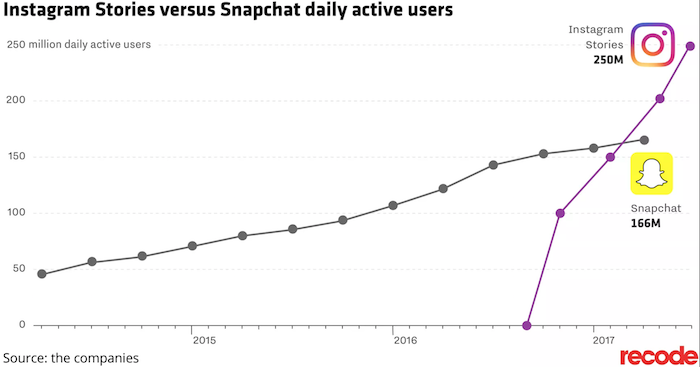
instagram stories

Over 250 million people share what they are doing in their personal life each day just on Instagram. All you have to do is talk (or look) into your phone for just a few seconds. It’s really that simple.

And that’s why more of you use social networks on a daily basis than a blog.

Just think of it this way… if you wanted to update your friends on your life, is it easier for you to just upload some pictures to Facebook or is it easier for you to write a blog post?

Of course, it’s easier to just upload some photos to Facebook. It’s why Facebook is so popular.

For that reason, people started to focus their attention on Instagram, Facebook, Twitter, LinkedIn, and Snapchat over blogging.

So why do people continually create more blogs?

There are many reasons why blogs have grown in popularity. As I mentioned above, there are well over 400 million blogs today.

The biggest reason why blogs have grown in popularity is that you are an end user and continue consuming the content that blogs put out.

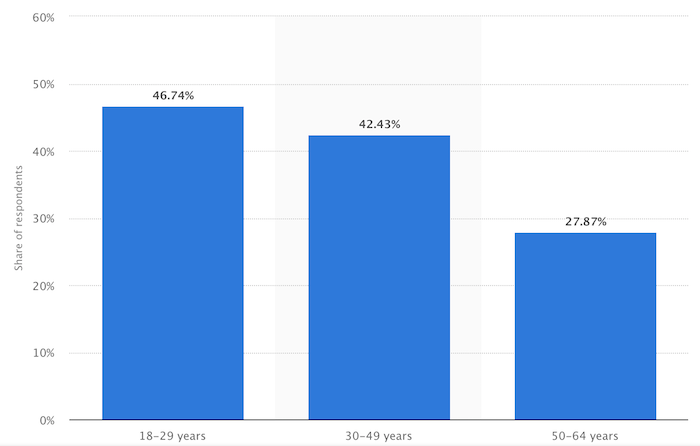
Just in the United States alone, 42.23% of people from the ages of 18 to 49 read blogs.

united states reads

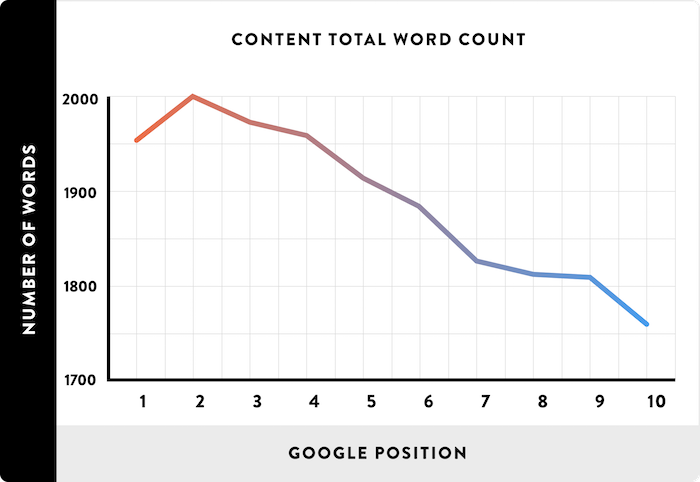
And because people want to read blogs, Google has no choice but to rank them. The average page that is listed on page one of Google has 1,890 words:

word count

There are many reasons you may want to create a blog, but from someone who blogs on a weekly basis and has been for 13 years, here are the main reasons to have a blog:

  1. You control your own destiny – social networks have restricted how many of your friends actually see your content. With a blog, you have more control over your destiny. You can collect emails to get people back to your site, you can build a push notification subscriber list, you can rank your content on Google… overall, it’s just easier to get a consistent stream of traffic from a blog than it is from a social profile because you aren’t relying on 1 traffic source. This is more important than ever because the top referring sites on the web are starting to send less traffic out to other sites.
  2. Paid ads are expensive – Google generate 6 billion dollars in ad revenue in 2005 and that number shot up to 95 billion in 2017. With ad costs continually rising, you have no choice as a business but to find other traffic channels. A blog is an obvious question as Google loves ranking text-based content. Just look at Wikipedia, they rank for everything and generate 5.4 billion visits a month.
  3. Marketing has moved to an omnichannel approach – there are currently 1,766,926,408 websites on the web. In 2005 that number was only 64,780,617. That’s a 2,627% increase. That means you as a business have more competition online, which gives consumers more choices. Why should someone choose you over the competition? Well, branding plays a huge part, if you can get a consumer to see or hear about your brand 7 times they are much more likely to be a customer. A blog creates another additional touchpoint.

A blog isn’t a blog, it’s a business

As more sites have come online, SEO has become more competitive. Yes, more people are using Google, but they are searching for the same popular terms.

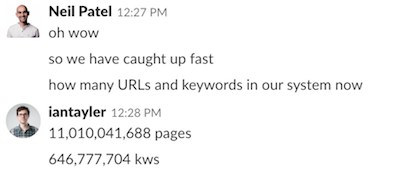
With Ubersuggest, we have a database of 646,777,704 keywords.

word database

And out of those keywords, only 15,301,405 keywords generate a search volume of an excess of 10,000 searches per month.

As more people come online, it doesn’t mean that they search for brand new keywords. It just means that the popular terms get even more popular.

That’s why it is harder to get people to come to your site over the competition because you are competing with more companies to get those eyeballs.

See, as SEO has become more competitive, you have no choice but to treat it as a business. It takes time and money to produce content. It takes time and money to promote your content. And then once you have those visitors, it takes more time and money to convert those visitors into paying customers.

In other words, because it is so competitive, you won’t do that well unless you put in tons of time or money (or ideally both).

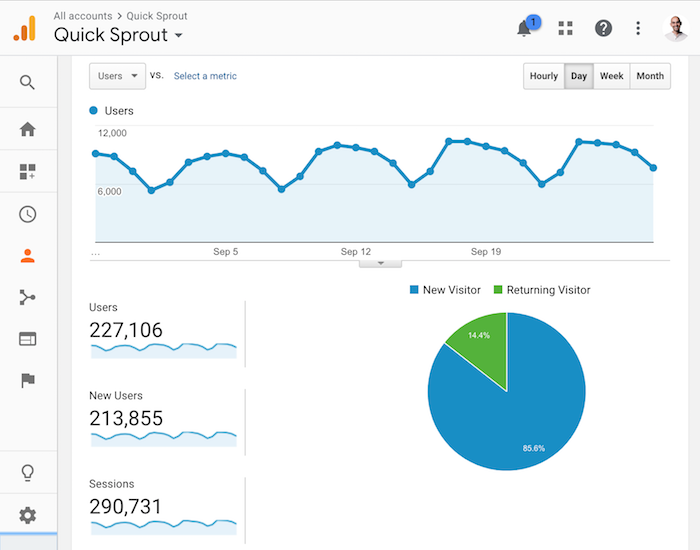
Just look at Quick Sprout, the marketing blog I don’t put much money into it. Even though it’s older than NeilPatel.com, it generates a lot less traffic.

quicksprouttraffic

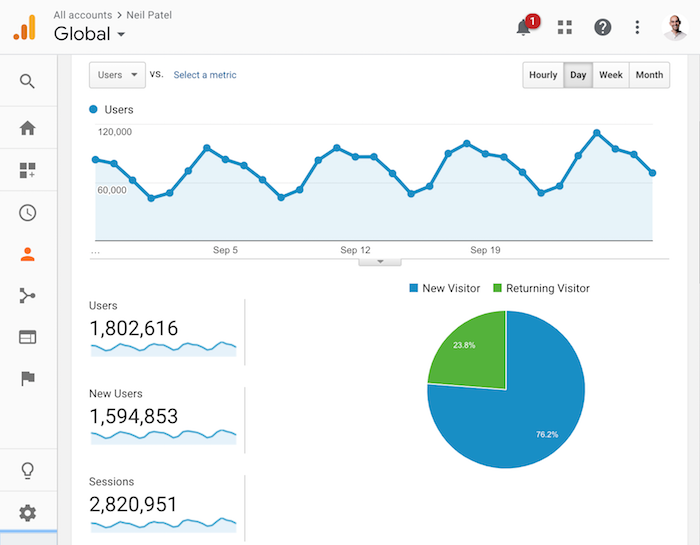
NeilPatel.com blog generates 693% more traffic because I put over 6 figures into the blog each month (mainly in developing free tools and creating audio and video content), and I treat it like a business.

neil patel traffic

Conclusion

Look, I am not trying to persuade you into not building a blog. But I believe most companies should have a blog. And if you don’t have one, just follow this guide to get up and running.

A blog is the only way you are going to rank well on Google and generate traffic without directly paying for it by using Google AdWords or Facebook Ads.

But if you want to do well, you can’t treat your blog like a “blog”… you have to treat it like a business. If you don’t, then you won’t do well.

Here are the 3 important steps you need to take if you want to do well:

  1. Focus on writing amazing content consistently – it’s not about writing one or two amazing posts… you have to be consistently awesome. The market is so competitive, you can’t write 400-word blog posts as I did in 2005. Sure, if you are in a new niche with no competition, by all means, write 400-word posts, but the chances are you are going to eventually have some competition. And if you don’t have the time, you should just hire a writer to help you out.
  2. Promote your content – after you have content, you’ll have to promote it. Promotion isn’t easy but I’ve broken it down into 4 steps for you. Just follow them and you’ll do well.
  3. Focus on monetization last – most bloggers who get this far face one big problem… as their traffic increases their revenue typically stays flat. Just because you have more visitors, it doesn’t guarantee an increase in revenue. Towards the end of this blog post, I teach you how to convert those visitors into leads and customers. Follow them.
  4. Don’t forget about voice – I know I said you only have to follow 3 steps, but if you’ve followed all of them successfully, you’ll need to start thinking about voice. 40% of adults use voice search daily, so don’t take it for granted. Follow this guide to ensure that you capture the voice search market share before your competition.

What do you think about blogging? Are you going to start taking it seriously?

The post A Blog Isn’t a Blog, It’s a Business appeared first on Neil Patel.


from Blog – Neil Patel https://neilpatel.com/blog/a-blog-isnt-a-blog-its-a-business/

How to Make Your Marketing Automation More Intelligent with AI

Many organizations are turning to marketing automation to streamline, automate, and measure marketing tasks and workflows. 53% of B2B organizations are using marketing automation technology today, and 37% surveyed say they are planning to implement it, according to an eConsultancy report. Meanwhile, artificial intelligence (AI) is also making waves in the industry. It’s reported that 70% of enterprises expect to implement AI in the next 12 months, according to Forrester.

While combining marketing automation with AI seems like a potential way to prepare your business for the future, you may have questions. What are some best practices to implement? What are the benefits of using marketing automation with AI? How will all this impact future business opportunities?

In this blog, I’ll examine some benefits of combining AI with your marketing automation, best practices of deploying the technologies together, and predicted trends to look out for.

Benefits of Combining AI with Your Marketing Automation

Increased Efficiency

Currently, many organizations face the challenge of trying to manually manage all the various marketing efforts. This often takes a lot of resources to operate the marketing technologies stack. Marketing automation, when combined with AI, can cut down on risks created by an error-prone, manual approach and help speed up time.

More Relevance and Improved Marketing Performance

If the marketing message is not relevant to the audience, the customer will tune out. When there’s no relevance in the marketing message, the customer’s expectations are not met. However, combining AI and marketing automation can help you predict the right programs for the right people. You can input your goals and let the combined technologies guide you from broad audiences to a segment of one.

Better Customer Experiences, Increased Loyalty, and Greater Customer Value

When marketers use AI with marketing automation, they create a superpower. Marketers can enhance their campaigns and programs by drawing on everything they know about their consumers to tailor experiences with speed and precision. And this is possible on a massive scale.

Increase Ability to Drive Business Growth

Marketing is often deluged by the growing volume and velocity of data. AI can work with marketing automation to empower marketing’s ability to translate data into decisions, meaningful interactions, and positively impact business outcomes.

Tap into Real Data Insights Faster

As covered, it’s all about the data today. However, the real challenge is quickly and accurately turning this data into actionable insights. Adding AI to marketing automation can help you harness all your audience data to auto-optimize millions of experiences with precision. In short, you can turn all that data into strategic and tactical insights to drive more value.

Best Practices Deploying AI with Marketing Automation

Before you jump head-first into combining AI and marketing automation, consider these best practices:

Start Small and Test into It

It’s important to see what works for you. Unfortunately, there is a lot of hype in the industry, and many vendors are overpromising what the average company can achieve. Is the technology easy to deploy? How does it integrate with existing solutions at your organization? Is the vendor innovating or is the tech static?

Identify and Prioritize Areas

Decide where the technology can have the biggest impact. How will the AI have the most significant impact to optimize customer experiences? Will the AI technology help to orchestrate engagement?

Invest in People and Processes

AI is not about robots and machines taking over human jobs. It’s about humans teaching machines how to work smarter. Furthermore, AI needs a team as well as a plan and process in place for it to succeed. Invest as much as 5-10X more than you spend on technology.

Get Leadership Buy-in Earlier

This helps break down silos and keep everybody aware and invested in the efforts. Getting early buy-in and commitment from the C-suite can help to set expectations and goals. Many executives are excited about AI, but you want to make sure they understand how it will fit into the overall marketing efforts and technology roadmap.

Some Predicted Trends with AI and MA to Watch

Here are some predicted trends of how AI and marketing automation might work together in the future.

  1. There will be a rise of data lakes built on cloud platforms, i.e., Microsoft Azure or Google. It’s from these data lakes which intelligence will be gleaned, via AI, to inform marketing automation programs.
  1. Customer data platforms will be integrated with AI and used as the source of truth for marketing and customer data. As an example, AI and marketing automation can help reveal customer journey behavior insights to reach them at the most critical and impactful touch points.
  1. A blurring of the lines between lead generation and account-based marketing strategies will occur. This will cause many companies to move to hybrid strategies depending on the target market, business goals, channel performance, and level of sales engagement.
  1. AI-powered intelligent orchestration will help with many of the manual and rule-based aspects of marketing automation. This can increase efficiency and reduce errors often created by manual processes.
  1. More effort and technology will be applied to better marketing performance measurement including advanced attribution, experimentation, econometrics, and journey analytics.

Conclusion  

We’re living in an exciting time where so many technologies are evolving and intersecting. While we can never truly predict where our marketing technology industry is heading, it’s safe to say that combining AI with marketing automation can help prepare your business for future opportunities.

What future do you see for artificial intelligence and marketing automation? I’d love to hear about what you think in the comments.

The post How to Make Your Marketing Automation More Intelligent with AI appeared first on Marketo Marketing Blog - Best Practices and Thought Leadership.


from Marketo Marketing Blog https://blog.marketo.com/2018/10/how-to-make-your-marketing-automation-more-intelligent-with-ai.html

The Ultimate Guide to Social Media Marketing Campaigns

Every month, there are over two billion active users on Facebook, one billion on Instagram, and 365 million on Twitter worldwide.

In the U.S. alone, 77% of the population has a social media account of some kind. Whether it’s to chat with friends, stay connected to people across the globe, or for business and networking purposes, consumers are on social media for a multitude of reasons — and marketers know it.

Due to the sheer number of active users on these platforms, marketers are quickly learning about the importance of targeting their customers through social media. In fact, investments in social media advertising across the world are projected to grow to about 48 billion U.S. dollars by 2021.

With so many people checking their smartphone notifications and social media feeds while traveling, commuting, and even relaxing, what better way to market than on social media?

Social media advertising reaches audiences in a low-cost, impactful, and effective way. This is exactly why social media campaigns have become a crucial marketing technique for businesses everywhere. With billions of people on social platforms — and continued growth in monthly users and influence — it’s hard to imagine how businesses could remain relevant without creating a social media presence.

Using social media will allow you to reach your target audience, engage with current and potential customers, create brand loyalty, increase website traffic, and drive sales. Marketing on social is not just a trend, it’s a powerful industry technique that is here to stay and will help you reach more people all over the world.


How to Set Social Media Marketing Campaign Goals

When creating a social media marketing campaign, you should keep specific goals in mind to ensure your work is as effective as possible. Here are some goals to consider and examples of companies that executed them well.

Improve Brand Awareness

Your business can improve brand awareness through social media by posting your campaigns on a variety of platforms. You can also use specific hashtags and provide followers with incentives for sharing your content and tagging their friends.

Improving your brand awareness through social doesn’t need to take a lot of time either. In fact, 91% of marketers said they noticed an increase in their brand visibility by only spending a few hours per week on social media. Once you have a plan for your campaign, you will be able to map out exactly where and when it should be posted to keep things efficient.

A great example of using social media marketing to raise brand awareness is Apple’s “Shot On iPhone” campaign. Apple’s impressive iPhone cameras allow their 90 million+ users to take pictures that look like they were taken with professional cameras. 

Taking beautiful pictures has also become increasingly important for social media users over the years, especially with photo-focused platforms such as Instagram. Apple decided to mesh these ideas together and launch the “Shot On iPhone” campaign which features iPhone photos taken by customers. 

Users take pictures with their iPhones, post them to social (typically on Instagram in this case), and use the campaign’s hashtag, #shotoniphone, which has been tagged in over 4.3 million posts thus far. Apple shares select photos on their Instagram page to their 6.8 million followers and gives participants a chance to have their photo on a billboard.

Apple’s social media marketing campaign increases brand awareness through their Instagram page, hashtag, and the requirement that people share their photos with their own followers.

shot-on-iphone

Source

Apple started the campaign, but iPhone users are the people doing the hard work. Through this campaign, the company builds a feed of the most beautiful and unique pictures that also serve as a way to improve brand awareness and market the iPhone camera feature.

Connect With Your Audience

Connecting with your audience is important in all types of marketing. In a world with growing distractions and diminishing patience, effective marketing tactics are more important than ever. The good news is that social media has made it easier to connect with potential customers anywhere around the world. 

When working on a social media marketing campaign, you want to connect with your audience both on a surface level — through a follow, comment, or a “like” — and on a deeper level — through a relatable post that gets them feeling a certain way about your brand or products.

Coca-Cola’s ”Share a Coke” social media campaign successfully connects the company with their audience on a deeper level. By selling bottles of Coke with people’s names on them, Coca-Cola personalizes the buying experience which gets customers excited about purchasing and sharing the bottles.

Whether it’s their own name or the name of a family member, friend, or co-worker, customers feel a connection to these bottles of Coke. Some of the bottles even have stickers on them that customers can peel off and wear as a name tag or give to someone else.

Coca-Cola made the campaign even more relatable by creating labels with multiple different spellings of names and including less-common names. Customers can also personalize their own bottle on the company’s website for $5. The company found a way to engage with everyone through this campaign. 

coca-cola-bottle

Source

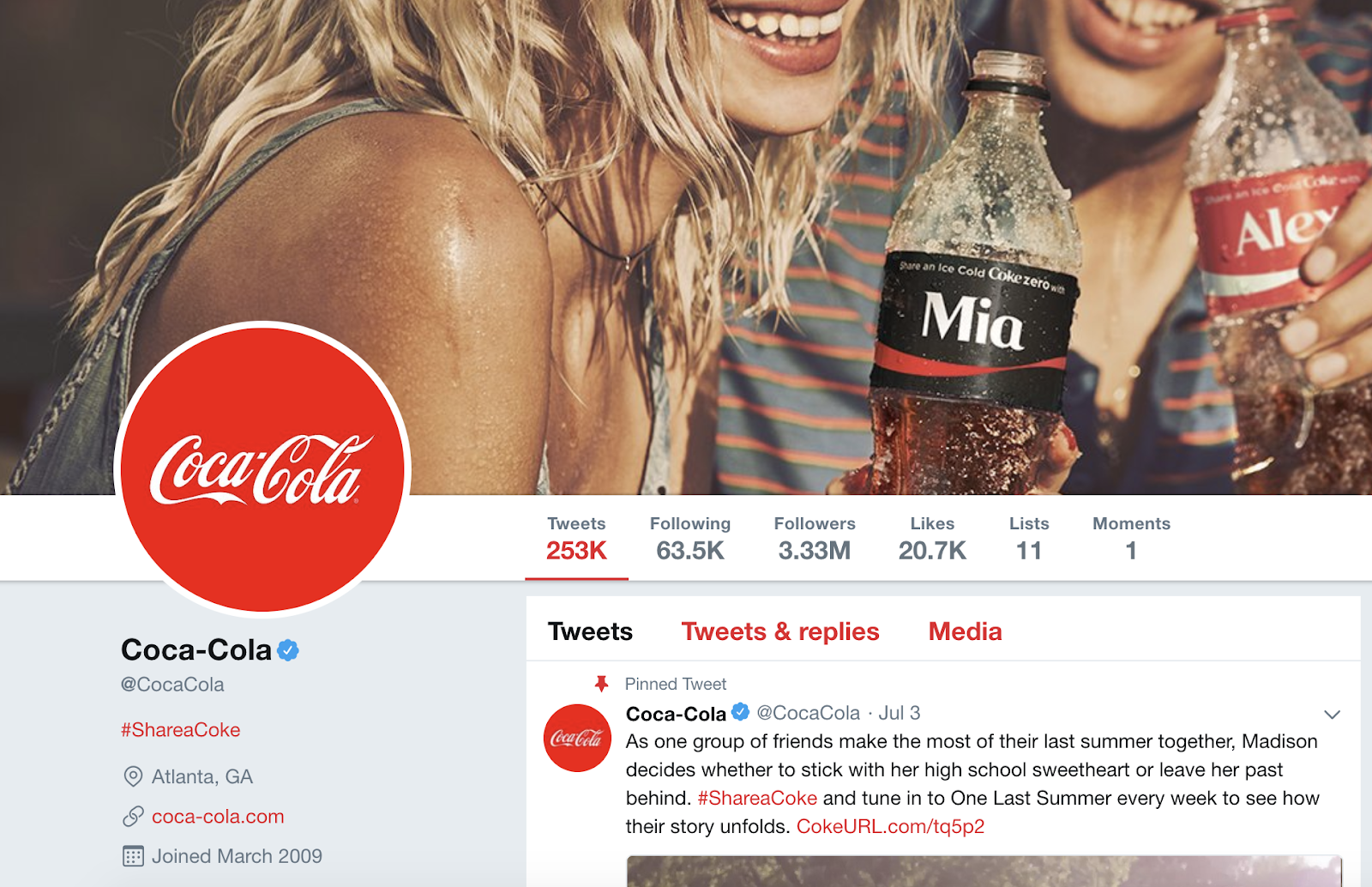
Coca-Cola also promoted a hashtag, #shareacoke, so social media users can share their pictures and videos with friends and followers. Since the campaign has gone viral, the hashtag has been used on millions of Twitter and Instagram posts. And for those who want to share a Coke, or post a picture about their own experience, there are links to more information about the campaign in the bio section of Coca-Cola’s social profiles. 

coca-cola-twitter

Source

The “Share a Coke” campaign gets people excited about a personalized bottle of Coke and makes customers feel connected to the brand on a deeper level. In turn, millions have been motivated to share pictures, videos, and stories on social media about their experiences buying and sharing a Coke.

Increase Website Traffic

Social media is a great way to boost website traffic. Simply putting your website in your profile bio helps guide users to your site where they can learn more about your company or a specific product. Customers have little patience and lose interest quickly. By including the URL in your bio, you will avoid any confusion and keep things simple for your potential customers.

Your campaign team can also respond to followers on social with URLs to specific landing pages on your website. Adding links to your website as part of a natural conversation or organic post is a great way to show them you are listening and boost website traffic.

Lastly, you can just add a website or landing page URL to your actual post on social. You will increase website traffic by providing followers with links to the resources they need to answer their questions and concerns on their own.

For example, many news stations across the country add URLs to their stories on social media. They are often seen posting an eye-catching image, video, quote, or statement along with a link to the actual story.

This works well because it increases their website traffic. If followers don’t follow the link to the station’s website, they can always click “Like”, or “Share” if they still want to interact.

abc-news

Source

Drive Sales

Marketers want customers to get excited about their products and brand. When a business can do this successfully, they will most likely see an increase in sales. Social media campaigns are a great way to get people excited about new products because of the ability to share, use images, get the word out.

One example of this was the Starbucks Unicorn Frappuccino campaign. Starbucks has been known to create special “secret menu” items, and these drinks have become increasingly popular to photograph, as they often make for fun Instagram and Twitter posts. The company took advantage of this and started selling the Unicorn Frappuccino — a bright, colorful drink that was only in stock for a limited time. 

unicorn-frappuccino

Source

Starbucks shared pictures of the Frappuccino all over social media and drummed up excitement around the drink. They also created a hashtag, #unicornfrappuccino, to encourage customers to share their experiences purchasing and drinking the beverage.

The $5 drink was so popular with customers that during the single week it was available in April 2017, there were over 180,000 posts on social media that featured the drink. The drink also led to an increase in same-store sales for the second quarter by 3%, and same-store sales were up 4% in March 2017.

Now that we have reviewed some of the most successful social media marketing campaigns, let’s dive into the ways you can kick start your own.

How to Create a Social Media Marketing Campaign

There are a number of ways to create a successful social media marketing campaign. Plans vary based on industry, social media platform, and campaign type. Use the following tips to create your own social media marketing campaign.

Research Your Competition

In the planning stages of your social media marketing campaign, consider your competition.

  • Which companies are similar to yours and already have successful social media accounts?
  • Which companies have campaigns that you know did well?
  • Do the companies you are reviewing typically conduct giveaways, contests, or live videos?
  • What is engagement like on their social posts?

By taking a step back and asking yourself these questions, you’ll start to understand what’s working well in your industry. You will also be able to determine how you can make your own campaign unique. 

Look for inspiration elsewhere, too. If your competition isn’t on social, you’re not a fan of their previous campaign style, or you have an exceptionally unique business, then look for other campaigns that inspire you and determine how you can apply elements such as a similar style, level of engagement, aesthetic, or a specific message to your own campaign.

Craft Your Strategy

Next, craft your campaign strategy. To determine your campaign goal, first consider your target audience.

1. Appeal to your target audience.

  • Who are you trying to reach?
  • How would you classify your target audience?
  • What are you hoping this campaign will achieve for your company and your audience?
  • How can you create continued engagement with your followers throughout your campaign?

Ensuring your content and messaging appeals to your target audience should always be your top priority. Remember this important rule throughout your social media marketing campaign. Don’t lose sight of who you are trying to connect with and why

Otherwise, your audience will likely scroll right by your social posts or lose interest in your campaign in a matter of seconds. 

Here are some ways to appeal to your target audience on social media:

Consider current trends.

What do people want to view these days? For example, Instagram stories and live streaming have become quite popular. Can you incorporate these trends into your social routine and campaign?

Be informative.

Make your audience want to stop and listen. If you don’t have information worth their time, why would they check out your post or campaign? Provide your audience with an incentive — create a giveaway that requires your audience to read your description from start to finish. In addition, you should also tell them how to participate in the giveaway and when you will announce a winner.

Create unique and compelling visual content.

Whether it’s a video on Facebook or an edited picture on Instagram, make sure your visual content is compelling and entertaining. Give your audience something they haven’t seen before.

Engage with your audience.

After posting on social media, 84% of consumers expect companies to respond within 24-hours. If your followers leave questions, comments, or concerns on your posts, you should reach back out to them. You will form a personal bond with your audience that will make them more loyal to you and your brand. You will also earn their trust more efficiently.

2. Choose your content type and format.

To determine content type, think about why you’re creating your campaign. Here are some instances in which a company might create a social media marketing campaign:

  • Holidays
  • Special occasions or milestones
  • Partnerships with other businesses
  • User-generated content promotions
  • Contests or giveaways

 Consider which content type should be used on what platform. For example, if your campaign uses a lot of still photography, then maybe Instagram is the platform for you. If you require live streaming and longer form video, Facebook might be a good option, and if you want to release shorter bursts of information, Twitter could be a good fit. Think about what each platform is best for and go from there.

3. Manage your results.

No matter why you’re creating your campaign, you’ll probably be interested in knowing your campaign’s level of success.To make any conclusions about your success, you’ll need some type of metrics to measure and monitor throughout your campaign.

A popular way to do this is through a metric tracker such as Google Analytics or HubSpot’s social monitoring and metric tracking tool. This type of concrete data will provide you with information like the amount of overall campaign traffic, how many new followers that you attract (as well as how many followers you lose), your level of engagement, changes in website traffic, and any change in sales.

Promote Your Content

Now it’s time to start sharing your campaign and promoting your content. Consider the following techniques on how to promote and share your content.

Promote one message throughout your campaign.

You should start by promoting one message on multiple different platforms using content that fits the chosen platform. By consistently sharing the same message across your campaign, your followers will hear the same information over and over again, which will allow them to retain your message.

In fact, marketing campaigns in the past have proven that messages are most effective when repeated. Repetition will result in familiarity, which will foster trust between your audience and your message, brand, and product. Redundant messages stick.

Balance your promotional and non-promotional content.

Your followers will notice if you’re constantly pushing promotional content on them. By balancing promotional and non-promotional, your followers will perceive you as being helpful and will want to engage with you more.

This is about your followers not feeling pressured or pushed into becoming a customer. You will be most effective if you provide your followers with promotional content that is balanced out with content that they find helpful and engaging.

Ensure your content is unique to your business.

Create an aesthetic for your campaign that matches your brand. You want this to be unique — anyone that lands on your page should know that it’s yours without reading your profile handle. Being unique and authentic helps you stand out … it also gives people a reason to want to follow you over your competitors.

Engage with your audience regularly.

No matter how many followers you have, you should set aside a bit of time to answer questions, “like” comments, and respond to feedback. By taking the time to engage with your followers, you will give them a personal experience that they won’t forget. These are the types of relationships and experiences that keep followers invested in your brand.

Create a unique hashtag for your campaign.

All major social media campaigns have a hashtag that should be the same across your social platforms. Hashtags allow your team members to keep track of interactions and make it easy for your followers to engage with your campaign. Your hashtag should be unique and memorable.

For example, Snickers has a popular social media campaign, “You’re Not You When You’re Hungry.” They depict people lashing out, losing their minds, and even turning into different people because they are “hangry” … or hungry-angry. These people go back to their normal selves once they eat a bite of a Snickers bar and satisfy their hunger.

Their hashtag for the campaign is #EatASnickers. It’s straightforward, simple to remember, and action-oriented. Additionally, “Eat a Snickers” is also one of their ad taglines, which contributes to the uniformity across the campaign.

snickers-campaign

Source

Automate your content with scheduling software.

Although creating engaging content and interacting with your followers may be time-consuming, there is a way to schedule your campaign posts ahead of time to save you from having to do it in real time.

Tools such as Hootsuite, Crowdfire, and CoSchedule allow marketers to schedule posts with text, photos, videos, hashtags, and more. Some of these scheduling tools even contain analytics that help users determine which scheduled posts are doing well and which posts may need to be modified.

Use live stream to your advantage.

By 2021, live streaming is expected to become more than a $70 billion industry. With live streaming, audience members can watch content in real-time from anywhere around the world, which creates a unique and engaging experience.

Facebook Live is one of the most popular ways to stream live content, followed by other platforms such as Twitter, Instagram, and YouTube. You can use live streaming to update followers on news as it happens, conduct giveaways and contests, interview guests and influencers, or simply make followers feel personally connected to your brand.

The way you promote your content is your decision, but don’t forget to test and analyze your results. This way, you will know if there are any immediate changes that can and should be modified while the campaign is live. You can also apply this information to future campaigns.

Conclusion

Social media has taken the world by storm. Although some trends are changing, social media is here to stay. Social media marketing campaigns are a great option for businesses that want to remain relevant and promote their content in an effective and efficient way. 

With the possibility of significant reach, ability to directly engage with followers and customers, the ease of sharing your content with thousands (or even millions) of people, and the budget-friendly nature of the work, social media marketing campaigns are appealing to both businesses and consumers alike. 

Get started creating unique and engaging content for your social followers and make an impact that drives sales and gets people pumped about your brand.


from Marketing https://blog.hubspot.com/marketing/social-media-campaigns

The Essential Guide to Becoming a Writer

My path to becoming a professional writer is a slightly unconventional one. In college, I majored in economics, only took one English class, and originally pursued a career in financial advising. But today, instead of walking people through their retirement plan, I spend 90% of my work day writing -- and I absolutely love it.

So how did I do it? Well, once I decided to seriously pursue a career in writing, I realized it’s a craft -- sharpening my writing skills would require countless hours and repetitions. So after I finished my homework at school, that’s exactly what I did. I learned how to write.

Writing is an incredible gig for creative people -- it provides fulfillment and financial stability. If this sounds like the career you’ve always wanted -- even if you don’t have a lot of experience like I did -- writing for a living is entirely possible. You just need to be passionate about the craft and disciplined enough to put in the work. My story is proof -- and I’ll teach you how to do it.

Read Every Single Day

When I stumbled upon my first digital marketing internship, I had no idea what content marketing was. So I Googled it, and that's when I discovered HubSpot’s Marketing Blog.

Two years later, after reading posts about content marketing every day, I could distill almost any topic, like a dry economics topic about the consolidation of the grain trading industry, into a blog post-like format. And being able to structure most topics in a digestible way and writing in a conversational tone is what helped me land an internship on HubSpot’s blog team.

Reading is like listening to music when you’re a musician. It improves your writing because it inspires you to create better work. When you read great writing, especially by the masters of your genre or industry, these writers are essentially teaching you their craft -- you just have to pay close attention to their diction, syntax, cadence, voice, and structure. Jotting down your observations or some inspirational thoughts is even better for you.

Reading regularly can also arm you with some of the most important tools  in a writer's arsenal: a refined vocabulary, the ability to quickly grasp new concepts, and the versatility to adapt your voice and style to any audience.

But one of the most prevalent obstacles of regularly reading is finding the time to do it. Most people place reading at the top of their to-do-list but never seem to able to cross it off .

To read everyday, you must hold yourself accountable. Most people can finish a median-length book in only one week if they just read for 45 minutes per day, so all you have to do is keep an active reading list and block off less than an hour on your daily schedule to do so.

If you need help making a reading list, here are the following books, newspapers, magazines, and marketing blogs that I found most helpful when I first started writing:

Now that I’m a full-time staff writer on HubSpot’s blog team, I owe a lot of my development as a writer to the habit of reading one blog post everyday.

Reading and analyzing the marketing industry’s best content taught me how to write well, but it took discipline to read everyday for three years. The good news is that if you just take one hour out of your day to learn about writing, you’ll be able to hone your skills in the long-run.

Write as Often as Possible

Even though I majored in economics, I went to a liberal arts college, so my school’s curriculum was extremely focused on writing. Each class I took had multiple writing assignments. And once I knew that I wanted to work in digital marketing, I started writing all my papers in the form of a blog post. 

My professors were definitely not used to this style of writing and it probably didn’t help out my grades, but it was completely worth it -- I practiced blogging enough to smoothly transition into my writing roles during my internships and, eventually, my first job.

If you’re not in school anymore, though, it’s hard to hunker down and write when you’ve already exhausted most of your mental energy at work. We all feel like turning off our brain and relaxing once the clock strikes five. 

But to master writing and eventually do it for a living, you need to write on a consistent basis. The best writers, like J.K. Rowling, all block off chunks of their schedule to write in solitude almost every day. 

If writing after work every day is a challenge for you, try only writing about your favorite topics. Your passion for these topics can pull you out of the post-work lull. If you need a little more help deciding what to write about, consider using a writing prompt generator like Plot Generator or Writing Exercises.

If you just started writing and you don’t know what to write about or even how to write, consider doing some copyworking. Copyworking is a common copywriting practice where you take an excerpt from your favorite author’s book (or any piece of writing you couldn’t stop reading) and transcribe it word for word.

It’ll help you internalize your favorite writer’s diction, syntax, cadence, voice, and structure, just like reading does. But you'll absorb even more insight than when you read because copyworking forces you to slow down and pay even closer attention to the nuances of great writing.

In the writing community, the majority of the best writers had talent to begin with. But they also had to work incredibly hard to sharpen their skills enough and separate themselves from the rest of their competition. By constantly writing, no matter how good or bad the quality was, and honing their skills through writing exercises, they all learned how to captivate audiences. And you could too.

Fight Through the Writing Blues

I applied for HubSpot’s inbound marketing internship two times when I was in college, and, I’ll be honest, my heart stung when my first application got rejected. Looking back, though, I’m glad I didn’t make the cut.

Getting rejected was what drove me to pursue two other content marketing internships and take two additional writing classes at school, which honed my writing skills and helped me accumulate enough writing samples to prove that I could be an intern at HubSpot the next year.

Clawing your way through the struggle and self-doubt that comes with writing is exactly what you need to do to become a professional writer. It’s an arduous process, but it’s definitely worth it. And if you keep studying the craft and gleaning new insights, despite its highs and lows, you’ll start writing well enough to get hired.


from Marketing https://blog.hubspot.com/marketing/become-writer

The Ultimate Guide to Google Search Console in 2018

At any given time, I have GSC open in two to 10 tabs. It’s helpful on a macro and micro level -- both when I need to figure out what’s happened to a high-traffic blog post that suddenly dipped, and see how many impressions HubSpot is gaining month over month.

I’m a content strategist on HubSpot’s SEO team, which means GSC is particularly useful to me. But anyone who’s got a website can and should dip their toes in these waters. According to Google, whether you’re a business owner, SEO specialist, marketer, site administrator, web developer, or app creator, Search Console will come in handy.

I remember the first time I opened GSC -- and it was overwhelming. There were tons of labels I didn’t understand (index coverage?!?), hidden filters, and confusing graphs. Of course, the more I used it, the less confusing it became.

But if you want to skip the learning curve (and why wouldn’t you), good news: I’m going to reveal everything I’ve learned about how to use Google Search Console like a pro.

This guide covers:

  • Adding your website to Google Search Console
  • Setting up owners, users, and permissions
  • Submitting a site map
  • Understanding dimensions and metrics
  • Adding filters
  • Using GSC (23 use cases)

First things first. If you haven’t already signed up for GSC, it’s time to do so.

Google starts tracking data for your property as soon as you add it to GSC -- even before it’s verified you’re the site owner.

Verifying your Site on GSC

Because GSC gives you access to confidential information about a site or app’s performance (plus influence over how Google crawls that site or app!), you have to verify you own that site or app first.

Verification gives a specific user control over a specific property. You must have at least one verified owner per GSC property.

Also, note that verifying your property doesn’t affect PageRank or its performance in Google search. Of course, the more information you have, the easier it is to rank higher -- but simply adding your website to GSC won’t automatically make your rankings go up.

GSC verification methods

  1. HTML file upload: Upload a verification HTML file to a specific location of your website.
  2. Domain name provider: Sign into your domain registrar (like GoDaddy, eNom, or networksolutions.com), and verify your site directly from GSC or add a DNS TXT or CNAME record.
  3. HTML tag: Add a <meta> tag to the <HEAD> section of a specific page’s HTML code.
  4. Google Analytics tracking code: Copy the GA tracking code that you use on your site. (You need “edit” permission in GA for this option.)
  5. Google Tag Manager container snippet code: Copy the GTM container snippet code associated with your site. (You need View, Edit, and Manage container-level permissions in GTM for this option.)

Google-hosted sites, including Blogger and Sites pages, are automatically verified.

WWW domain or not?

True or false: hubspot.com and www.hubspot.com are the same domain.

The answer? False! Each domain represents a different server; those URLs might look very similar, but from a technical perspective, they’re two unique domains.

However, if you type “hubspot.com” into your browser bar, you’ll land at “www.hubspot.com”. What is this sorcery?

HubSpot has chosen “www.hubspot.com” as its preferred, or canonical, domain. That means we’ve told Google we want all of our URLs displayed in search as “www.hubspot.com/……”. And when third parties link to our pages, those URLs should be treated as “www.hubspot.com/……” as well.

If you don’t tell GSC which domain you prefer, Google may treat the www and non-www versions of your domain as separate -- splitting all those page views, backlinks, and engagement into two. Not good.

(At this time you should also set up a 301 redirect from your non-preferred domain to your preferred one, if you haven’t already.)

GSC users, owners, and permissions

There are two GSC role-types. I know you might be itching to get to the good stuff (cough the data) but it’s important to do this right.

  1. Owner: An owner has total control over their properties in GSC. They can add and remove other users, change the settings, see all data, and access every tool. A verified owner has completed the property verification process, while a delegated owner has been added by a verified one. (Delegated owners can add other delegated owners.)
  2. User: A user can see all data and take some actions, but can’t add new users. Full users can see most data and take some actions, while restricted users can only view most data.

Think carefully about who should have which permissions. Giving everyone full ownership could be disastrous -- you don’t want someone to accidentally change an important setting. Try to give your team members just as much authority as they need and no further.

For example, at HubSpot, our technical SEO manager Victor Pan is a verified owner. I’m an SEO content strategist, which means I use GSC heavily but don’t need to change any settings, so I’m a delegated owner. The members of our blogging team, who use GSC to analyze blog and post performance, are full users.

Here are detailed instructions on adding and removing owners and users in Search Console.

There’s a third role: an associate. You can associate a Google Analytics property with a Search Console account -- which will let you see GSC data in GA reports. You can also access GA reports in two sections of Search Console: links to your site, and Sitelinks.

A GA property can only be associated with one GSC site, and vice versa. If you’re an owner of the GA property, follow these instructions to associate it with the GSC site.

Do you need a site map?

A site map isn’t necessary to show up in Google search results. As long as your site is organized correctly (meaning pages are logically linked to each other) , Google says its web crawlers will normally find most of your pages.

But there are four situations a site map will improve your site’s crawlability:

  1. It’s really big. The more pages you have, the easier it is for Googlebot to miss any changes or additions.
  2. It has lots of “isolated” pages. Any page that has few inbound links from other pages is harder for a web crawler to discover.
  3. It’s new. Newer sites have few backlinks (links from other sites) making them less discoverable.
  4. It uses rich media content and/or shows up in Google News. In these cases, your sitemap makes it easier for Google to format and display your site in search.

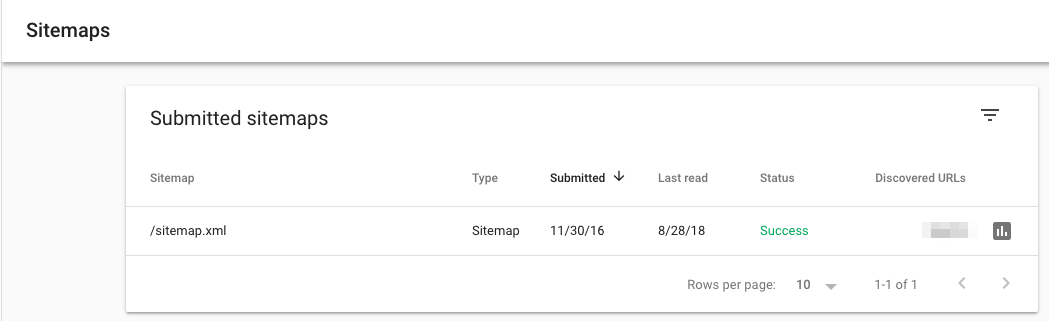
Once you’ve built your site map, submit it using the GSC site maps tool.

GSC site maps report

After Google has processed and indexed your site map, it will appear in the Site maps report. You’ll be able to see when Google last read your site map and how many URLs it’s indexed.

GSC dimensions & metrics

There are a few terms you should understand before using GSC.

What’s a Google Search Console query?

This is a search term that generated impressions of your site page on a Google SERP. You can only find query data in Search Console, not Google Analytics.

What’s an impression?

Each time a link URL appears in a search result, it generates an impression. The user doesn’t have to scroll down to see your search result for the impression to count.

What’s a click?

When the user selects a link that takes them outside of Google Search, that counts as one click. If the user clicks a link, hits the back button, then clicks the same link again -- still one click. If then, they click a different link -- that’s two clicks.

When a user clicks a link within Google Search that runs a new query, that’s not counted as a click.

Also, this doesn’t include paid Google results

What’s average position?

This is the mean ranking of your page(s) for a query or queries. Suppose our guide to SEO tools is ranking #2 for “SEO software” and #4 for “keyword tools.” The average position for this URL would be 3 (assuming we were ranking for literally nothing else).

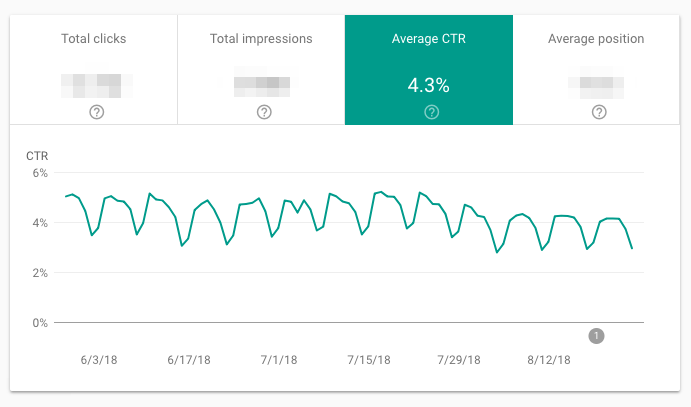
What’s CTR?

CTR, or click-through rate, is equal to Clicks divided by Impressions, multiplied by 100. If our post shows up in 20 searches, and generates 10 clicks, our CTR would be 50%.

Filtering in Google Search Console

GSC offers several different ways to view and parse your data. These filters are incredibly handy, but they can also be confusing when you’re familiarizing yourself with the tool.

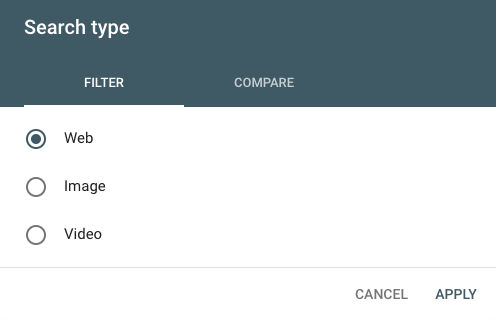
Search type

There are three search types: web, image, and video. I typically use “web,” since that’s where most of the HubSpot Blog traffic comes from, but if you get a lot of visits from image and/or video search, make sure you adjust this filter accordingly.

You can also compare two types of traffic. Just click the “Compare” tab, choose the two categories you’re interested in, and select “Apply.”

This can lead to some interesting findings. For example, I discovered this color theory 101 post is getting more impressions from image search than web (although the latter is still generating more clicks!).

Date range

GSC now offers 16 months of data (up from 90 days). You can choose from a variety of pre-set time periods or set a custom range.

As with search type, you can also compare two date ranges in the “Compare” tab.

Queries, page, country, device, search appearance

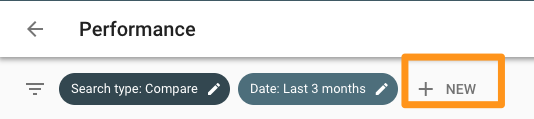
Click “New” next to the Date filter to add up to five other types of filters: query, page, country, device, and search appearance.

These filters can be layered; for instance, if I wanted to see data for SEO-related queries appearing on mobile search, I’d add a filter for queries containing “SEO” on mobile devices. If I only wanted to limit the results even further to posts on the Marketing Blog, I’d add another filter for Pages containing the URL “blog.hubspot.com/marketing”.

You can get very specific here -- I recommend playing around with different combinations of filters so you see what’s possible.

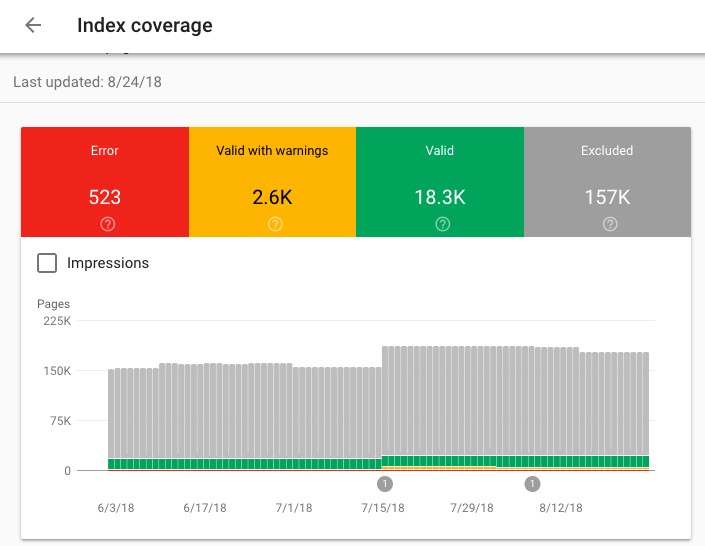
Index coverage report

Each page is assigned one of four statuses:

  1. Error: The page couldn’t be indexed.
  2. Warning: The page is indexed, but has a problem.
  3. Excluded:

Submitted sitemaps

How to Use Google Search Console

  1. Identify your highest-traffic pages
  2. Identify your highest-CTR queries
  3. Find your average CTR
  4. Monitor your CTR over time
  5. Monitor your impressions over time
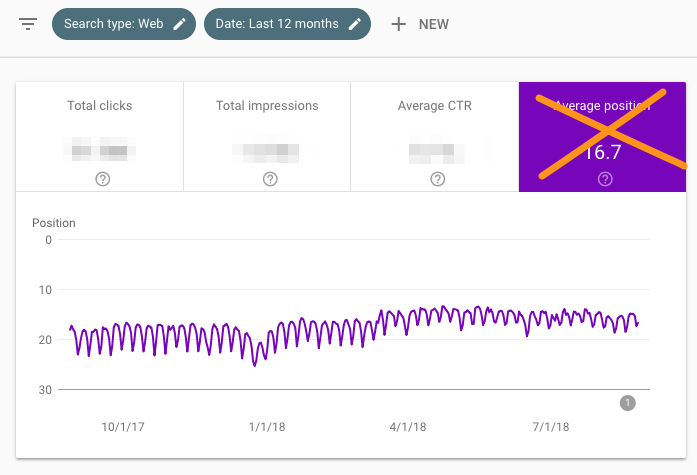
  6. Monitor your average position over time
  7. Identify ranking increases and decreases
  8. Identify your highest-traffic queries
  9. Compare your site’s search performance across desktop, mobile, and tablet
  10. Compare your site’s search performance across different countries
  11. Learn how many of your pages have been indexed
  12. Learn which pages haven’t been indexed and why
  13. Monitor total number of indexed pages and indexing errors
  14. Identify mobile usability issues
  15. Learn how many total backlinks your site has
  16. Identify which URLs have the most backlinks
  17. Identify which sites link to you the most
  18. Identify the most popular anchor text for external links
  19. Identify which pages have the most internal links
  20. Learn how many total internal links your site has
  21. Find and fix AMP errors
  22. See Google how Google views a URL
  23. Go to the old version of Search Console

Can you see why I love GSC? Let’s dig into each use case.

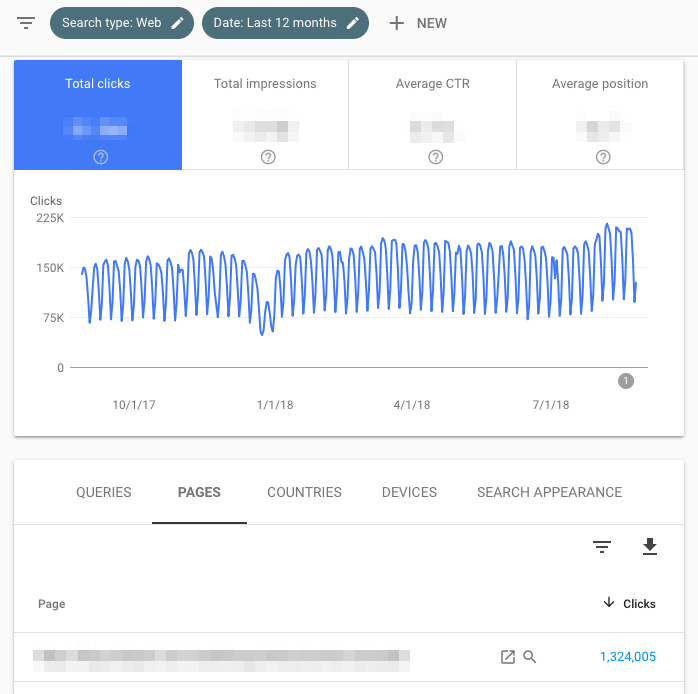
  1. Identify your highest-traffic pages
  2. Click Performance.
  3. Click the “Page” tab (next to Queries).
  4. Change the date range to “Last 12 months”. (A full year gives you a comprehensive overview of your traffic, but feel free to adjust the time period.)
  5. Make sure “Total clicks” is selected.
  6. Click the small downward arrow next to “Clicks” to sort from highest to lowest.

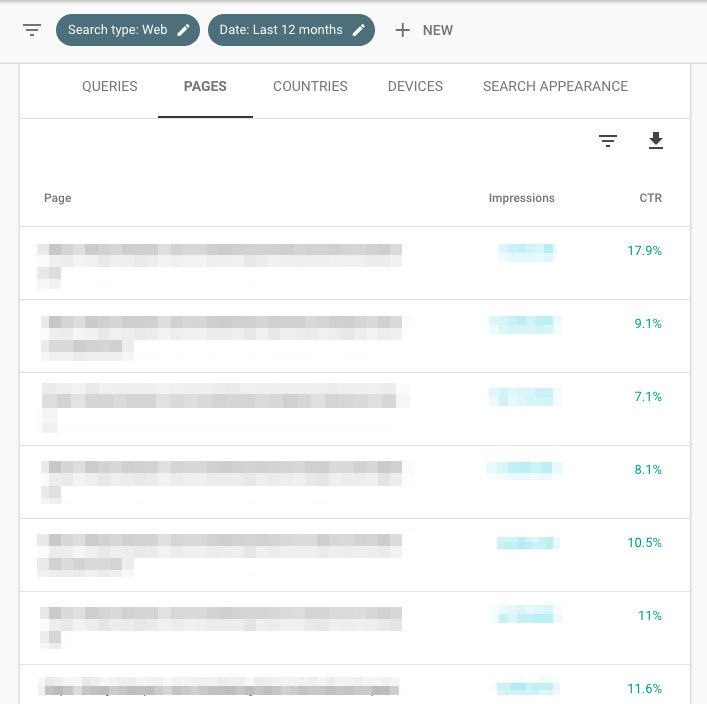
1. Identify your highest-CTR queries

  1. Click Performance.
  2. Click the “Queries” tab.
  3. Change the date range to “Last 12 months”. (A full year gives you a comprehensive overview of your traffic, but feel free to adjust the time period.)
  4. Make sure “Average CTR” is selected.
  5. Click the small downward arrow next to “CTR” to sort from highest to lowest.

Note: It’s useful to look at this in tandem with “Impressions” (check “Total impressions” to see this information side-by-side). A page might have high CTR but low impressions, or vice versa -- you won’t get the full picture without both data points.

2. Look at average CTR

  1. Click Performance.
  2. Click the date to adjust the time period. Choose whatever range you’re interested in. (Alternatively, click “Compare” to analyze two date ranges at once.)
  3. Look at “Average CTR”.
  4. Click Performance.
  5. Click the date to adjust the time period. Choose whatever range you’re interested in. (Alternatively, click “Compare” to analyze two date ranges at once.)
  6. Look at “Total impressions”.
  7. Go to Status > Performance.
  8. Click the date to adjust the time period. Choose whatever range you’re interested in. (Alternatively, click “Compare” to analyze two date ranges at once.)
  9. Look at “Average position”.

3. Monitor your CTR over time

I recommend keeping an eye on CTR. Any significant movement is significant: If it’s dropped, but impressions have gone up, you’re simply ranking for more keywords, so average CTR has declined. If CTR has increased, and impressions have decreased, you’ve lost keywords. If both CTR and impressions have gone up, congrats -- you’re doing something right!

4. Monitor your impressions over time

As you create more content and optimize your existing pages, this number should increase. (As always, there are exceptions -- maybe you decided to target a small number of high conversion keywords rather than a lot of average conversion ones, are focusing on other channels, etc.)

5. Monitor average position over time

Average position isn’t that useful on a macro level. Most people are concerned when it goes up -- but that’s shortsighted. If a page or set of pages starts ranking for additional keywords, average position usually increases; after all, unless you’re ranking for the exact same position or better as your existing keywords, your “average” will get bigger.

Don’t pay too much attention to this metric.

6. Identify your highest-ranking pages

  1. Click Performance.
  2. Click the “Page” tab.
  3. Change the date range to “Last 28 days.” (You want an up-to-date, accurate snapshot of your pages.)
  4. Make sure “Average position” is selected.
  5. Click the small upward arrow next to “Position” to sort from smallest (good) to highest (bad).
  6. Click Performance.
  7. Click the “Page” tab.
  8. Change the date range to “Last 28 days.” (You want an up-to-date, accurate snapshot of your pages.)
  9. Make sure “Average position” is selected.
  10. Click the small downward arrow next to “Position” to sort from highest (bad) to lowest (good).

Because you’re looking at average position by URL, that number is the mean of all of that page’s rankings. In other words, if it’s ranking for two keywords, it might be #1 for a high-volume query and #43 for a low-volume one -- but the average will still be 22.

With that in mind, don’t judge the success or failure of a page by “average position” alone.

7. Identify your lowest-ranking pages

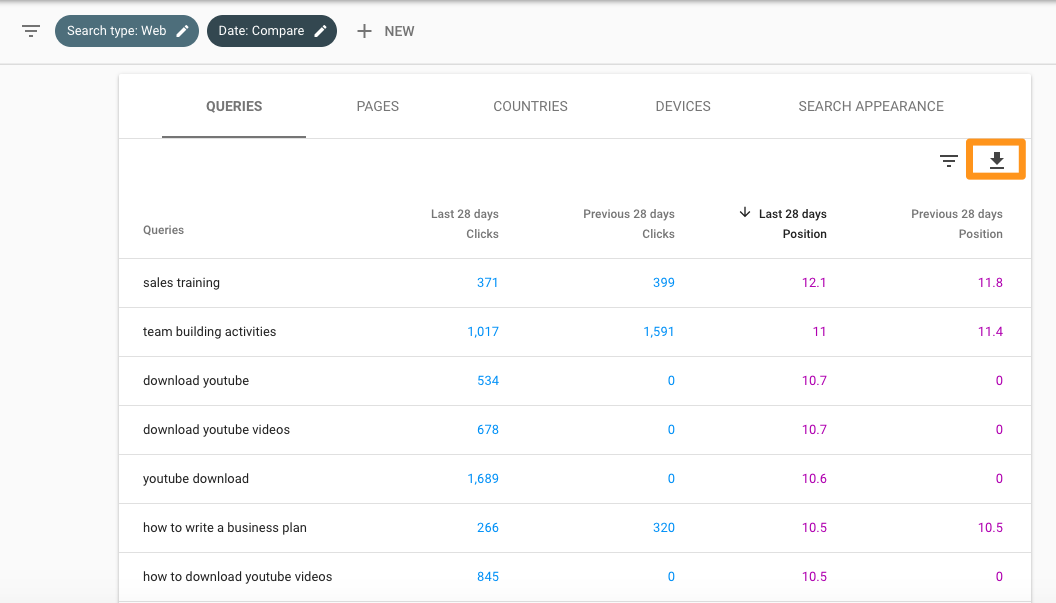
8. Identify ranking increases and decreases

  1. Click Performance.
  2. Click the “Query” tab.
  3. Click “Date range” to change the dates, then choose the “Compare” tab.
  4. Select two equivalent time periods, then click “Apply.”

At this point, you can look at the data in GSC, or export it. For an in-depth analysis, I highly recommend the second -- it’ll make your life much easier.

To do so, click the downward arrow beneath “Search Appearance,” then download it as a CSV file or export it to Google Sheets.

After you have this data in spreadsheet form, you can add a column for the position differences (Last 28 days Position - Previous 28 days Position), then sort by size.

If the difference is positive, your site has moved up for that query. If it’s negative, you’ve dropped.

9. Identify your highest-traffic queries

  1. Click Performance.
  2. Click the “Query” tab.
  3. Click “Date range” to choose a time period.
  4. Make sure “Total clicks” is selected.
  5. Click the small downward arrow next to “Clicks” to sort from highest to lowest.

Knowing which queries bring in the most search traffic is definitely useful. Consider optimizing the ranking pages for conversion, periodically updating them so they maintain their rankings, putting paid promotion behind them, using them to link to lower-ranked (but just as if not more important) relevant pages, and so on.

10. Compare your site’s search performance across desktop, mobile, and tablet

  1. Click Performance.
  2. Go to the “Devices” tab.
  3. Make sure “Total clicks,” “Total impressions,” “Average CTR,” and “Average Position” are selected.
  4. Compare your performance across desktop, mobile, and tablet.

11. Compare your site’s search performance across different countries

  1. Click Performance.
  2. Go to the “Countries” tab.
  3. Make sure “Total clicks,” “Total impressions,” “Average CTR,” and “Average Position” are selected.
  4. Compare your performance across nations.

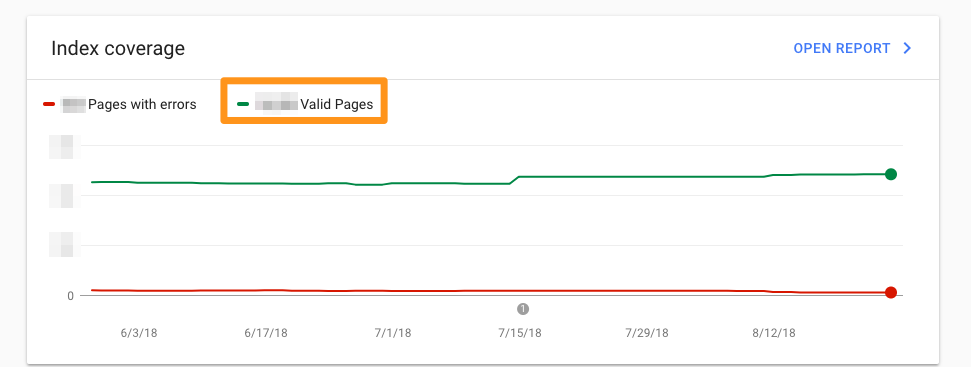
12. Learn how many of your pages have been indexed

  1. Start at “Overview.”
  2. Scroll down to the Index coverage summary.
  3. Look at the “Valid pages” count.

13. Learn which pages haven’t been indexed and why

  1. Go to Overview > Index coverage.
  2. Scroll down to the Details box to learn which Errors are causing indexing issues and how frequent they are.
  3. Double-click on any Error type to see the affected page URLs.

14. Monitor total number of indexed pages and indexing errors

  1. Go to Overview > Index coverage.
  2. Make sure “Error”, “Valid with warnings”, “Valid”, and “Excluded” are all selected.

The total number of indexed pages on your site should typically go up over time as you:

  • Publish new blog posts, create new landing pages, add additional site pages, etc.
  • Fix indexing errors

If indexing errors go up significantly, a change to your site template might be to blame (because a large set of pages have been impacted at once). Alternatively, you may have submitted a sitemap with URLs Google can’t crawl (because of ‘noindex’ directives, robots.txt, password-protected pages, etc.).

If the total number of indexed pages on your site drops without a proportional increase in errors, it’s possible you’re blocking access to existing URLs.

In any case, try to diagnose the issue by looking at your excluded pages and looking for clues.

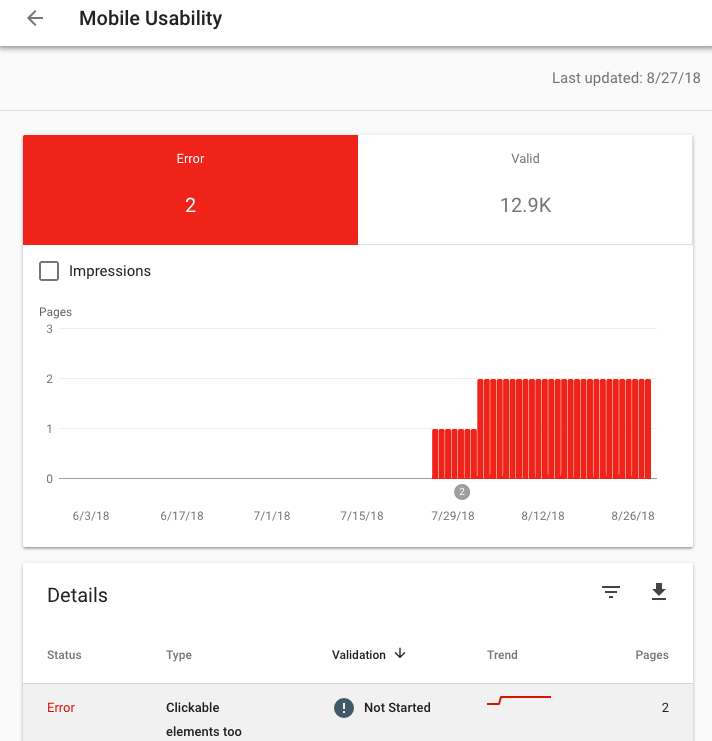
15. Identify mobile usability issues

  1. Click Mobile Usability.
  2. Make sure “Error” is selected.
  3. Scroll down to the Details box to learn which Errors are causing mobile usability issues and how frequent they are.
  4. Double-click on any Error type to see the affected page URLs.

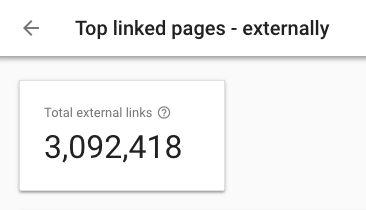
16. Learn how many total backlinks your site has

  1. Click Links.
  2. Open the Top linked pages report.
  3. Look at the box labeled “Total external links.”
  4. Click the downward arrow next to “Incoming links” to sort from highest to lowest backlinks.

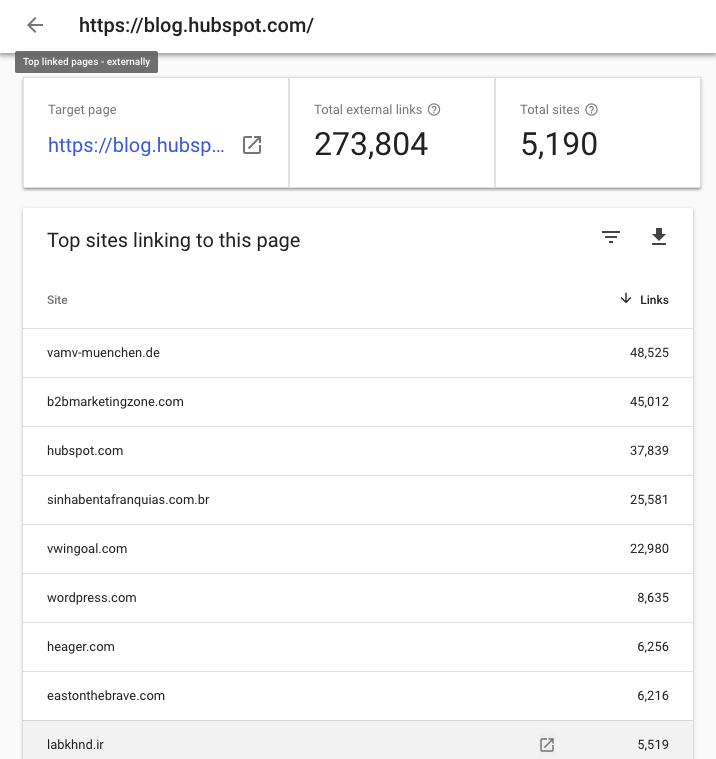
Every backlink is a signal to Google that your content is trustworthy and useful. In general, the more backlinks the better! Of course, quality matters -- one link from a high-authority site is much more valuable than two links from low-authority sites. To see which sites are linking to a specific page, simply double-click that URL in the report.

17. Identify which URLs have the most backlinks

  1. Click Links.
  2. Open the Top linked pages report.
  3. Click the downward arrow next to “Incoming links” to sort from highest to lowest backlinks.

If you want to help a page rank higher, adding a link from a page with a ton of backlinks is a good bet. Those backlinks give that URL a lot of page authority -- which it can then pass on to another page on your site with a link.

18. Identify which sites link to you the most

  1. Click Links.
  2. Scroll down to “Top linking sites” > “More.”

Knowing your top referring domains is incredibly useful for promotion -- I’d recommend starting with these sites whenever you do a link-building campaign. (Just make sure to use a tool like Moz, SEMrush, or Ahrefs to filter out the low-authority ones first.)

These may also be good candidates for comarketing campaigns or social media partnerships.

19. Identify the most popular anchor text for external links

  1. Click Links.
  2. Scroll down to “Top linking text” > “More.”

Anchor text should be as descriptive and specific as possible -- and best case scenario, include your keyword. If you find websites linking to your pages but using anchor text like “Click here” “Learn more”, “Check it out”, etc., consider sending an email asking them to update the hyperlink.

20. Identify which pages have the most internal links

  1. Click Links.
  2. Scroll down to “Top linked pages” > “More.”

It’s normal for some URLs to have more inbound links. For example, if you run an ecommerce site, every product page in your “Skirts” category will link back to the “Skirts” overview page. That’s a good thing: It tells Google your top-level URLs are the most important (which helps them rank higher).

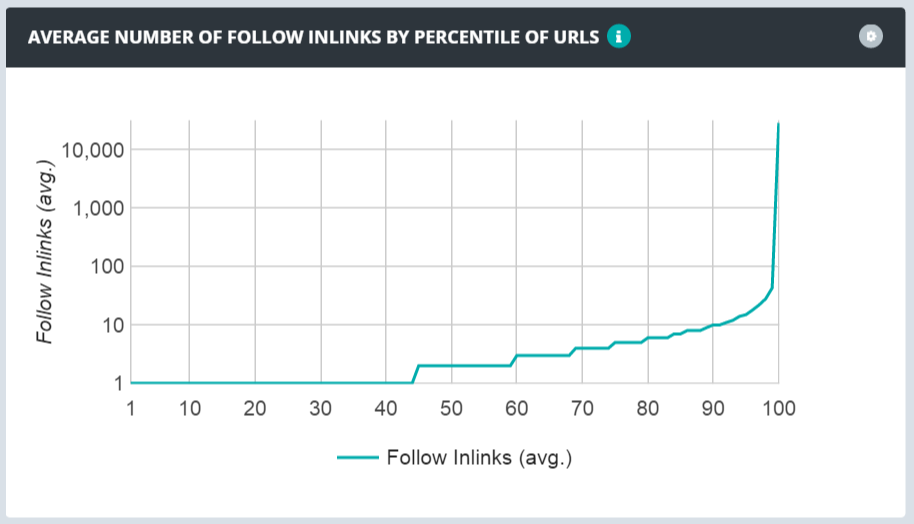
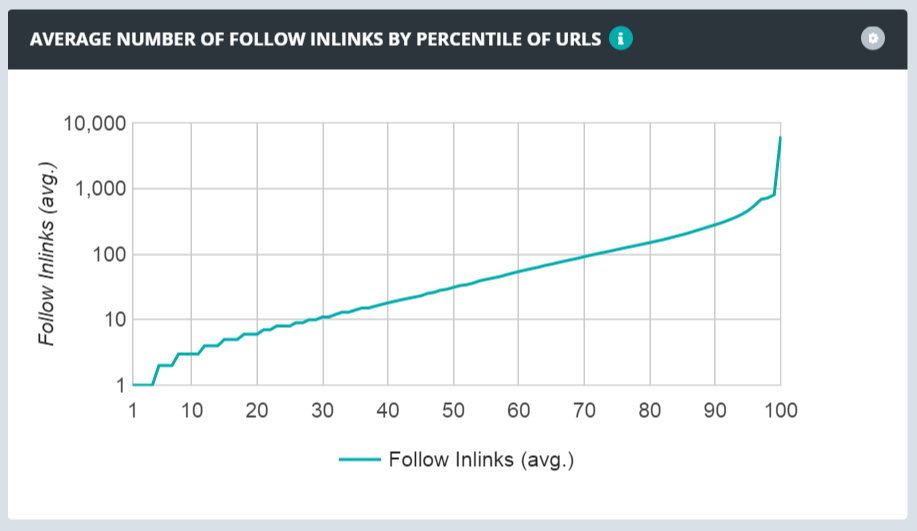
However, a heavily skewed link distribution ratio isn’t ideal. If a tiny percentage of your URLS are getting way more links than the rest, it’ll be difficult for the 95% to receive search traffic -- you’re not passing enough authority to them.

Here’s what a heavily skewed distribution looks like:

The optimal spread looks like this:

Use GSC’s link data to learn how your links are distributed and if you need to focus on making your link distribution more smooth.

21. Learn how many total internal links your site has

  1. Click Links.
  2. Scroll down to “Top linked pages” > “More.”
  3. Look at the box labeled “Total internal links.”

22. Find and fix AMP errors

  1. Click AMP.
  2. Make sure “Error” is selected.
  3. Scroll down to the “Details” box to see which types of issues you have and how frequent they are.

Google recommends fixing errors before looking at the pages in the “Valid with warnings” category. By default, errors are ranked by severity, frequency, and whether you’ve addressed them.

23. See Google how Google views a URL

  1. Click the white magnifying glass at the top of the page.
  2. Enter the page URL. (Make sure it belongs to the property you’re currently viewing.)

Here’s how to interpret the results. If the URL is on Google, that means it’s indexed and can appear in search.

That doesn’t mean it will -- if it’s been marked as spam or you’ve removed or temporarily blocked the content, it won’t appear. Google the URL; if it shows up, searchers can find it.

Open the Index coverage card to learn more about the URL’s presence on Google, including which sitemaps point to this URL, the referring page that led Googlebot to this URL, the last time Googlebot crawled this URL, whether you’ve allowed Googlebot to crawl this URL, whether Googlebot actually could fetch this URL, whether this page disallows indexing, the canonical URL you’ve set for this page, and the URL Google has selected as the canonical for this page.

The Enhancements section gives you information on:

  • The AMP version of this page, if it exists, and any AMP-specific issues
  • Status for job posting and/or recipe structured data

24. Go to the old version of Search Console

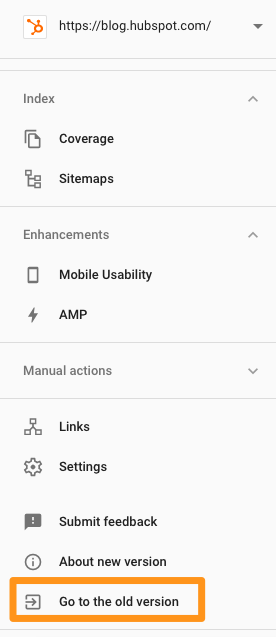
The new GSC, while intuitive and well-designed, doesn’t have all the features of the old version. If you want to use the latter, click “Go to the old version” in the left sidebar menu.


from Marketing https://blog.hubspot.com/marketing/google-search-console