Tuesday, 6 September 2016

The Best Time of Day to Do Everything, According to Science [Infographic]

peak-time-of-day.jpg

We often talk about optimizing your website and optimizing your marketing ... but what about optimizing your day?

Think about all the things you do in a given day, from eating meals and cleaning your apartment to brainstorming ideas and holding meetings. Believe it or not, there's an optimum time of day to complete every single one of these activities.

A lot of it has to do with taking advantage of your body's natural rhythms. For example, neuroscientists recommend waiting until 9:30 a.m. to drink your morning coffee because that’s when your stress levels tend to drop, and you really don’t need the caffeine boost until afterward. Others have to do with weekly schedules: Studies also show that scheduling meetings at 3:00 p.m., especially on Tuesdays, increases the likelihood of high attendance.

What other activities have an optimum time in the day? Check out the infographic below from NetCredit for a full list.

 peak-time-of-day-infographic.png

free productivity tips


from HubSpot Marketing Blog http://blog.hubspot.com/marketing/best-time-of-day-activities

The Stories Behind 6 Major Brand Makeovers

Makeovers aren't just for 80's movie montages -- they're also an important way for brands to future proof, reach new audiences, and remain relevant in competitive markets.

But changing up your entire image comes with considerable risks -- especially for bigger, more established brands. If you pivot too far away from your core identity too fast, you could alienate your base audience. But if the changes aren't big enough, no one will notice.

If you're considering shaking up your brand and could use some guidance on the line between not enough and too much change, we're here to help. Let's explore how six major companies were able to refresh their well-established brands for the better.

6 Successful Big Brand Makeovers

1) Kentucky Fried Chicken

In an appeal to millennials, the ubiquitous chicken chain recently resurrected the goateed visage of their founder and original mascot, Colonel Sanders, to appear in print, TV, and social ads.

Colonel Sanders -- the real man behind the brand -- appeared in KFC ads until close to his death in 1980. In his trademark white suit and western bowtie, Sanders' big personality and natural salesmanship proved to be pivotal in the fast food franchise's success.

During the 1990s and 2000s, KFC pivoted away from their founder's iconic image, first phasing out actors who played Sanders and then removing the animated version of him as well. The mascot-free look was accompanied by a push to focus more on the quality of the brand's food, staff, and American roots under the slogan "So good."

But the company soon realized that the Sanders-free KFC didn't resonate well with the coveted millennial set. So in 2015, KFC brought on global ad agency Wieden + Kennedy for a much needed brand facelift to boost sales and increase engagement.

The new colonel -- who has been played by a number of actors over the last year, including Darrell Hammond and George Hamilton -- is a quirky, patriotic spokesman for the brand. And even though not everyone loves him, KFC is happy that they've got people talking about them again.

"So far the response has been about 80% positive, 20% hate it," said KFC's parent company's CEO Greg Creed. "Now they at least have an opinion. They’re actually talking about KFC, and you can market to love and hate; you cannot market to indifference."

2) AXE

AXE is no stranger to controversy. The male grooming brand has been slammed in the past for ads featuring hordes of scantily clad women appearing whenever a man applies body spray. Their ads have found their way onto many sexist campaign roundups, including Adweek's Most Sexist Ads of 2013.

This year, AXE's parent company Unilever decided to make a big change, vowing to drop sexist messaging and stereotypes in all their ads. This has signaled a completely new direction for AXE.

"Masculinity today is going through seismic changes. More than ever, guys are rejecting rigid male stereotypes," Matthew McCarthy, the senior director of Axe and men's grooming at Unilever said to Adweek. "We've been part of guys' lives for decades, and Axe champions real guys and the unique traits that make them attractive to the world around them."

In their latest campaign by Amsterdam's 72andsunny, AXE changes up their usual formula of six-pack abs and heterosexual pursuit, opting instead for a broad and inclusive representation of masculinity.

3) The Milk Processor Education Program (MilkPEP)

If you picked up a magazine or flipped on the TV in the 1990s or 2000s, you were likely to see a celebrity proudly brandishing a milk mustache with the tagline, "Got Milk?"

Developed by ad agency Goodby, Silverstein & Partners, the "Got Milk?" ads are commonly cited as one of the most iconic marketing campaigns of all time. For nearly 20 years, MilkPEP used the slogan to promote the consumption of dairy milk nationally.

But the pervasiveness of "Got Milk?" couldn't stop dairy milk sales from slumping beneath the growing popularity of dairy-free nut milk in 2014. "The milk industry has had a tough bill over the last few years. Consumers seem to be forgetting about milk," Julia Kadison, the then-interim CEO of MilkPEP said to USA Today. "They needed to be educated or reminded of the nutritional value of milk."

The decline in dairy milk sales prompted MilkPEP to stop producing "Got Milk?" ads in favor of an updated "Milk Life" campaign. The $50 million revamp by New York's Lowe Campbell Ewald puts the focus on regular people instead of celebrities, and highlights dairy milk's high protein content. Another series of Milk Life ads try to differentiate dairy milk from popular alternatives like almond milk.

4) Buick

To shake off their grandfatherly image and appeal to younger drivers, Buick re-launched several updated versions of their cars in 2014, along with a new, hilariously self-aware advertising campaign.

The "That's a Buick?" TV spots, which began in 2014, played on Buick's older, out-of-touch image, showing unbelieving consumers that the sleek, modern car in front of them was actually a Buick.

"We're attacking that false familiarity directly, because we've got this new portfolio now," US Vice President of Marketing for Buick, Tony DiSalle, said to Automotive News today. "We know that consumers' perception takes a long time to change."

The ads were produced by DigitasLBi, and deftly introduced the fresher, cooler side of the car company. And in 2016, Buick is taking things even further into millennial territory, enlisting the help of up-and-coming comedians Ellie Kemper and Max Greenfield to give the brand an edge.

5) GoDaddy

Known for their bawdy, provocative ad campaigns, the domain registrar and web hosting company has made deliberate steps away from their macho image in recent years, choosing instead to focus on the small business owners who depend on their services.

For years, GoDaddy's marketing seemed centered around the adage that "all press is good press." They stoked controversies left and right with their racy television spots, and many of their ads were denounced as sexist. GoDaddy CEO Blake Irving even revealed in a New York Times interview that a group of female small business owners were pressuring Etsy to stop doing business with GoDaddy because of their ads' portrayals of women.

Under the helm of CMO Phil Bienert and with direction from global ad agency TBWA/Chiat/Day New York, the company's advertising is now pivoting to better serve their real target demographic -- female small business owners.

"We've had some famous, very notable messaging in the past, and as we've evolved in the U.S. -- where 58% of small businesses are owned by women -- we've had advertising that reflects who the audience is, getting away from the tactics we've done [before]," Bienert said to AdAge.

GoDaddy's latest ads depict funny, fictionalized accounts of small business owners, such as an artist who designs little hats for cats.

6) Bud Light

In 2016, the beer of choice for football games and college parties received its first rebrand in 15 years, along with a humorous new series of ads parodying the presidential election.

The new logo and can design is decidedly less sporty and more reminiscent of craft beer label trends. In a nod to their parent company's 160-year-old brewing tradition, a retro Anheuser-Busch crest appears front and center. The composition might be a nod to original Budweiser packaging, but the reimagined packaging is intended to appeal to a new generation of beer drinkers.

"Anheuser-Busch is seeking to find the right look and messaging to attract more millennial drinkers, who may have never even consumed Bud Light, while maintaining brand loyalty among established drinkers of the brand," Eric Shepard, the executive editor of Beer Marketer's Insights, told Entrepreneur.

Despite being the dominant beer on the American market, Bud Light has seen sales slip in the face of craft beer's growing popularity. Along with their craft-beer-esque packaging revamp, they're also updating their sense of humor to align with modern tastes.

"If you look at the humor that was relevant back in the ‘80s, ‘90s, early 2000s, it was very different than the humor that is [relevant] right now," Bud Light vice president Alexander Lambrecht said to Business Insider.

Bud Light's newest commercials were created by Wieden + Kennedy, and focus on a fictional political party -- The Bud Light Party, naturally -- led by comedians Amy Schumer and Seth Rogen. The topical ads take a relaxed but direct approach to politics, with Rogen and Schumer throwing their support behind gay marriage, equal pay, and of course, beer.

"We don't care, we'll sell you a beer!" Rogan says in one of the spots promoting gender identity.

Feature image from AXE's "Find Your Magic" ad, via Fast Company.

marketing-campaigns


from HubSpot Marketing Blog http://blog.hubspot.com/marketing/big-brand-makeovers

Monday, 5 September 2016

7 Types of Push Notifications Users Actually Enjoy

Mobile Push Notifications

If recent marketing news has made one thing clear, it’s this: Mobile is non-negotiable.

A growing number of us are using mobile as our primary device for accessing the internet -- over a quarter of us interact with our smartphones more than any other object, or human being, for that matter. And content, in kind, has to fit that format, whether we’re consuming it or discovering it for the first time.

Brands are starting to respond to that. Just last week, for instance, Google announced that non-mobile friendly pages will be ranking even lower next year.

Apps will be especially impacted most by this increasingly widespread mobile use. The push notifications we receive on our devices will play a vital role in the information we come across, and if we choose to consume it. Want more data on existing and emerging marketing trends? Pre-register for the 2016 State of Inbound report here.

Many of us are already receiving information that way. In 2015, the average opt-in rate for push notifications was 49.8%. But those messages have to be optimized -- otherwise, brands risk being ignored or forgotten.

Why is that, exactly, and how can it be avoided? Read on to discover the types of push notifications your users actually want to receive -- and how each one will benefit both of you.

7 Types of Push Notifications Your Users Actually Want

1) The ones that are encouraging -- not shaming.

Once upon a time, I had an activity-tracking bracelet. It was connected by Bluetooth to my phone, where I could use an app to log workouts and meals.

One day, when I hadn’t worked out for a while as a result of having the flu, I received a push notification from the app.

“You haven’t been your active self lately,” it said. “Log a workout now.”

I can’t be the only one who would feel a little bit judged by a message like that, even if it was automated. I mean, was this app serious? I had the flu! No wonder health and fitness app have the lowest opt-in rate for push notifications -- they shame their users.

That doesn’t have to be the case -- nor is it, for every health and fitness app out there. There are some, like 12 Minute Athlete, that let users schedule their own workout reminders. (And if you’re sick, you don’t have to schedule any.) Then, when it does come time for your workout, you get a notification that encourages you, instead of making you feel guilty.

12 Minute Athlete

Source: 12 Minute Athlete

Most health and fitness apps are traditionally created with a somewhat shared goal: To help their users get better at doing something. And one of the most ineffective ways of doing that? Feeling bad about not doing it. In fact, research has shown that it’s self-compassion and forgiveness that make us correct negative behaviors -- not guilt.

Consider giving your users the option of taking a break. That can be applied to a variety of app categories: Health and fitness, dating, or online shopping. Let them determine how long they want that hiatus to be -- and feel free you set your own parameters for how long that can actually go on. Then, send a push notification to ask them if they’re ready to come back. That will remind them to launch the app, keeping them engaged after they’ve stepped away.

2) The ones that make life a little easier.

I’m one of those people who has to put everything in my calendar. But the one thing I never seem to remember scheduling is an online check-in for my flights.

That’s why I absolutely love it when airline apps remind me to check in 24 hours in advance -- and maybe that’s one reason why travel and transportation apps have the highest push notification opt-in rate.

Many airlines notify passengers to check in via email, but let’s face it -- with text messages outweighing email as the preferred method of communication by 23%, chances are that we're looking at these quick notifications more than we're checking our email.

JetBlue is one airline that does this particularly well. Like clockwork, I always receive a friendly little note on my screen -- “Hey there. It’s time to check in for your flight” -- exactly 24 hours before I’m scheduled to take off. It’s one less thing that I have to remember to do and, therefore, these particular notifications are adding value for me.

Ask yourself that question before you write copy for a push notification: How can we frame this in a way that creates value for the user? You’ll be glad you did -- users who opt-in to push messages average three times more app launches than those who opt out.

3) The ones that know where its users are -- in a non-creepy way.

When Localytics asked mobile users which type of push notifications they preferred the most, 34% responded with “a special offer based on my location” -- the third most popular kind.

And why not? If you’re already out, you might as well treat yourself with that special discount, right?

Take this notification from Neoshop. It’s personalized on two levels -- it includes the user’s first name, and it lets him know that there’s a shop location nearby where he can use some of the credits he’s accumulated.

Mobile-Marketing-Personalized-Push-Notifications.png

Source: Business 2 Community

Knowing where your users are and responding in kind accomplishes two things: First, it lets them know that you’re paying attention. You’re not watching them in a Big-Brother-ish way -- you’re looking out for them, and for opportunities around them.

Second, offering them something special based on that information can make your brand relatable -- like a friend texting to say, “I’m in your neighborhood. Wanna get coffee?”

That’s another way to add value for your user. Instead of asking them to go out of their way to engage with you, you’re creating an opportunity when it’s convenient to them. That makes it easy for someone to find a reason to launch your app -- and to remember that they have unused rewards.

4) The ones that get people excited about something.

There are also occasions when you might not be where you want to be -- like a warm beach in the middle of winter, for example. And, there are times when a push notification can help you get there -- like with a cheap airfare alert.

Kayak, a travel search site, allows its users to set their own notification criteria -- based on destination, date, or popular places to travel -- and receive an alert when the price for any of those trips drops below a point of their choosing.

Kayak

Source: Arkenea

There are few things that thrill me more than a good deal on airfare. And when it’s Kayak who lets me know about that deal, I associate that brand with my excitement.

And that makes sense -- "a special offer based on my preferences" was the #1 preferred type of push notification in 2015. The reward is twofold: Not only are your users receiving information that’s perceived as a great deal, but it’s the result of something they were able to dictate. There’s a return on their investment in your app -- and they got to call the shots on what that return would look like.

There are several verticals that could stand to benefit from this strategy. It’s the positive association I mentioned before that really stands out -- just as it is with location-based alerts, these notifications send the message that your brand is looking out for its users. It’s as if the app is saying, “I know you mentioned that you were looking for one of these, so I picked it up for you.”

It’s thoughtful, right? And since 52% of us prefer gifts that are truly considerate in that way, it seems fitting that we would respond well to brands that behave accordingly.

So think about what’s really going to excite your users. Let your audience determine what they deem rewarding by letting them customize preferences. When you plan your push notifications, having that information will help craft the message that your app is going out of its way to benefit its users.  

5) The ones that alert people to what matters to them.

It might seem like we’re a bit overwhelmed with bad news these days -- so much, in fact, that WNYC put together a Breaking News Consumer’s Handbook. As much as we like to stay informed, we also like the opportunity to tune some things out.

But what about the rest of what’s happening in the world -- the stuff that we want to stay in the loop for? At risk of sounding cliché: There’s an app for that.

The Oregon Public Broadcasting app set a great example for how push notifications can be used for this kind of content distribution and promotion. "We’re not singularly a breaking news app," said OPB's Marketing Director, Paul Loofburrow, "but if there’s a public service announcement, we want to share that.”

Instead, the app uses push notifications to alert listeners to live broadcasts, encouraging them to tune in. And it works -- after sending these alerts, OPB saw a 483% increase in users listening to a specific radio broadcast.

OPB Broadcast Notification

Source: Urban Airship

Medium, an online publishing platform, uses push notifications in a similar way. Users can receive an instant alert when someone they follow publishes a new post -- and can decide if they want to Medium to select the top five posts of this kind, instead of receiving a notification every time something new is published. And if they want, users can also opt to receive notifications for stories that Medium recommends, based on their reading history. 

 Medium Push Notification

Breaking News is another app that has quite a few content customization features. It lets users decide what they want brought to their attention, and when they want to hear about it. There’s an option to disable notifications for “major stories,” as well as a way to set “quiet time,” when no news alerts will be sent.

Breaking News Notification Settings

Source: Breaking News

But here’s where the real value comes in -- the features that allow users to pick the topics they want to know about.

Breaking News Topics

Source: Breaking News

That level of personalization is a tremendous asset to your audience. In fact, users are three times more likely to respond to a notification that directly affects them, as opposed to an alert that might have been sent to everybody.

Depending on what sort of information is shared by your app, a best practice could be to let users pick and choose what they want to know about. And, instead of only giving them the chance to turn off notifications completely, let them choose a time of day when they don’t want to be disturbed.

6) The ones that help people pick up where they left off.

You’ve walked into a room with an intention. But then, something distracts you. The phone rings, someone’s shouting your name for your attention, and by the time that distraction has passed, you’ve forgotten why you walked into that room in the first place.

That scenario often plays out when we’re using apps. Let’s say I’m using a grocery delivery app to place an order, when someone sends me a text message. If leave the app to respond, I’m probably going to forget what I was doing before that message came in, and neglect to finish my order. That’s no surprise, since studies now reveal that we have a shorter attention span than most goldfish -- largely due to smartphone use.

But Instacart is one app that helps me remember to finish a task. If I abandon my shopping cart without checking out, for example, it sends me this friendly reminder:

Instacart Reminder

How convenient! Not only do I now remember that I need to order my groceries, but I don’t have to wait that long for them to be delivered, either.

This example goes back to the idea of making life easier for your users. But in this case, instead of being reminded of a specific, salient event -- like a trip or flight somewhere -- the app is helping me stay on top of my day-to-day tasks and responsibilities.

When you design your push notifications, keep two things in mind:

  1. How busy are your users?
  2. Is this alert going to help them, or just distract and disrupt them?

Answering those questions will help you prioritize the alerts you want to send to your users, and limit the amount of overload they perceive from your app.

7) The ones that keep people posted.

Perhaps you’ve heard about the “hangry” phenomenon -- an adjective that Dictionary.com defines as “irritable as a result of feeling hungry.”

When you combine the cultural pervasiveness of hangriness with the fact that more and more of us are ordering meals online (by 2020, it’s predicted that mobile ordering will be a $38 billion industry), the outcome is as follows: We really, really want to know when our food will arrive.

That’s why it’s smart for what Business Insider calls “aggregators” -- platforms like GrubHub and Eat24 that allow users to order online from dozens of different outlets -- to incorporate a live delivery update feature, to let us know when our food is on its way.

GrubHub Delivery Confirmation

Source: Localytics

GrubHub Delivery Status

Source: AllThingsD

It’s important to note that we’re becoming a species of instant gratification -- 43% of us think it’s unacceptable to take more than 10 minutes to respond to a text message, for example. And whether we like that direction or not, it’s important for businesses to adapt, especially in the mobile sector.

If your app requires your users to wait for something, ask yourself:

  1. Am I making my users wait longer than they want or should have to?
  2. Am I keeping my users posted about what they’re waiting for?
  3. Am I updating my users to the point that I’m becoming disruptive?
  4. Do my users have a way to reach me if they need more information after I update them?

Those last two points stress the importance of striking the right balance with push notifications. Share just enough information so that your users aren’t left completely in the dark while they’re waiting. And if they need more details, make sure there’s an easy way for them to get in touch with you.

Ready to start notifying?

There are a few tools out there that can help you create and implement push notifications. A few of our favorites:

  • Roost: Roost provides a number of solutions for both desktop and mobile apps. Its biggest selling point is likely the ease of implementation, which largely consists of cutting and pasting a line of JavaScript into your code.
  • Amazon Web Services: Among Amazon's many developer tools is its SNS Mobile Push Notifications feature. Like other platforms of its kind, this feature allows notifications to be sent individually (to one person at a time), or to multiple users at once.
  • OneSignal: OneSignal is a notification service that's used by several apps that need to provide real-time updates to their users -- think Uber ("where's my ride?"). It also allows A/B testing, so that marketers can send two different messages to samples of user groups and see which one performs better.

When it comes to creating push notifications, there’s an unspoken golden rule: Alert others as you would like to be alerted.

These notifications are absolutely crucial to your mobile marketing strategy -- users that enable them are 171% more engaged with the app than those who don't. But choose them wisely.

When in doubt, we find it’s helpful to use a checklist. So make sure your push notifications meet these basic criteria:

  • They aren’t redundant or disruptive to your users.
  • They keep your users informed of the things they want to know.
  • They’re thoughtful -- they keep an eye out and make life a little more convenient for users, without seeming overbearing or clingy.
  • They encourage users -- and don’t shame them.

How do you use push notifications? Share it with us in the comments.

State of Inbound 2016

from HubSpot Marketing Blog http://blog.hubspot.com/marketing/push-notification-types

Friday, 2 September 2016

How to Use Release Notes to Drive Feature Adoption

Companies are understandably excited to tell the world when they push new features. New developments can take months and they are the hope for more users, greater engagement, and achieving milestones towards success.

So how do teams communicate these big announcements to their users? A blog post, an unread notification, an email, and… that’s it. They sit back and wait for impact, but are disappointed if the anticipated uptick in usage doesn’t arrive.

Here we’ll explain why standard feature announcements are missing the mark, and how to drive new feature adoption amongst your users.

The Standard Feature Announcement

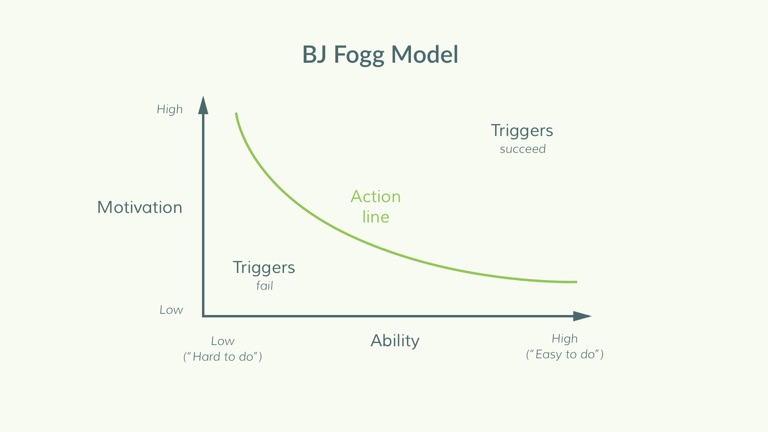
The BJ Fogg behavior model is a big component of our thinking on user experience. It explains that new behaviors form when three elements align:

  • Motivation—the user wants to perform the action.
  • Ability—the user has the capacity to perform the action.
  • Triggers—the user is nudged to perform the action.

You can see how these three elements intersect in this graph:

BJ-Fogg-model-new

When people have high motivation, they are more able to do hard things. When people have low motivation, they will only take action for easy to do behaviors. Triggers will push people into performing the actions, as long as there is sufficient motivation AND ability (above the action line curve).

When trying to change user behavior to adopt a new feature, an announcement serves as the trigger.

However there are three problems with conventional feature announcements:

  1. Users miss them or forget about them because those channels are noisy and are out-of-context.
  2. Announcements focus on HOW to use the feature and emails are a terrible way for this: we learn by doing, but emails are not interactive. We explain more here.
  3. Announcements don’t actually help a user adopt the new behavior, because they don’t improve a user’s ability (they don’t make the new feature “easy to do”).

In these cases, the feature announcement email or notification or blog post is a trigger below the action line, and so it doesn’t cause users to act and adopt the new feature or workflow.

Blog & Email Announcements

Blog and email messaging can help motivate users, but they don’t help them adopt any new behavior. What’s more, when a user is going through their inbox or reading a blog, they are away from the context of the app. Even if they see information about a new feature, it is difficult for them to internalize the new actions just through reading.

Automation tool Zapier has a whole section of their blog devoted to product updates:

zapier-screenshot-resized

They post once a month about new updates to their product. This is great information for new and current customers alike, but it isn’t actionable. They are in the wrong place and the wrong frame of mind, so don’t have the ability to make any behavioral changes. They are just reading a blog, not thinking about using the product.

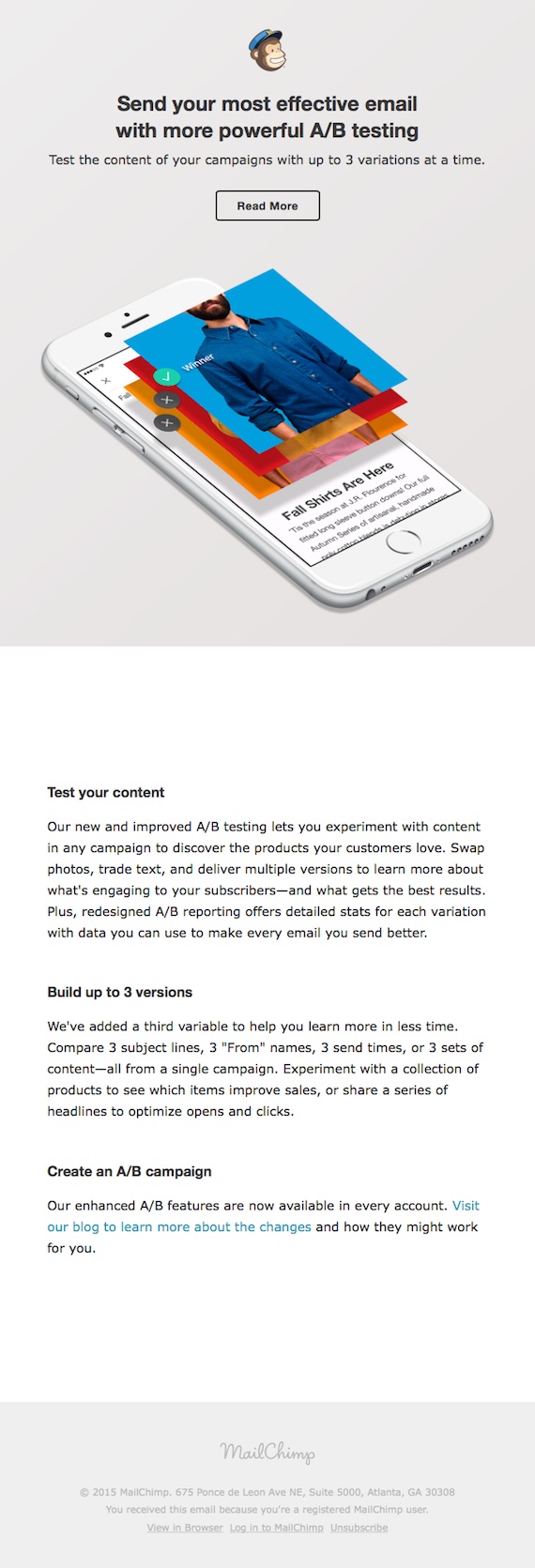
Following this up with an email highlighting the feature is also common. This is an email from email marketing tool MailChimp announcing improvements to their A/B testing tool:

mailchimp-email-resized
Image Source

This email does tell you all you need to know about the new features. These type of update emails are great for maximum reach as you can send the update to the thousands of users on your email list. If any currently aren’t finding good use for your product, this might be enough to bring them back.

But this doesn’t help the user actually use the product. The call-to-action at the end of the email is to read more, even though they have just read a very long email about the product. Reading doesn’t help the customer internalize the idea of the new feature. Though they might be giving use cases for the new features, the only way people can really learn is by using the product. MailChimp missed the opportunity here to direct the user into the product and to a tour of the new features.

In-app notifications

Ability is slightly higher with in-app announcements. In this case, the user is in the product and they are familiar with how it works.

But they are still way below the threshold needed to get the new user invested in the product. They are often delivered at the wrong time to the wrong user. Also, they just give the user more to read, instead of guiding the user through actions they need to take to get value from the new feature.

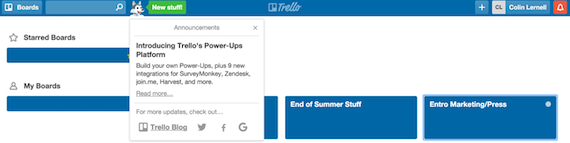
Most in-app notifications have this fatal flaw. For instance, if you’ve ever used project management tool Trello, then you will be familiar with Taco the Husky and his announcements:

trello-notification
Image Source

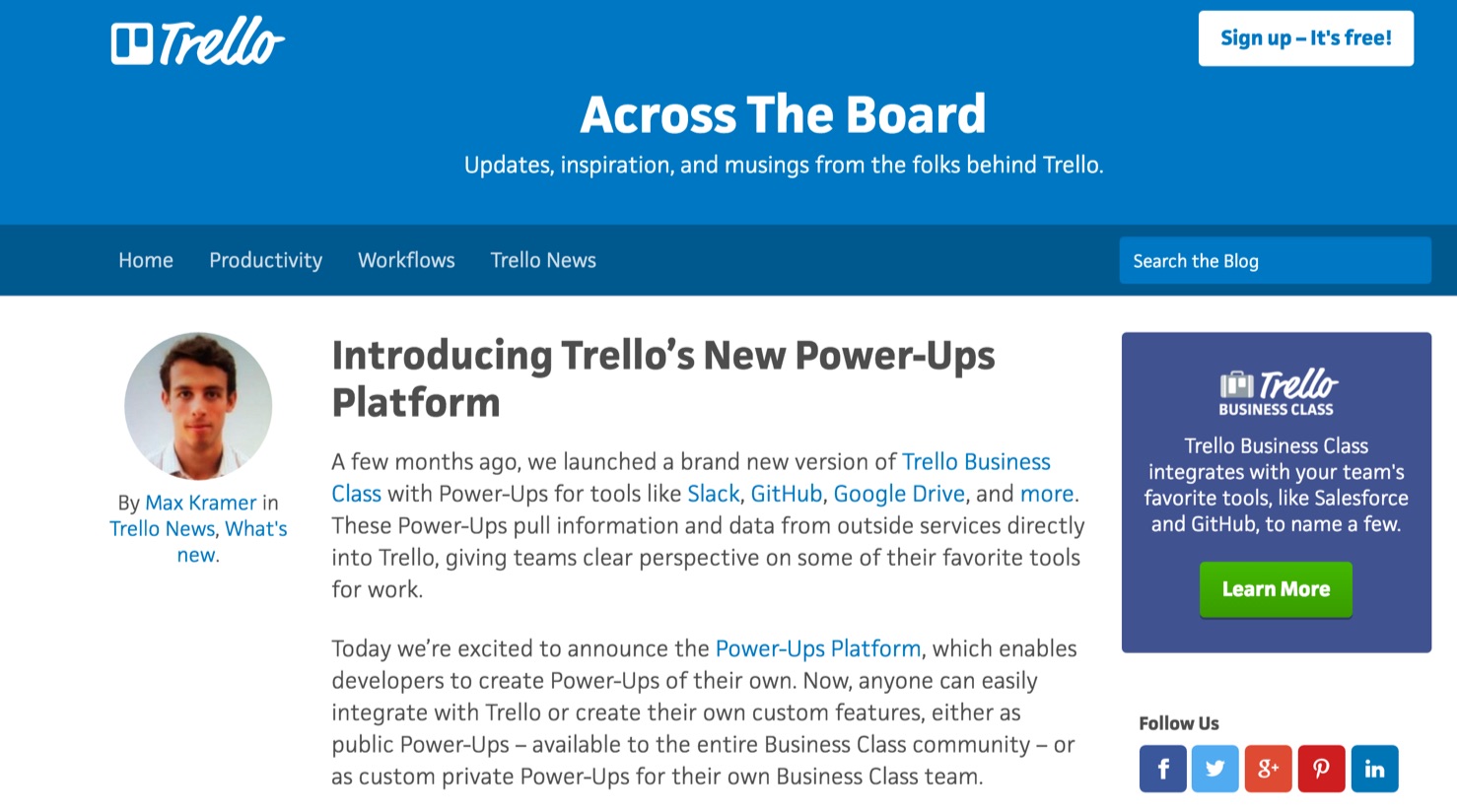
If you were to click on that link though you would be taken away from the product and to their blog:

trello-blog

This is the opposite of what you want. Users have been moved to a detailed description of your product, possibly raising their motivation, but lowering their ability. Plus, there’s no guarantee users will come back once you send them away from your app. How many times have you clicked through a link thinking you’d just read one blog post or article and get back to what you were doing, only to disappear into a hours-long timesink? This is the fate Trello is tempting with this kind of feature announcement.

Instead showing them what to do in bitesized chunks through tooltips and product tours is much more effective. Users can internalize each new concept and start to use that feature, without being overwhelmed.

Increase Adoption with Targeted Product Tours

In each of the feature announcements we’ve looked at, users are simply told about the new feature and then left to find it themselves. They have low motivation and low ability. You need to get to your users when they have high motivation and high ability. This means teaching users with a product tour within the product.

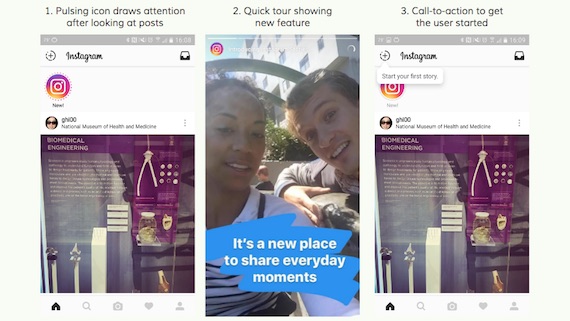
Some products do this. For instance, Instagram’s new Stories feature comes with a quick in-app tour that is easy to find, and pushes you towards using the feature:

Instagram-Stories

These tours work best when they are in-context of what the user is doing at that very moment. For that, you need to segment users by both time and behavior.

Targeting the Right User

Sharing a new feature with all your users may seem the best way to increase engagement. But the truth is that each of your customer personas will have different use cases for your product. They will favor some features over others. Therefore, they will want to hear updates about some new features more than others.

Using behavioral data you can look at how different subsets of users have used a certain feature before, how engaged they currently are with the feature, or if they have used adjacent features recently.

You are looking for a behavior they have exhibited that demonstrates they are ready to learn about your new update. For instance, you could use Kissmetrics Analyze to identify specific customer journey’s through your app and target different features to these different journeys.

Another example is the MailChimp feature above. If MailChimp want to increase the use of their improved A/B testing they could target a tour towards users who exhibit the following behaviors:

  • Have previously created five regular campaigns — this shows they have the motivation to continually create campaigns, but perhaps not the knowledge of A/B campaigns.
  • Have two or more saved templates — they have the ability to start testing each of these templates immediately with A/B testing.
  • Have 1000+ contacts in their list — they have enough users to make a test statistically useful.
  • Are currently creating their next campaign — they are in the position to start their next campaign.

These are the users that will be ready to use A/B testing in their email campaigns. Users who are just starting out with a single campaign, don’t have templates ready, or only a small readership will not find value in this new feature.

Targeting at the Right Time

Targeting at the right time is as critical as targeting the right person. In the MailChimp example above, pinging that ideal customer just as they start generating their new campaign with “Hey, there’s a better way!” can be just the trigger to move them to the new feature.

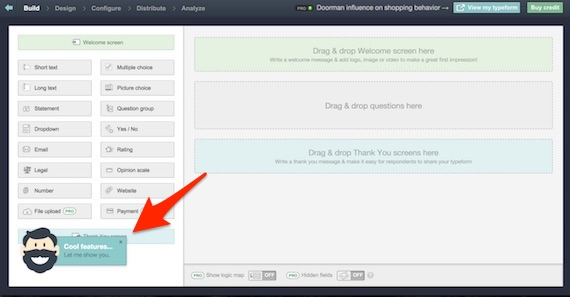
This isn’t as simple as targeting someone the moment they sign in or start using a feature. It depends on what the new feature is and how it corresponds to the current feature they are using. Look at this example from survey platform Typeform. They show the announcement at the start of building a new survey:

typeform-tour

This is a lost opportunity. At this point I have a form to build. That is my main motivation. I am going to immediately dismiss this tour and continue with my main task. By the time I’m finished, I’ll have forgotten about these “cool features.”

If instead this was targeted after I had finished my main task then my motivation could be to check the new features out. Once I had successfully completed one task, I would then be ready to learn more.

Conclusion

Emails, blogs, and in-app notifications all have their place when it comes to feature announcements. Each messaging channel can be used at a different point to inform, teach, and highlight features to users.

But the in-app tour is the most powerful tool at your disposal for engaging users with new features:

  • You can target the right people: New features will appeal to a certain segment of your users most. Using behavioral data, you can find out who uses the features you’re upgrading or aligned features and target a brief tour of the release only to them.
  • You can target those people at the right time: in-app tours let you get your new features in front of users at the exact moment when they would find them most useful. This might be just as they finish a task, or just as they start another. But timing an in-app tour allows users to have the context needed for them to find value in the feature, as well as the ability and motivation to learn more.

When you target a tour to the right people at the right time you will have them when both motivation and ability are high. Then it only requires a small trigger to push them into action.

If you get this targeting right, then you have introduced the best customers to the most valuable features to them, meaning you are building success for them and your product.

About the Author: Pulkit Agrawal is cofounder & CEO of Chameleon, a platform for better user onboarding. He believes that first-user experience is a hidden treasure to drive improved user activation and retention. He writes on the Chameleon blog, which contains great resources on the psychology of effective user engagement. You can converse with him on Twitter.


from The Kissmetrics Marketing Blog https://blog.kissmetrics.com/release-notes-to-drive-feature-adoption/

4 Marketing Lessons I Learned from Being a Mascot

4 Marketing Lessons I Learned from Being a Mascot

Author: Mike Madden

Mascots. You’ve seen them at football games shuffling lifelessly through a crowd, desperately trying to avoid pictures with awestruck children. You’ve seen their uninspiring, lackadaisical dance moves to some of hottest jams. But, for the most part, those are very mediocre mascots.

Being a mascot means more than just sweating in a costume and throwing down slick dance moves. As a mascot, you’re a visible representation of your brand. You have the ability to entertain, inspire, and resonate with your prospects, customers, and fans. Just think about what Flo from Progressive, the GEICO Gecko, Tony the Tiger (They’re Gr-r-reat!), the Kool-Aid Man, and Pillsbury Doughboy represent.

The bottom line is that being a mascot is like being a marketer and vice versa. While not every brand has a mascot nor does every marketer have the chance to be one, the best practices for being a great mascot can be applied to marketing as well. How do I know, you ask? You better sit down for this. What you’re about to hear is top secret: I have proudly represented Marketo as Markie—our mascot (we can call it a hobby)!

Mike Madden Markie

After spending time representing Marketo in high-pressure situations, I’ve learned four important lessons that you can apply to your marketing:

1. Prepare Wisely

This is an important first step to being both a mascot and a marketer, but you’d be surprised by how often people forget it. Preparation is not all fun and games when it comes to your dance moves or campaigns. Before attending any event or running any marketing program, there’s a lot of planning that should happen beforehand. Establish your goals, target the right audience, and determine how you’ll track your success.

As a mascot, I’ve learned that it’s important to determine what your role is at the event. What’s the goal for you being there? Who’s the audience—sports enthusiasts or concertgoers? In my case, when I’m the Markie for the day, I need to determine whether I’m there to be awesome Marketo eye-candy, hanging out for photo opps, or whether I’m supposed to bring a more specific entertainment element to the event. That helps determine what I need to do to prepare.

You also need to think through all the technicalities involved. For me, it’s wearing moisture-wicking fabrics, drinking Gatorade (fruit punch is my flavor of choice…yes, it stains), and loading up on candy right before for an energy boost. I’ve also learned that you need to get the costume (and try it on) at least 2-3 hours before the event so you can understand what your limitations are and how that might affect the event you’re at. For example, I’ve learned that it’s impossible to do jumping jacks in the Markie costume and that my vision is obstructed so I can’t see anything by my feet (so I need some clearance and an understanding of the room I’ll be in).

As a marketer, all of these steps are just as important. You have to understand what your goals are so you can determine the strategies and channels you’ll used to accomplish them. If you’re a B2B marketer, should you use broad-based marketing to reach a large number of potential customers or should you use account-based marketing to target specific accounts and the people within them? Should you use digital channels, offline channels, or both? You’ll also need to understand who your target audience is and how they might perceive you so that you can ensure you’re sending relevant, engaging campaigns. Are they new contacts or leads or are they already familiar with your brand? Are you marketing to a consumer audience or other businesses? In terms of the technicalities, what other teams should be involved? Are you coordinating your cross-channel campaigns to deliver a seamless experience?

Bonus Mascot Tip: Practice moving in front of a mirror to see how you look. It’s all about perception and you might need to experiment with different things because the suit is much bigger than you. Plus, then you can practice your sweet moves—The Sprinkler, The Mashed Potato, The Shopping Cart, The Lawnmower, The Running Man, and the ultimate crowd pleaser known as The Cabbage Patch. If you don’t recognize any of these top-notch dance moves, I’m afraid you have some work to do before you can boogie down for your brand.

2. Live and Breathe the Brand

Okay, so let’s say you’ve just been selected for your first gig in your company’s mascot suit. Your initial thought is to tell all of your friends and family about this new development. Facebook will be the first to know, then Twitter, then Instagram, and then Snapchat. Do NOT do this! Becoming a mascot is like becoming a superhero. Revealing your secret identity to the masses could hurt the mascot’s brand identity. You’ll no longer be known as Markie the mascot, but instead Mike in a Markie costume. It might also create a swarm of paparazzi around you and your loved ones. Do you really want to ruin everyone’s trip to the grocery store? Didn’t think so.

So what does this have to do with marketing, aside from mascots being a softer way to sell products? (Markie the Marketo mascot trying to promote Marketo software is better/more fun than Mike trying to promote Marketo software.) As a marketer, you’re representing your brand. Every email, social media post, and display ad that goes out on behalf of your company should represent your brand’s views, not your own. That’s not to say that your knowledge and expertise isn’t valuable, but if your campaigns are coming from your company and not your own social profile or blog, then you should make sure the messaging and values align with your brand’s.

3. Make an Entrance

Do you want everyone in the world to know how awesome your brand is? Of course you do, so make one heck of an entrance. Huge flags, noisemakers, backflips, confetti showers, and white doves fluttering into the air will show everyone at the event that you’ve arrived in style. Stomp on the floor, flail your arms, and come off larger than life.

Everything about you is huge when you’re in a mascot costume: huge head, huge feet, and huge hands, so you need to fill that costume with a huge ego! Typically, mascot costumes can be large and restrictive, so it’s best to double or triple the actions you’d normally take so the crowds can see and feel what you’re saying. Walking can be challenging, so make sure you pick up those feet. A silly wobble, pep in your step, or skip in your walk adds character to your steps, making you more relatable. If you dance, use your entire body. Folks in the back row needs to see those fluid dance moves just as easily as your admirers in the front row.

This is essentially a physical personification of marketing. Your audience is inundated with a tidal wave of messages every single day, whether it’s though social channels, email, digital ads, or television advertisements. By the end of the day, a person can only remember so much. Be different and develop memorable marketing campaigns that cut through all the noise.

In this case, loud distractions might not go over so well with your audience. Instead, work with your team to understand what differentiates your brand and own it. Embody it in your branding, mission statement, content, campaigns, and even your mascot. Markie’s hair is actually the four bars in the Marketo logo that represents elevating company growth and revenue, which has been our core mission from when our company was first founded.

Marketo Markie

4. Be Respectful

You might not have experienced this yet, but trust me, putting on your company’s mascot suit is an incredible adrenaline rush! You’ll feel more powerful than ever before but with great power comes great responsibility. Treat everyone with respect because your brand depends on it. In a mascot example, this means no picking someone randomly out of the audience for an embarrassing dance montage that they are not into.

Have you ever received an email that you didn’t sign up for? Or felt like a brand didn’t keep their promise to you? Your brand is nothing without a strong foundation for trust. If you have made promises to your buyers, you HAVE to deliver. If you promise them an asset when they fill out a form, deliver it. If you ask for their opt-in for relevant communications, don’t abuse it. Nothing is more off-putting than a brand that follows through sometimes but not always. And this sense of duty shouldn’t stop once your prospects have purchased from you. Customers are your most valuable asset, so treat them with respect and continue to provide value to them!

Not all mascots may be marketers and not all marketers may be mascots, but one thing’s for sure: both are key roles that should embody a brand’s values. Stay true to your brand and everything else will fall in place.

What are some lessons you’ve learned from brand mascots that apply to marketing? Share them in the comments below!

Marketo Virtual Event


4 Marketing Lessons I Learned from Being a Mascot was posted at Marketo Marketing Blog - Best Practices and Thought Leadership. | http://blog.marketo.com

The post 4 Marketing Lessons I Learned from Being a Mascot appeared first on Marketo Marketing Blog - Best Practices and Thought Leadership.


from Marketo Marketing Blog http://blog.marketo.com/2016/09/4-marketing-lessons-i-learned-from-being-a-mascot.html

6 Negotiation Strategies Every Marketer Should Know

Negotiation_Techniques.jpg

There's a reason why we love TV courtroom dramas. Beyond the shocking objections and confessions, it seems like there's constant screentime for strong, powerful arguments.

As marketers, that last part is especially exciting. Whether we know it or not, we are unabashed nerds for all things negotiation -- and it's a skill that all of us should master.

That could be why we're drawn to a well-written, televised version of a compelling argument. We love seeing people making a case for what they believe in, and wish we could do it as well ourselves, like when we're trying to negotiate a budget allocation or a project.

But with the right strategies and skills, you can learn to negotiate. It’s practical, valuable knowledge that can be applied almost anywhere -- especially in the marketing realm.

Why Do Marketers Need to Negotiate?

When I speak with marketers, it seems like there’s always something that has to be negotiated. A lot of the time, it’s the allocation of resources -- budget, new hires, or time.

There are other marketing-specific times when negotiation is necessary, though. Maybe you’re working out a co-marketing agreement. Or maybe you’re trying to make a case for your own ideas.

Regardless, being prepared for these conversations is key. A big part of that is confidence -- after all, 19% of folks don’t negotiate because they’re afraid of looking too pushy. We get it. Negotiating is kind of scary, especially when you’re new to it.

But arriving to these discussions with the right expectations and information can make them a little less intimidating. We picked six techniques that can be applied in a broad range of negotiations -- at work, or wherever else.

6 Negotiation Techniques Every Marketer Should Know

1) Focus on interests, not positions.

In the context of negotiation, there's a big difference between focusing on interests and focusing on positions. While interests refer to an outcome that will benefit you, positions refer to your stance on a particular issue.

Co-marketing, as we noted above, is a place where this concept plays out quite a bit. Let's say a small business is trying to partner with one that has a larger reach.

  • The smaller company might think, "We want our names attached to yours."
  • The larger might say, "Well, we already reach the same audience. What's in it for us?"

Those are the positions of each company: "You should partner with us," versus "We don't need you."

That's where the smaller company has to think about the underlying interests of the larger one and how they might, in fact, need each other. 

"Larger companies may have a large reach, but what do they not have?" asks HubSpot's Manager of Content Marketing Strategy, Lisa Toner. "Do they not have resources to create really great content for their audience?"

That could be an interest of the larger business: Gaining resources to create things like compelling design or apps. "It's all about the pitch, and if you can offer an experience [your opponent] or their customers would welcome," Toner says, "without them having to do the work."

But determining these interests requires research and creativity, Toner says. And she's not alone -- in the book Negotiating Rationally, Max H. Bazerman and Margaret A. Neale note that “creative solutions can be found by redefining the conflict for each side, identifying their underlying interests, and brainstorming for a wide variety of potential solutions.”

So while your opponent might have a different position on the surface, you might actually have interests in common. Knowing what those are can help you frame the conversation in a way that sets you both up for success.

2) Have “if-then” scenarios -- and a backup plan.

When you enter a negotiation, it’s valuable to have different scenarios and alternatives in mind. In business school, we were taught to frame these with an “If-Then Matrix”: A table with rows of “if”s -- the things we wanted, but the opponent might say no to. Those were followed by columns of "then"s -- the items that would become non-negotiable if the client refused the "if."

Having options in mind can help to mitigate some of the fear that comes with negotiating. For one, it clarifies your priorities: A recent survey showed that 56% of women won’t negotiate a job offer because they don’t know what to ask for, which implies that a lot of people -- male and female -- haven’t considered what’s most important to them.

Maybe work-life balance matters more to you than salary. In that case, if your employer says no to your payment requirements, then flexible hours might become non-negotiable.


IfThenNegotiationMatrix.png

Do this with all of the "if"s that matter most to you. If flexible hours are also met with resistance, then what will your sticking points be?

And that's where we also need to consider the BATNA -- or, best alternative to a negotiated agreement. Sometimes, no matter how prepared you are for a negotiation, you might not reach an agreement. Then what? 

You’ll need to know the answer to that question before you even enter the conversation -- that's your BATNA. In fact, have multiple alternatives in mind -- the more options you have, the less likely you are to feel completely helpless if your negotiation results in a stalemate.

An “If-Then” matrix can be helpful here, too. Know which factors will be at play if you don’t reach an agreement, and what the implications will be for your customers, your company, your team, and yourself. Don’t focus on defeat -- focus on what you can do, and the actionable items that come with it. 

Remember: Negotiation isn’t an all-or-nothing process. Think about your interests, then determine your options based on the ones that are most important to you.

3) Use creativity to your advantage.

When it comes to negotiation, creativity is key. 

In one study of MBA students, participants were divided into two groups for different workshops -- one that focused on systematic problem solving, and the other on solutions that directed students to “have fun,” “refrain from criticizing your ideas,” and “look for new possibilities.”

Each group then had negotiate a budget allocation. The students that underwent the creative training -- the one that emphasized unconventional ideas and outcomes -- executed the task better than the one that went through a more traditional workshop.

Studies like that show the value of creativity in generating unique alternative solutions and possibilities, and that is a lesson that you should think about when creating your negotiation agenda. You see, if an agenda resembles an itemized list with strict topics like budget and personnel, it tends to put the focus on positions, like “I need 35% of the budget,” or “I need 10 employees reallocated to our team.” But it doesn't address why those needs exist -- the interests behind them.

To combat that, try to focus on more open-ended things like goals and concerns. In that case, you’re leading with the why -- the underlying interests that are at the root of each side’s position.

Maybe your opponent is concerned that her team can’t handle its growing workload, and that’s why she wants to add 10 people. With that perspective, her interest isn’t really about personnel allocation, as much as it’s about preventing her employees from burning out. That opens the door to discussing more creative solutions.  

4) Think about what matters most to your opponent.

I know what you’re thinking. “We know. Focus on interests. We get it!”

It’s true. Understanding your opponent’s priorities can more quickly uncover those underlying interests that I keep harping at. And yes -- they’ll also help you align their interests with yours, and determine mutually beneficial outcomes.

But thinking about what matters most to your opponent can also give you an idea of what kind of questions he might ask. And you can prepare responses for those questions, gathering the data to support your answers in advance.

That will also help you figure out which questions you want to ask during the negotiation. When my colleague, Juliana Nicholson, was writing an ebook, she really wanted to include a certain organization as a case study. But they were hesitant to be featured, she said, because they were “very sensitive to how we framed them.”

At the same time, she told me, they “really wanted the exposure.” Knowing that was important to them helped Nicholson figure out the best questions to put them at ease, and gave them a sense of control in the process -- questions like, “Can we use your real name and logo, so that we can link back to your site and drive traffic there?”

Notice how she cited a benefit in her question. She was asking for permission to do something -- to use real identifiers of the organization, instead of a pseudonym -- while immediately noting the positive outcomes of doing so.

And by posing it as a question, instead of stating it as a fact -- “Doing X will result in Y” -- Nicholson gave her opponent a sense of control over the process. Because she knew how much that mattered to them, she was able to phrase her questions in a way that addressed their interests in both control and exposure.

So don’t be afraid to relinquish a little bit of jurisdiction during a negotiation, especially when it comes to your opponent’s priorities.

5) Understand cultural elements -- and how other cultures negotiate.

When you enter a negotiation, you’ll want to set the stage for a positive, proactive discussion. It goes without saying, then, that you probably don’t want to offend your opponent.

But accidentally offending your counterparts might be easier than you'd expect, especially if you’re negotiating with international peers. And that’s becoming more and more likely in business. HubSpot, for example, has offices in five different countries -- that definitely shapes the way we do business.

It wouldn’t hurt to brush up on the business etiquette of your opponent’s native country. Here are some categories to consider when preparing for an international negotiation.

Physical Cues

In researching other cultures, I've learned that there are things I do naturally and unconsciously -- like elaborately moving my arms when I talk -- that would offend my colleagues in other countries. So in addition to doing my intellectual homework, I would have to physically prepare for a negotiation for my Chinese counterparts, and practice sitting still during a conversation.

My colleague, Leslie Ye, breaks down some do's and don'ts on physical behavior in each country here

Silence

In the U.S., we often joke about the discomfort of an awkward silence. So it makes sense that other cultures -- like Japan -- use silence with the “hope the other side will speak,” writes University of Hawaii Professor John Barkai, and end up revealing something valuable, for the sake of saying anything at all.

But instead of letting the silence get awkward, use it to reflect. And if you do decide to speak first, take advantage of the quiet to think carefully about what you’re going to say.

Punctuality

Being on time is one of those things that starkly varies according to country. Just look at this guide to international business etiquette from my colleague, Lindsay Kolowich -- how many countries have punctuality listed as important?

It's important to know when you'll be expected to be on time, and when you can anticipate the opposite from your counterpart. In France, for example, "you're considered 'on time' if you're 10 minutes late," writes Kolowich.

Knowing how each culture treats timeliness will help you plan for and keep your negotiation efficient -- and leave out the element of surprise if your guests arrive later than the scheduled start time.

6) Prepare your team.

You are so totally prepared for this negotiation. Great! What about the people sitting next to you at the table?

Even if you’re the one doing all of the talking, prepare any colleagues who will be present for the negotiation. Transparency is crucial here -- your team should be briefed on any information that might arise during the negotiation, and privy to the same cultural and behavioral context that you’ve researched.

When your team has information, it gives them the opportunity to add their own valuable insights. When we become deeply ingrained in an issue, it can be difficult to look at it objectively. So make sure your team is equipped with the same armory you have -- their perspective of it is an asset.

When it comes to preparing for any meeting, there are a few basic things you can do to prepare your team that also apply here.

  • Set clear ground rules: Make sure your team actually understands what the problem is here, and what the most desired proposed solutions are. Also make sure they know when it's okay to contribute to the discussion, and what they should avoid bringing up.
  • Discuss non-negotiables: Your colleagues should be aware of the If-Thens. Prepare them with a list of things for which your side is absolutely unable to compromise -- and let them know how to handle those objections.
  • Let them ask questions: Now is the time to clear up any uncertainties. If your team is caught off-guard, it will probably show. That can make your side look unprepared, which lends power to your opponent.

Ready to get started?

If you do all of these fabulous things to prepare -- homework, research, introspection, and planning for less-than-desirable outcomes -- then please, feel good about the conversation you’re about to have. We have a tendency to expect the worst (I know I do, anyway), and sometimes, numbers are the only thing that make us feel better.

So know this:

I said it before, and I’ll say it again: Negotiating is kind of scary. But even if the worst case scenario actually plays out, by following these steps, you’ll be covered with a backup plan.

You’ve got this. And we’re always here to help as much as we can. Do you have a negotiation question, or story? Share it in the comments.
Marketing Ideas to Generate Business

from HubSpot Marketing Blog http://blog.hubspot.com/marketing/negotiation-strategies-for-marketers

Are You Actually a Good Listener? [Flowchart]

good-listener.jpg

When you listen to someone speak, are you really listening to them ... or are you listening to the voice in your head?

Hearing someone and listening to someone are two very different things. It's all too common for people to wait for their turn to speak or think about what to say next instead of truly listening to someone. 

But being a good listener is a sign of emotional intelligence and social awareness. It means really, truly paying attention to what people are saying -- and it's a skill that'll set you apart in both your professional and personal life. The good news is, becoming a good listener isn't all that difficult -- it just takes some practice (and self-awareness).

So, what do you think: Are you really a good listener? Quiz yourself by following the flowchart below from CT Business Travel. Then, keep reading for nine helpful tips for improving your listening skills.

good-listener-infographic.png

free ebook: leadership lessons


from HubSpot Marketing Blog http://blog.hubspot.com/marketing/good-listener-flowchart