Tuesday, 28 November 2017

8 of the Biggest Marketing Mistakes We've Ever Seen

Everyone makes mistakes. Even (especially?) marketers. Usually, we learn from them and move on with our lives, maybe escaping with just a touch of public shaming. But what happens to those companies that make mistakes on a much greater scale and cost their company millions in clout or (gulp) dollars?

They go down in history as the biggest marketing mistakes of our time. It's hard to move on when you're being cited as the example of what not to do, huh?

We looked into the biggest mistakes from many popular brands -- but glossed similar instances of faux pas from smaller companies, because, well, we don't want to hurt the up-and-comers.

Keep reading for a little entertainment, and some reminders of what you should never do to ensure you don't repeat these mistakes yourself.

1) Guerilla Marketing Without Due Diligence

In 2007, Cartoon Network launched a guerrilla marketing campaign in which it set up LED signs in various places throughout cities to promote one of their cartoons.

A resident in Boston, however, thought the devices were bombs and called the police. This turned into a terrorism scare, resulting in the shut-down of many public transportation lines, bridges, and roads.

The problem cost the head of Cartoon Network his job, and the broadcasting company $2 million in compensation for the emergency response team.

This campaign is a symptom of thinking in a silo -- marketers must always be aware of current events and public sentiment when crafting campaigns. Most people, particularly city dwellers, are on high alert for signs of something fishy. I guess you can say hindsight is 20/20, but large-scale guerrilla marketing campaigns of this nature should really consider all possible outcomes before launch.

2) Tone Deaf Tweets

In early 2011, a tweet was sent out from Kenneth Cole's Twitter account trying to promote their new spring collection. No big deal, right? Except when it's offensive, insensitive, and offends millions of people. The tweet was a poor play on the political turmoil happening at the time in Egypt:
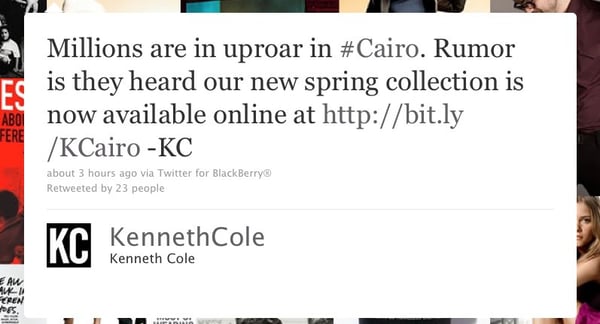
Screen shot 2011-02-03 at 12.30.12 PM
 

The tweet came from the Kenneth Cole corporate Twitter account -- actually, from the chairman himself, as indicated by the "KC" in the tweet.

The company received negative feedback immediately, and they soon took the tweet down in response and apologized to anyone offended by the tweet. The lesson social media marketers can learn from this awful mistake is that humor doesn’t work if you're newsjacking something contentious.

3) Lackluster New Logos

In October 2010, Gap launched a new logo in an attempt to be more modern. Guess how long that lasted?

gap logo new

Source: Vanity Fair

A whopping two days.

Gap quickly put the old logo back into place after unbelievable backlash from the public.

Gap, known for everyday basics, tried to redo their image to appeal to a more hip crowd. Unfortunately, the brand didn’t understand who its target market is -- the people who want the basics and aren't interested in trendy styles. Its loyal customers felt that Gap was changing their image for the worse, and lost a connection with the brand.

Gap was also unsuccessful at attracting the younger, trendy generation with the redesign (albeit, only a two-day redesign), resulting in a failure on two fronts with this new logo.

While it wasn't so awful for Gap to pursue a logo redesign, the lesson is simply to stay in touch with your buyer personas so you can ensure your new design reflects them. Marketers focus a lot on metrics -- for good reasons -- but never underestimate your audience's feelings towards your brand. They're harder to quantify, sure, but boy will people speak out when their sensibilities are offended.

4) Losing Sight of Loyal Customers

In 2011, Netflix had a $16 billion market value with its mail-order rental. But then, the brand decided to enter the digital streaming market with a brand called “Qwikster,” an easy alternative to mail order DVDs.
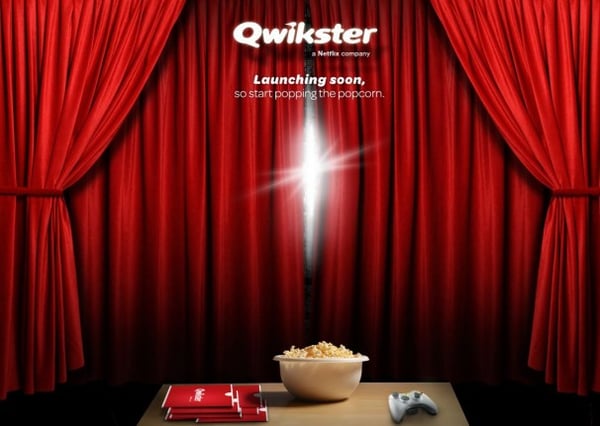
Source: Idea Lemon

Unfortunately, splitting the company between Netflix's mail-order DVDs and Qwikster's DVD streaming made things more complicated -- not to mention, it resulted in a 60% price increase for those who wanted both services.

Even worse, current customers weren't grandfathered into the new price structure at the old rate, causing serious negativity amidst all the general confusion. Plus, the Qwikster Twitter handle was already owned by someone else: a pot smoker who discussed boredom, smoking, and partying.

According to CNET, the company lost 800,000 subscribers and its stock price dropped 77% in four months.

Businesses need to remain agile and fast-moving to stay relevant, but make sure you communicate those changes to your audience clearly before making them. Oh, and don't forget to show gratitude to your current customers, instead of giving them the short end of the stick.

5) Being Too Speedy With Sends

In December 2011, the New York Times sent an email to people who recently canceled their subscriptions asking them to reconsider, and giving them a discount to sweeten the deal.

Sounds like a good idea to get a customer back, right?

Too bad an employee accidentally sent it to 8 million subscribers -- instead of the list of 300 that it was meant for. Whoops.
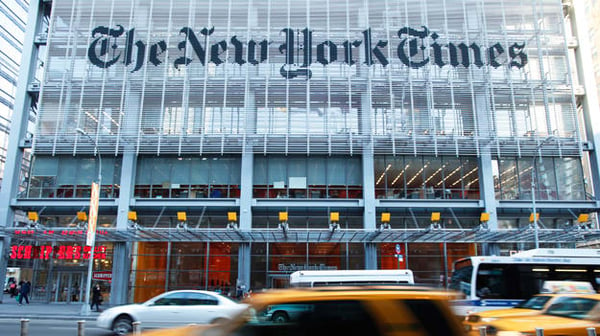
Source: Daily Beast

Subscribers instantly assumed that the email was spam as a result of hackers. Some were even mad that they weren't getting the same discount as a loyal customer.

Of course, employees responded immediately apologizing and telling people it was an unfortunate human error.

Still, this type of mistake is every email marketer's nightmare, and it serves as a much-needed reminder to always double check your list before clicking 'Send' on any campaign!

6) Promising Free Stuff -- and Running out of It

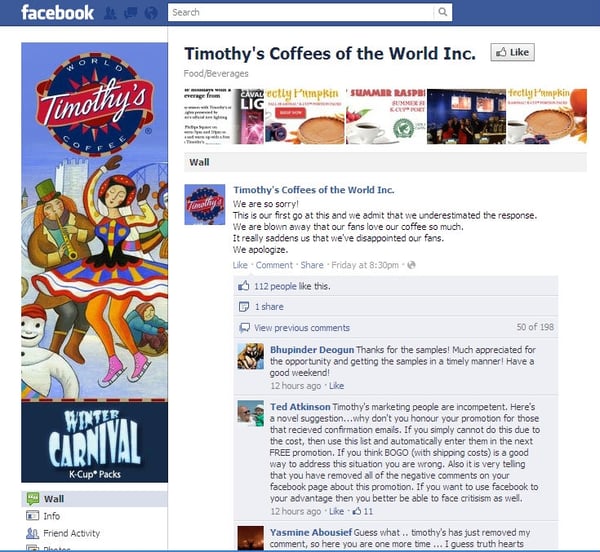
Timothy’s Coffee did what many brands have done to increase social media reach: offer a coupon or free sample for following them on social media.

Unfortunately, Timothy’s offered more than it could deliver, depleting its supply of free K-cup packs after only three days.

Get this: It wasn't until two weeks later that Timothy's sent out a message saying that coupons and samples were issued on a first-come, first-serve basis. Talk about too little, too late.
Source: Sparker Strategy Group

Despite an apology video and the potential for receiving a free coupon in the mail, Timothy's is still trying to recover from the fan backlash on social media. 

When running a contest on social media, don’t underestimate the impact of your offer -- especially if it's meant to grow reach.

Think about it: If your contest works -- and you're designing a contest based on the premise that it will work, I hope -- your reach will get bigger with each new participant. If you can't actually back up your end of the contest bargain, all that new reach will be used to hurt your brand, instead of singing its praises.

7) Fixing Something That Isn't Broken

In 1985, Coca-Cola tried to introduce a new, sweeter version of their beverage to combat its (then) new competitor: Pepsi.

Those of us who were around at the time remember the Pepsi commercials boasting that, in blind taste tests, people preferred its taste over Coke's. 

Coke, for its part, felt the need to regain market share with a new recipe. So, how did that turn out? 

Not well. Public response was so negative, in fact, that people were actually hoarding the old Coke flavor, and selling it on the black-market for grossly inflated prices.

Why were people so upset? Coke’s brand embodied classic American traditions -- so, Coke drinkers didn't want a new flavor. They wanted that classic beverage whose secret recipe was guarded under lock and key in Georgia.

Finally, after retiring the “New Coke” recipe, sales of the old classic -- actually renamed “Coca-Cola Classic” to make it extra clear to consumers -- rose significantly.

So, what do we take away from this marketing mistake? Learn what your customers want before spending time and money on a top-secret product or service change.

8) Getting Lost in Translation

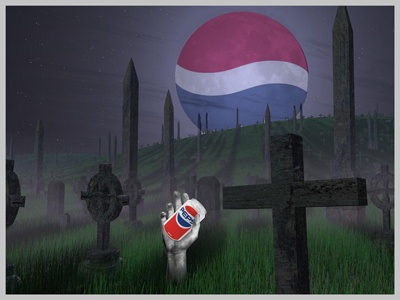
Coke wasn't the only major beverage to blunder, though. When Pepsi expanded its market to China, it launched with the slogan, "Pepsi brings you back to life."

What the brand didn’t realize, however, is that the phrase actually translated to, “Pepsi brings your ancestors back from the grave.”
 

Source: Glantz Design

Okay, maybe this mistake is kind of funny. But, when you're a brand that's working toward major international expansion, a mistake like this one might not exactly have you in stitches.

If you're launching a new market, be sure to do some cultural research. And please -- ask native speakers of the language what your slogan actually means.


from Marketing https://blog.hubspot.com/blog/tabid/6307/bid/33396/8-of-the-biggest-marketing-faux-pas-of-all-time.aspx

3 Ways to Incorporate Digital Innovation Into Healthcare Marketing

With an ever-changing and complex landscape, healthcare marketers are facing more challenges than ever before. Growing consumerism and changing demographics in healthcare have led to higher patient expectations and demands. Regulatory uncertainties make it hard to strategize and execute on long-term growth. New entrants from retail and technology are shaking up the traditional ecosystem. Increasing marketing touchpoints and channels have created an overwhelming amount of noise for target audiences. With all these changes, it’s clear that the winners in healthcare are those who can embrace technological solutions faster. One thing is for certain—if you don’t innovate, someone else will.

Attending this year’s SHSMD Annual Conference gave me insights of how healthcare providers have tackled these challenges by undergoing a digital transformation in different parts of their business. In this blog, I’ll share three ways to leverage digital solutions to deeply understand patients and stakeholders in ways that truly move the needle.

Personalize Physician Engagement

Physicians are more overwhelmed with marketing messages than ever before. Tired of a constant barrage of phone calls, emails, and office visits, it’s not surprising that a recent study by ZS Associates shows that over 50% of physicians have stopped responding to sales reps. To combat this while driving service line growth and moving market share, Valley Health System transformed the way it approached physician relationships. Using a “needs-based relationship” approach, the team found the key to building physician relationships is by uncovering pain points and addressing them.

With targeted communication tools, marketing teams can uncover and track each physician’s top concerns, such as improving patient outcomes or staying current on professional information, and communication preferences. By combining the two using digital marketing tactics, you can drive the most compelling message through at the right time and the right channel. Moreover, these insights can enable physician liaison teams to build trusted advisor relationships. Unlocking insights about an individual physician’s newsletter subscriptions, which articles they’ve read, and which CME’s (Continuing Medical Education) they’re interested in, can help target communications and drive conversations to help physicians understand truly what’s in it for them.

Leverage Virtual Health

Virtual Care is a transformational solution that produces real revenue results and can impact lives in profound ways. Mercy Sisters rolled out virtual health options to the sickest 5% of their chronic health patients who also contributed to the highest healthcare costs. With virtually supported home hospice care, elderly patients were able to stay home surrounded by family and comforts, instead of a nursing home. They interacted with physicians more frequently and received quicker response rates. Not only did this improve quality of life, but it also had enormous revenue benefits, Mercy was able to reduce Medicare and labor costs, totaling $1M in cost savings. Although we tend to think technology can create an impersonal and disconnected culture, this is a great example of how technology, combined with change management, in a healthcare environment can make a real and personal difference to human lives.

Understand Patient Journeys

In healthcare, increasing your share of voice by understanding the ins and outs of your target audience is not a new concept. Especially in crowded urban geographic regions, health systems have leveraged databases to research patient demographics and use focus groups to test messages for years. However, what’s new is the idea of designing marketing campaigns around the concept of “digital first.” To grow market share in a highly competitive region where leaders consistently outspent them in marketing, UI Health did just that.

First, the marketing team armed themselves with in-depth insights about their target audience. This changing demographic doesn’t just include millennials, but anyone exhibiting digital and participatory behaviors, including over 33% of seniors. This audience tends to self-diagnose online, use online research to confirm a doctor’s diagnosis, and share health information via social media. Armed with these insights, the team crafted two ad concepts designed for online viewing, rather than a traditional TV ad, and tested them with a virtual focus group. But they didn’t ignore traditional advertising completely. By creating a consistent experience across channels, such as running TV and YouTube ads together, physically reaching Millennials with billboards, and having a single continuum from paid search and display ads, they actually saw 2.4x more ROI.

I hope these examples can serve as inspiration for you, as it did to me, to think critically about your organizations and look for transformational ways to innovate. Let’s challenge ourselves to take a risk now because the consequences are too significant to wait on the sidelines.

Share your stories of healthcare innovations you’ve seen both inside and outside of your organization. I’d love to hear what you have discovered. Tell me about it in the comments!

The post 3 Ways to Incorporate Digital Innovation Into Healthcare Marketing appeared first on Marketo Marketing Blog - Best Practices and Thought Leadership.


from Marketo Marketing Blog https://blog.marketo.com/2017/11/3-ways-incorporate-digital-innovation-healthcare-marketing.html

3 Shortcuts for Business Owners to Market Effectively Without Wasting Time

9-to-5 jobs are never truly 9-5.

There’s always something that comes up that needs to get done. ASAP. No questions asked.

Thank your boss for that one. Actually, don’t. That’s probably not a good idea.

But running a business is a whole new level of busy. Being a business owner in today’s world is damn near impossible.

Want to have a normal work-life balance? Good joke.

Need to take a vacation to refresh your brain? Sure. If you’re okay with a business-level apocalypse.

Family asking you to go apple picking this weekend? It ain’t happening.

As a small business owner, you’ve got to run every single department, constantly making sure everything’s running smoothly.

That means creating new content, generating big ideas, speaking with clients, landing sales, checking emails, running marketing reports.

The list goes on.

You simply don’t have enough time in the day to complete all of these tasks.

You can’t scale your business to new heights if you ignore any of them though.

They need to get done. Your business and livelihood literally depend on it.

So what do you do?

You need to automate. Put boring, tedious, time-consuming tasks on autopilot to save yourself hours every week.

Marketing automation isn’t easy, but it’s necessary if you want to scale your business without dying from sleep deprivation.

Here are the reasons why you need marketing automation and three tips for small business owners to automate and scale.

How marketing automation can be your saving grace

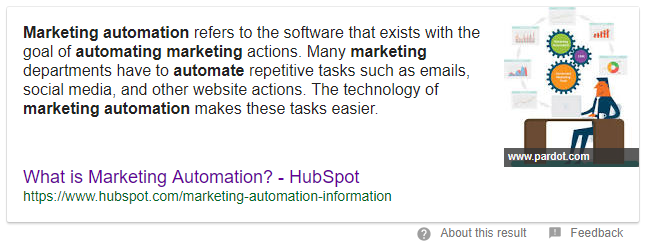
Marketing automation is just what it sounds like: automating marketing-based tasks.

If you’re not too familiar with marketing automation, here’s a simple definition from Google:

The goal is to save you time and increase your ROI.

Automation does this by cutting out time spent on tedious processes. Meaning you’re using less labor. And less labor means less overhead.

But here’s the biggest benefit of all:

Less time spent working means more time looking at pugs.

Yes, it’s a real addiction that affects thousands every year (source: N/A).

Image Source

The more you can automate, the better.

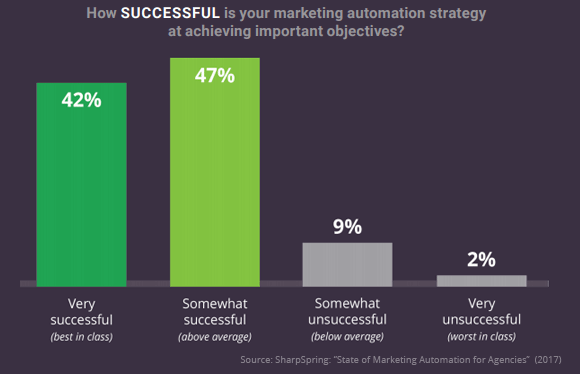
According to the latest data, the vast majority of marketers using marketing automation strategies are successful in achieving their objectives:

Image Source

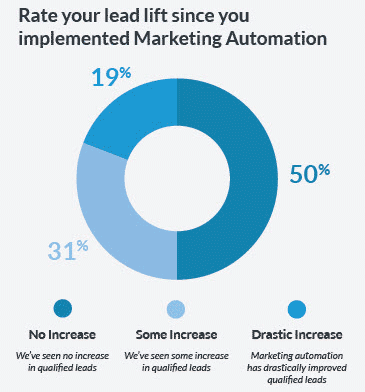
Another study discovered that 50% of marketers using automation tools found either some increases or massive increases in leads:

Image Source

But effectively gaining leads isn’t all that comes with marketing automation.

It shouldn’t even be the main focus.

Sure, it’s great that marketing automation can increase leads; don’t get me wrong.

That’s amazing.

But the goal here is to reduce time spent working without reducing profit.

If you don’t see a massive spike in leads, but you’re cutting out 10 hours of marketing work each week with automation, you’re effectively increasing profit by reducing labor.

See what I mean?

Even if the process doesn’t generate 10x the amount of leads, you’re spending less on labor.

Less labor = less overhead = more profit.

This is where people tend to go wrong. When you only focus on lead increases, you lose sight of profit and business growth.

There are dozens of ways to achieve profit and growth that don’t include landing more clients.

And according to Aberdeen, companies using marketing automation can reduce their marketing-to-close time by 49%.

That potentially means completing your work in half the time.

If you’re strapped for time and haven’t slept in weeks, it’s time to implement marketing automation.

It will not only cut down on your working hours, but it’ll also reduce your labor costs and help you generate more leads.

Here are three great ways you can automate your growth today.

1. Automate your Content Promotion

Content promotion is critical to business growth.

When it comes to driving new organic traffic and leads, nothing competes with top-notch content.

But having good content alone won’t always drive traffic.

So most marketers turn to promotion on social channels like Twitter, LinkedIn, and Facebook.

All of these platforms are an easy way to generate more leads.

But it takes time. And lot’s of it.

In fact, Statista found that the majority of marketers are spending anywhere from one to 10 hours per week on social media.

Image Source

By scheduling content and loading it into your Buffer queue, you can quickly waste a few hours every week.

Coming up with tweets and trying to squeeze your content into 140 characters sucks.

Especially when you’re re-sharing that post five different ways.

Content sharing is a necessary process that’s tedious and often time-consuming.

On top of that, it doesn’t always equate to a perfect return on investment.

So it’s sometimes thrown on the backburner.

But that’s not an option in today’s world that’s obsessed with social media.

Thanks to marketing automation, it doesn’t have to be.

You can automatically share content from your blog to social media without lifting a finger.

Here’s how.

Start by creating an account with Zapier.

It’s a popular automation tool that connects thousands of different SaaS tools that you use daily.

Once you make an account, click on the explore tab and head to the “Marketers” section:

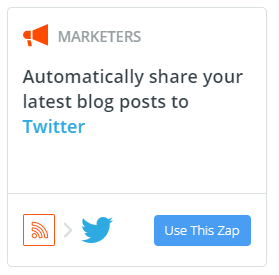
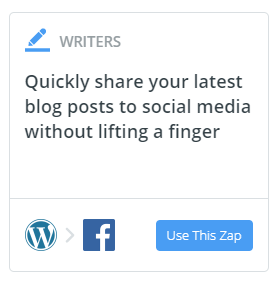
Next, you should be able to locate the following “Zap,” or automation process:

This is legitimately a life saver.

If social media is the bane of your existence, you will save hours every week from trying to post and come up with new ideas.

Click “Use This Zap” to start a new automation workflow.

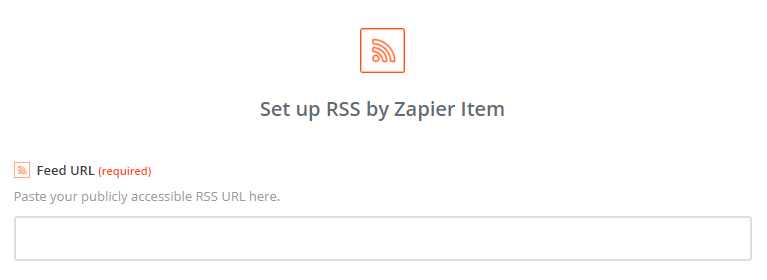
Next, you’ll have to link your public blog RSS feed.

If you’re not sure what that is, you can set up an RSS feed in just a few minutes with this Google tutorial.

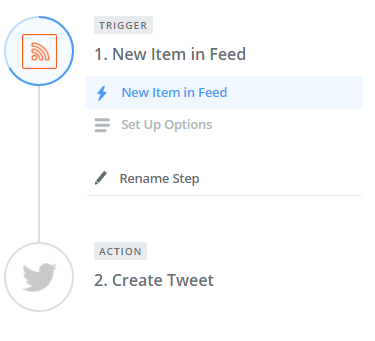
After plugging in your feed URL, you can head to the “Action” step, which is where your social post will happen:

All you have to do here is link your account, and you’re good to go.

So next time you publish a blog post on your site, Zapier will trigger this automation process and craft a tweet for you instantly.

You can use this automation technique for all of your social channels. If you don’t want to use an RSS feed, Zapier allows you to connect WordPress too:

Ditch the hours spent crafting tweets and social posts. Automate it instead.

2. Only Focus on the Important Emails

If you’re like me, you spend too much time checking your email.

It’s obviously not because you want to, but simply because your inbox is jammed with emails.

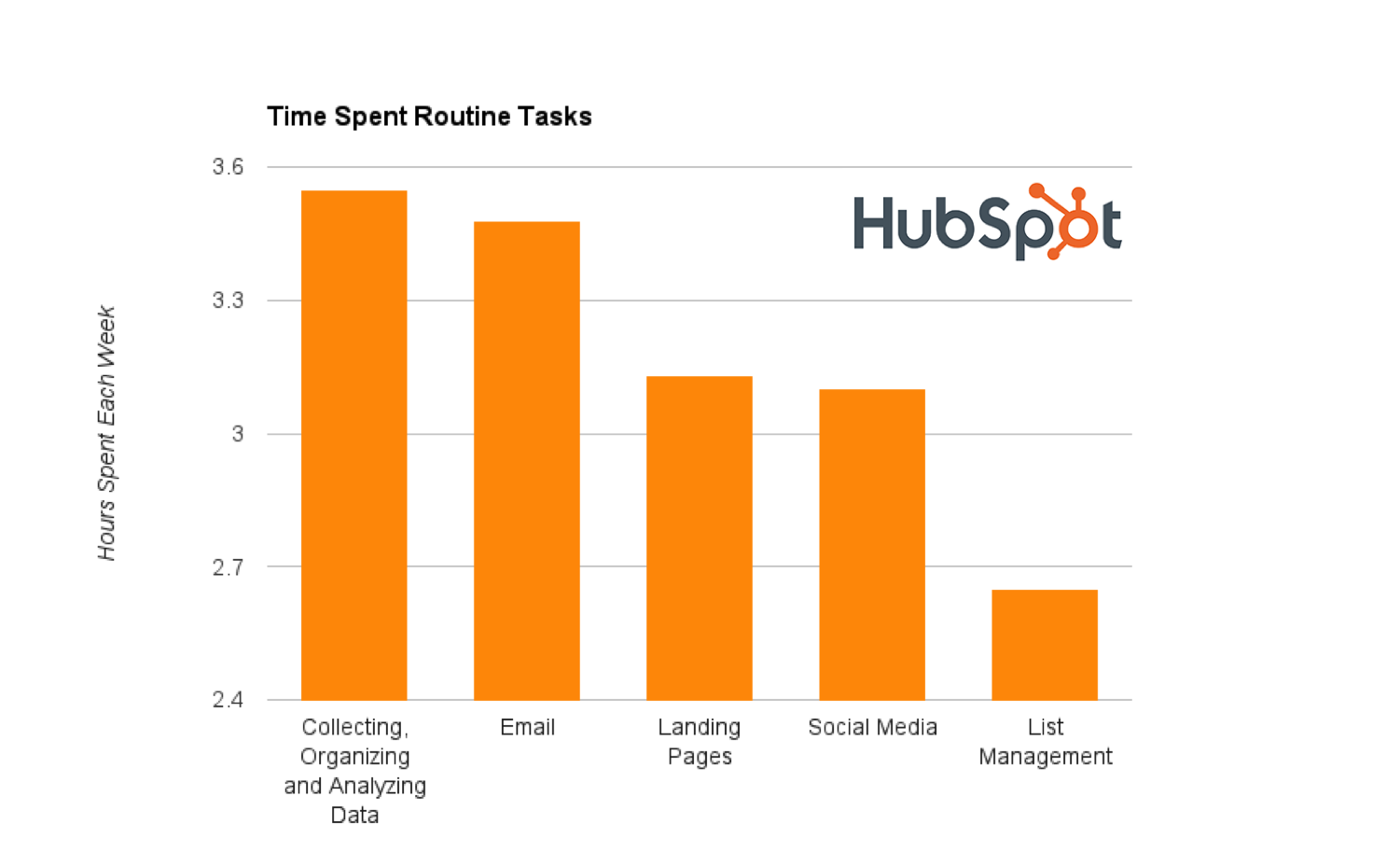
HubSpot’s latest research shows us that marketers spend an average of nearly four hours just sending emails every week.

Image Source

That doesn’t include checking your email. That’s just typing and sending emails.

Brutal.

Email sucks. It’s boring and often filled with junk.

Yet, your iPhone is blowing up every two minutes from new emails, distracting you from the task at hand and killing your productivity.

So, how do you only get notifications for the important stuff? How do you cut out those nearly 4 hours of sending emails each week?

By automating your email process.

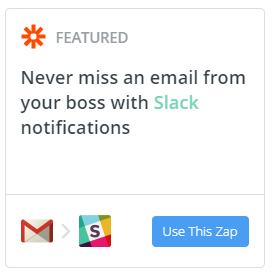
In Zapier, you can set up an automation workflow that allows you to get notified only when specific people email you:

Do you have important clients that email you frequently?

Or even employees that ask time-sensitive questions?

Then you need this. It’s extremely easy to set up, too.

Click “Use This Zap” to get started. Be sure to connect your Gmail account to Zapier and select your work email as the inbox.

Next, you need to type in the search string that will trigger this process.

For example, you can enter a few different search strings:

Try using direct email addresses from clients, employees, or even another boss (like your significant other).

You can also set up simple subject lines like “from:client name.”

Once you save this automation workflow, you’ll get pinged on Slack whenever an important email comes in.

Meaning you can respond instantly and only spend time on the most important emails.

So silence your email notifications, get some work done, and respond to the big-ticket clients.

Stop spending four hours weekly on email with this automation tip.

3. Automate your lead flow

Collecting leads is awesome.

You just drove some quality traffic to your site and converted a few of them.

Great. Now what?

Do you download the data and upload it into a CRM? Or into your favorite email campaign platform?

Lead flow processes can quickly become tedious and time-consuming.

From downloading, formatting, and uploading lists, you could be spending hours on it weekly.

Plus, if you don’t follow up with a lead fast, you risk losing them.

Automation is critical when it comes to perfecting a lead flow.

From automatically sending nurturing emails to uploading lists without doing the work, you can quickly cut down your hours.

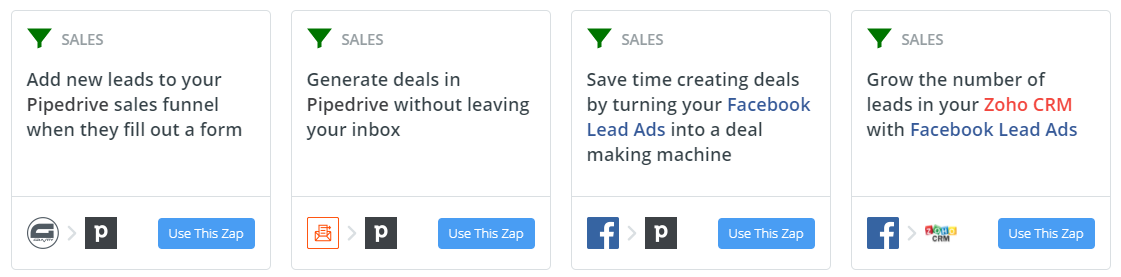
One of my favorite Zapier integrations is adding new sales leads directly to a CRM or email platform without doing the actual work.

You have much more important things to do besides uploading lists and creating new campaigns.

With Zapier, you can actually automatically upload new leads from your site or social media ads directly into a CRM or email campaign.

Zapier is great for this simply because of the integrations they offer.

You can connect it with the top services like MailChimp, HubSpot, and more.

If you use it, they most likely have it.

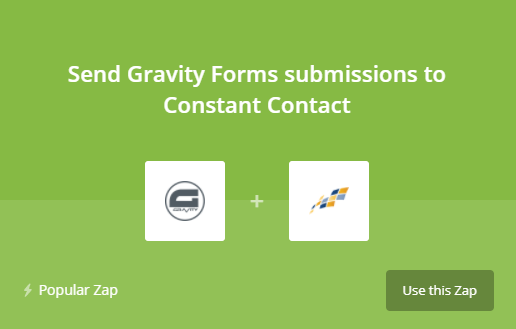
This is one of my favorite Zaps:

If you don’t use Constant Contact or Gravity Forms, don’t fret.

You can connect nearly anything with Zapier.

This is just an example of two integrations that are amazing.

If you set up this Zap, you are automating the process of lead gen to nurturing without ever having to worry about it.

With your favorite email platform, you can usually turn on settings to send newly-added leads a welcome email, too.

Meaning you are virtually skipping these steps:

Checking your leads, downloading the lead list, formatting it for your platform, uploading it, creating and sending a new campaign.

That’s potentially hours of work every week.

If you’re a lazy business owner like me, you can get tons of value from automating lead flows.

Conclusion

Running a small business is one of the toughest ventures you can embark on. Besides kids.

Don’t get me started.

From sleepless nights (or weeks) to chasing the ever elusive “work-life balance,” you’re always strapped for time. Your plate is constantly full to the point where nothing gets done.

Your workload exceeds human capabilities. And unless you’ve got the hookup on some new age brain transplant technology, you’ve only got one option:

Automation.

If you notice that tasks are piling up and taking up your time, you need to automate.

Do you want your business to have any shot at scaling and achieving new growth? If so, you’ve gotta cut out the junk that, though necessary, doesn’t directly contribute to growth.

But you can’t ignore it full scale. You just need to automate it, filter it out, or delete it entirely.

Freeing up time doesn’t just save you time. It can also help make you a lot more money in the long run.
 

About Kissmetrics

Kissmetrics combines behavioral analytics with email automation. Our software tracks actions of your users across multiple devices allowing you to analyze, segment and engage your customers with automatic, behavior-based emails in one place. We call it Customer Engagement Automation. Get, keep and grow more customers with Kissmetrics.


About the Author: Brad Smith is the founder of Codeless, a B2B content creation company. Frequent contributor to Kissmetrics, Unbounce, WordStream, AdEspresso, Search Engine Journal, Autopilot, and more.


from The Kissmetrics Marketing Blog https://blog.kissmetrics.com/market-effectively-without-wasting-time/

What Video Marketing Metrics Should You Pay Attention To? [Video]


from Marketing https://blog.hubspot.com/marketing/video-marketing-metrics-should-pay-attention-to

The Complete SEO Starter Pack [Free Download]

Think about everything you’ve bought in the last six months, specifically the big purchases. When was the last time you didn’t start a shopping trip with a Google search? If your answer is anything close to “I can’t remember,” you’re in good company. Every year, over 2.8 trillion search queries are made on Google alone.

A strong SEO strategy will help your business generate more leads and get found by potential customers, but search engines are constantly switching up and tightening up their criteria for high rankings. If you’re not familiar with the ins and outs of search engines and their algorithms, how will you know what steps to take to help your business get found?

Ryte and HubSpot have joined forces to bring you the answers you’re “searching” for with a 3-part Complete SEO Starter Pack. The kit includes everything you need to get your website and blog ranking on search engines, specifically:

  • A 30-day SEO planner (with tips and strategies for each day of the month)
  • Beginner's guide on "What is SEO" and the new era of search engines
  • A template for on-page SEO tips in excel
  • The keys to gaining inbound links to your site for improved off-page SEO
  • Which performance indicators to track when analyzing SEO performance
  • How to structure your web pages for maximum on-page SEO
  • How to identify the keywords your target audience is searching for
  • And much more on a successful long-term SEO strategy


Click here to download your Complete SEO Starter Pack. 

marketing


from Marketing https://blog.hubspot.com/marketing/introductory-guide-search-engine-optimization-2017

Monday, 27 November 2017

The 1 Secret to Effective Customer Engagement at Any Scale

Customer engagement is the key to effective digital marketing in the Engagement Economy. The internet is saturated with content marketing, people’s inboxes are full of well-designed emails, and account-based strategies are quickly becoming a B2B standard. Improved customer engagement is the only answer to increasing customer expectations, but it can be a complicated strategy.

Customer engagement is the strategy by which businesses build relationships with their clients and customers, with the intent of creating awareness and fostering brand loyalty. It is the foundation of the Engagement Economy, a movement to deliver the authentic and personalized experiences that consumers expect and demand.

Brands that continuously engage with their customers benefit from doing so in many ways:

  • It differentiates brands. Consistently finding opportunities for customer engagement results in memorable brand touchpoints.
  • It increases customer satisfaction, which helps to retain customers while also making them your biggest advocates.
  • It creates trust between the brand and their customers. It’s hard to feel buyer’s remorse over a purchase when a brand is consistently interacting with the buyer—even after the sale.

It’s because of measurable, proven benefits like these that 98% of marketers have a developed a clear strategy to address customer engagement. Despite their efforts, however, almost half of those strategies are severely restricted by one internal hindrance.

Your customer engagement efforts won’t be effective without internal alignment. Even though 98% of marketers understand the value of a robust customer engagement strategy, only 56% report having alignment on that strategy with the most important part of their team—the executives.

In this blog, I’ll cover how to achieve executive-level alignment to take your customer engagement to the next level. 

Every department should be aligned with a marketing strategy, especially a broad strategy that will involve many campaigns, but getting buy-in from the C-suite is key. In one sense, even the best customer engagement strategy will likely fail without the support of the executive team. On the other hand, the C-suite can help mobilize alignment across the entire team, redirect company resources to the strategy, and provide the kind of oversight to make sure the strategy is constantly improving. In fact, 58% of companies reported higher profitability than their competitors when their CEO was in charge of customer experience initiatives.

The key to any customer engagement strategy, at any scale, is executive-level buy-in.

First, of course, you need a strategy for customer engagement, but once it’s on paper, how do you get the C-suite to sign on?

1. Make the Case for Customer Engagement

While the case may be clear for marketers in the trenches of a new age of digital networks and communications, it’s also easy to see why many executive-level leaders don’t jump at ideas like, “building relationships with audience members.” That sounds time-intensive and hard to quantify.

And it is.

So, quantify it, and do it quickly.

  • Define “customer engagement” in terms that can be measured, like email opens, branded SEM keywords, etc.
  • Provide statistics that connect improved engagement to the bottom line.
  • Demonstrate how your competition is better at customer engagement than your organization.

Some statistics you can use:

  • 60% of consumers expect an improved experience from brands they are engaged with.
  • 54% of consumers engage with brands in order to get the latest news on products and services.
  • 66% of B2B consumers want to advocate for brands that engage well.
  • 66% of B2B consumers fully expect that all communications with a brand to be personalized.

Once you’ve proven the need, cast a vision.

2. Present Your Customer Engagement Goals

Tie the need directly to your organization and your audience, and outline the end result of your customer engagement strategy. Create some goals based on the metrics you chose to quantify engagement strategies, and extrapolate the revenue-related consequence of those improvements. For example, you know that every X email opens results in one purchase, qualified lead, etc. Your customer engagement strategy aims to improve email opens by Y%, which would, in one year, result in additional revenue of about $Z.

If there are a variety of management and executive-level leaders you need to get aligned, be sure to also highlight how the strategy will help each individual department.

3. Outline the Strategy

Thomas Edison is credited with saying, “Vision without execution is hallucination.” The C-suite doesn’t want to know every detail, but you will need to demonstrate your plan. The executive team won’t buy into a hallucination.

Outline the basic strategy for taking your customer engagement metrics from where they are today, to where they need to be. Make sure the plan is rooted in the present-day reality of your situation and shows practical, achievable increments.

4. Listen and Apply Feedback

There will be considerations you didn’t think of, and insights you didn’t have. Not to mention, anyone—executives included—is more apt to get on-board with a plan when they have a say in that plan.

Be prepared to listen and make adjustments.

5. Commit to Accountability

Make sure you have a plan to share frequent updates with the C-suite. Whether it’s a quarterly meeting or a monthly email, make it part of the overall plan, promise periodic updates—and then make sure your team delivers them!

Customer engagement is a requirement for effective marketing, sales, and customer service in the Engagement Economy. Every team needs the right strategy, insights, and tools, but the one secret to truly effective customer engagement is executive-level buy-in. Start by ironing out your engagement strategy. Make sure it’s rooted in the present reality and clearly tied to revenue-related goals and you’ll be set up for success.

What do you stand to win if you achieve optimal customer engagement? How would you approach achieving executive-level buy-in? Tell me about your obstacles and how you might overcome them in the comments.

The post The 1 Secret to Effective Customer Engagement at Any Scale appeared first on Marketo Marketing Blog - Best Practices and Thought Leadership.


from Marketo Marketing Blog https://blog.marketo.com/2017/11/1-secret-effective-customer-engagement-scale.html

12 of the Sassiest Brands on Social Media

Brands use social media for a lot of things: to distribute content, to share news, to provide customer service.

And sometimes, brands use social media for jokes, burns, and unmitigated sass.

When brand accounts share personality and humor on social media, it's delightful -- and it captivates the collective internet. It's funny when brand accounts use social media like the real people behind the copy, and it breaks up the monotony of the negativity and mistrust that characterizes a lot of people's feelings about their social feeds.

So we've rounded up 12 brand accounts to share the burns, the jokes, and the GIFs that make these sassy profiles some of our favorites online.

12 of the Sassiest Brands on Social Media

1) MoonPie

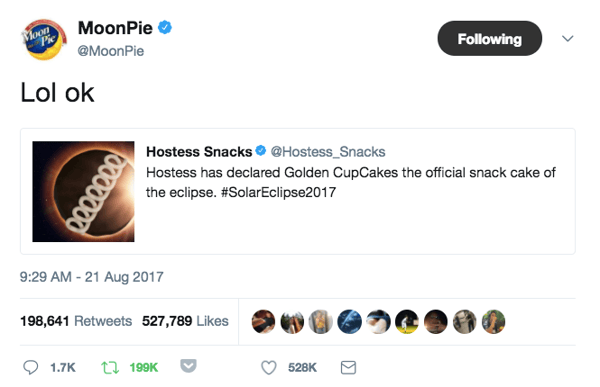
No list of sassy brand social media accounts is complete without MoonPie -- the vintage snack cake that started garnering a lot more attention on Twitter for its quirky insights -- and burns -- after launching a Twitter beef with Hostess Snacks over whose treat was the official snack of the solar eclipse in the summer of 2017.

moonpietweet1.png

MoonPie is never afraid to wade into hotly contested debates, like the still-raging critique of Twitter doubling its character limit to 280.

But remember, it's not all fun and games -- MoonPie's witty social media manager has feelings, too.

2) Helper

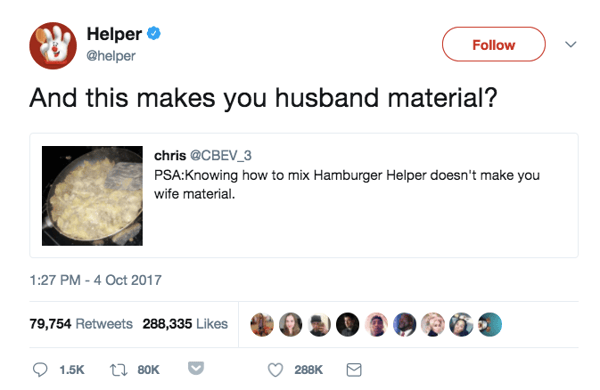
... as in, Hamburger Helper. Helper likes to wade into the social media muck by savagely burning people back when they try to make fun of the quick and easy meal brand -- like so:

helpertweet1.png

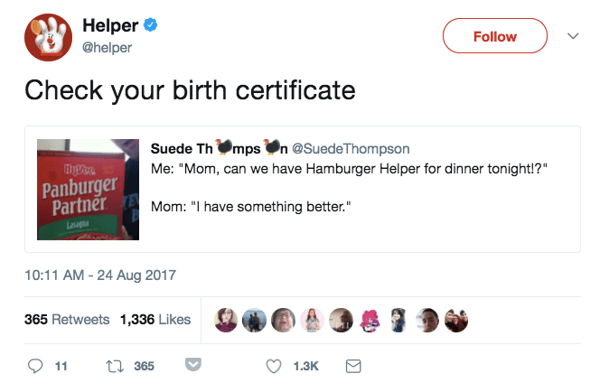
Simply put, Helper tells it like it is -- and helps followers confront critical conflicts within their families and their kitchens.

helpertweet2.png

I don't eat hamburger, but even I can get on board with this level of hilarity from a brand on social media.

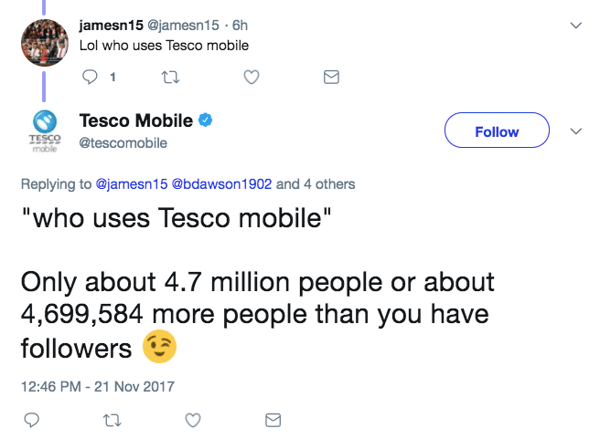
3) Tesco Mobile

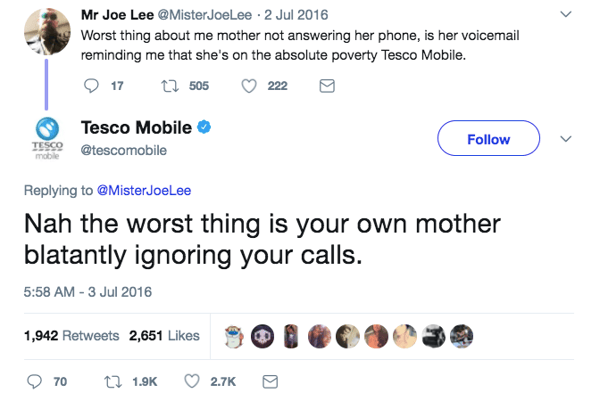
Tesco Mobile is a mobile phone provider in the United Kingdom, and from what I can tell from customer complaints on Twitter, its cellular coverage might not be the best in the biz. It makes up for dropped calls, however, by coming back with hilarious takes and jabs in response to the haters.

tescomobiletweet.png

Seriously, don't make fun of Tesco Mobile lightly -- be prepared for them to come into your mentions with a fiery reply that mocks everything about you.

tescotweet.png

4) Discovery

Normally, Discovery's social media content showcases stories about history, geography, and cute animals, like in this tweet:

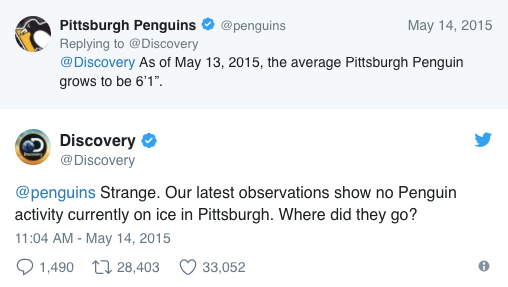
Which is why it was so unexpectedly hilarious when, after the Pittsburgh Penguins hockey team tried making a joke about the average height of a penguin to contradict Discovery's estimate, Discovery came back with a vengeance:

discoverytweet1.png

For context, the Penguins had just been eliminated from the Stanley Cup playoffs ... ouch. We hope they had some ice on hand for that burn.

5) Brooklinen

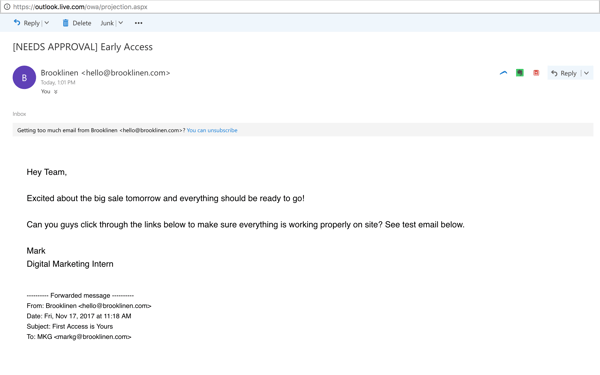
Last week, Brooklinen sent this email to HubSpot Marketing Director Debbie Farese. At first glance, it appears to be a test email that Digital Marketing Intern Mark accidentally sent to Brooklinen's entire list, advertising its upcoming sale on sheets.

brooklinenemail.png

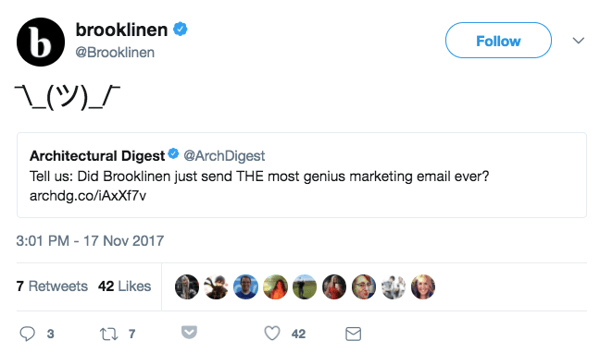
Our team gawked at the email, lamenting what we were sure would be a swift end to Mark's digital marketing career -- until we did some investigation on Twitter and found this incriminating tweet.

We realized we had all been tricked by a clever marketing ruse designed to drum up attention -- and give subscribers early access to Brooklinen's sale.

brooklinentweet.png

Well played, Brooklinen. Well played.

6) Denny's

Denny's got in on a popular Twitter meme that tricks the viewer into repeatedly zooming in on spots on a picture to read secret messages -- try it for yourself.

But Denny's also tweets clever remarks commenting on hot topics circulating -- like the running joke of 2017, when social media accounts kept creating different ways to copy Snapchat Stories:

But they always find a way to infuse breakfast foods into their sassy tweets and memes -- like this one.

7) Merriam-Webster

Merriam-Webster uses Twitter mostly to share interesting trends and articles about unique word definitions -- but most tweets are usually accompanied by a very niche GIF or reference to pop culture, like this one:

The dictionary's social media manager also likes to subtly comment-without-commenting on current events taking over the news by tying it into the context of word definitions -- see what I mean?

What's the definition of the word "shade"?

8) Charmin

Charmin has a hilarious series of tweets called #TweetsfromtheSeat about -- you guessed it -- sitting on the toilet. Its tongue-in-cheek bathroom humor will definitely make your day -- and make you remember Charmin the next time you go to pick up some TP.

But make no mistake, Charmin shares important news stories in its vertical, too.

Who says πŸ’©jokes are just for kids?

9) Wendy's

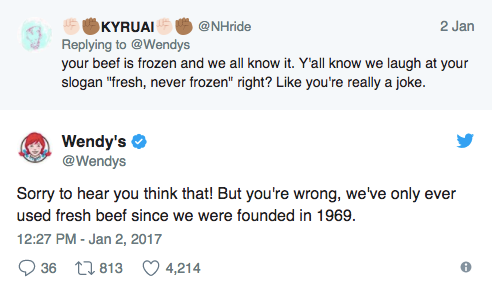
Wendy's became famous this year for starting beefs (get it?) with anyone and everyone it could on social media. It all started with this innocent tweet, advertising its policy of only serving fresh beef.

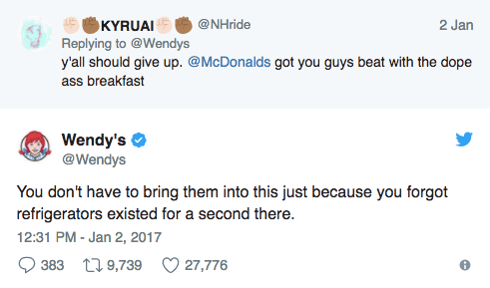
This Twitter user tried to start a Twitter battle with Wendy's, and clearly, they had no idea what they were in for:

wendysbeef1.png

wendy'sbeef2.png

Owned.

And while Wendy's sometimes uses social media for good, old-fashioned Biology 101 jokes ...


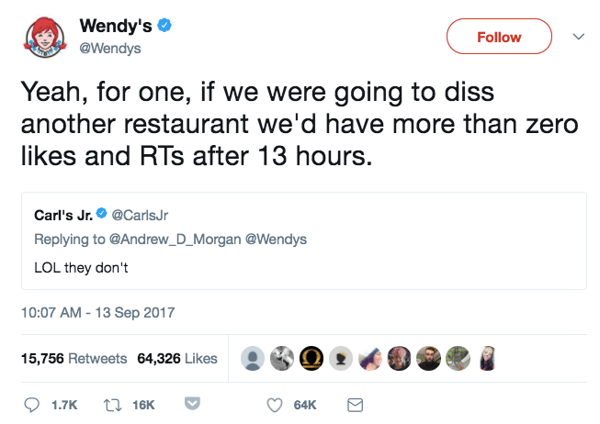
... its social media sass is best reserved for people (and other restaurants) that dare hint its food is anything but #1.

wendystweet2.png

10) Bangor Maine Police Department

I'm from a little town called Portland, Maine, so when I started seeing news stories about Bangor, Maine's charming Facebook account, I was overjoyed.

Police Sargeant Tom Cotton writes the Bangor PD's lengthy status updates, featuring long-winded stories that feature jokes, some friendly mockery, and all-around laughs.

You can click to expand this one, or you can just read my favorite line:

"It's your day on in the comment section of the world's most marginally famous Police Department Facebook page. We heard that Zuckerberg reads it (that's a lie)."

Or this one:

"For those of us in Maine? We will soon have the distinct privilege of leaving for work in the dark as well as returning to our homes in the dark. I also turn the analog bathroom scale back 10 pounds this time of year...or only look at it in the dark. Might as well make this enjoyable."

These updates all contain stories, warnings, and advice for Bangor, Maine residents -- all wrapped up in hilariously-written statuses.

"It should be noted that cats tend to come down out of trees when they make a decision to do so. Pleading with a cat to return to terra firma is done purely to please those standing around and looking up. It's a public relations move which makes people feel warm inside, but cats are cats."

11) BuzzFeed Books

BuzzFeed has nailed creating different profiles and outlet for its fans' myriad interests, and BuzzFeed Books focuses on news and stories in the literary world.

For the most part. The account had some words (but only a few) about the expansion of Twitter's character limit:

12) Pop-Tarts

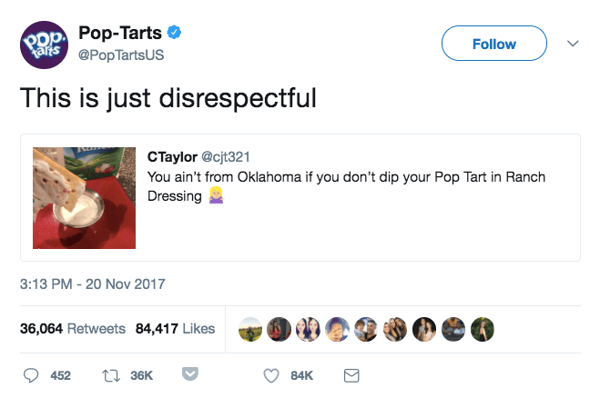
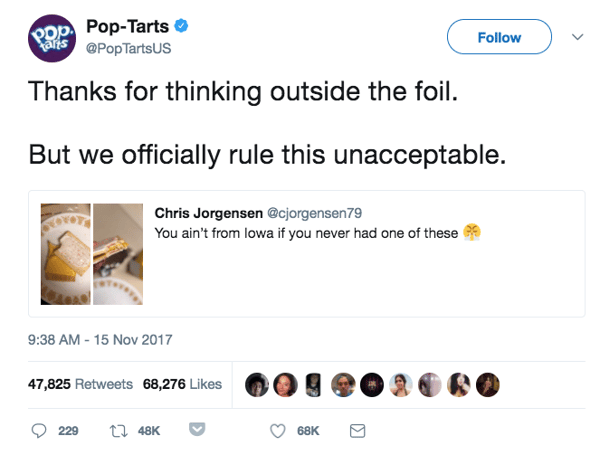
I love Pop-Tarts. (Did you know they're vegan?) I also love the way the brand refuses to let anyone disgrace its name with unconscionable food preparation choices -- like this one:

poptarttweet1.png

Or this one:

poptarttweet2.png


from Marketing https://blog.hubspot.com/marketing/sassiest-social-media-brands