Hi everyone... Wayne here. Always been interested in marketing, eventually leading me in to doing a Marketing and Business Management course at Oxford Brookes in order to expand my knowledge further and now I work as a content writer at Firepath Digital.
Manufacturers have the chance to reach a wide audience, improve their sales, and increase their revenue with the help of inbound marketing and automation. While older marketing techniques such as cold calling, print ads, and trade shows remain effective to a degree, supplementing these strategies with effective online marketing can help you get better results.
Why is Inbound Marketing Important for Manufacturers?
A majority of B2B customers perform research online before making a buying decision, and the types of people that manufacturers target aren't just any B2B customer. These companies market to serious individuals including scientists, plant managers, and engineers. These customers are also looking for complex and expensive services and products that need to give them exactly what they need.
By taking advantage of inbound marketing, manufacturers can effectively boost their ROI while further separating themselves from competitors that are performing poorly. There are many ways you can utilize inbound marketing to enhance your overall marketing strategy.
Generate More Traffic Through Inbound Marketing
While you may already have a website, you may not be getting the kind of traffic you have the potential to attract. Consider the main objectives of your marketing efforts, which are to attract, convert, and close. Without the ability to attract, the rest can't follow, making inbound marketing through your website crucial to success.
Unlike other marketing methods such as print ads and mailers that rely on outreach to customers' locations, inbound marketing can help bring in a steady stream of traffic from people actively looking for your services.
The key to getting plenty of high-quality traffic to your website is to write large amounts of relevant, valuable content that draws and engages readers. It's also important to maintain a blog with regular updates that keep people informed while consistently boosting traffic.
Many businesses underestimate the value of a blog with fresh content, but the kind of people manufacturers want to attract will be actively looking for more information for these products and services. An in-depth blog can educate visitors regarding common roadblocks in the industry, tell them how your products or services can help solve their problems, and which issues they might be facing that you can help ease.
It's important to refrain from being too promotional with a blog. However, educating prospects and showcasing your company as an industry authority can boost traffic and help you rank higher for certain long-tail keywords that people search.
Different types of content can also help carry people through the sales cycle, giving them more incentives to share the messages you convey.
Increase Brand Awareness
Another benefit of inbound marketing is a higher level of visibility, resulting in more brand awareness. Because of this visibility, you can gain a better reputation that helps convince potential customers to choose you over competitors.
Valuable content such as blog posts, guides, ebooks, white papers and videos can all work together to provide prospects with valuable information. Webinars can also be a great asset to your marketing strategy. You'll likely find that these types of content are more effective at brand awareness than other offline strategies, lending your business credibility that it might otherwise lack.
Experience Better Lead Generation
If your business isn't targeting people specific to your products or services, your marketing efforts will be too broad to be efficient. You need to make sure that you're only targeting a select group of people who will benefit from what you have to offer, separating "leads" from uninterested parties.
Manufacturers often sell expensive equipment or high value services, which makes lead generation more of a challenge because of highly selective buyers. At the same time, leads become more valuable when they're willing to spend more on a product or service.
Rather than relying only on cold calls or print ads, you can see a better reach and response when you use inbound marketing and marketing automation in conjunction with other marketing efforts. Utilizing valuable content offers as promotion in your traditional print ads or cold outreaches will help increase the demand for such content pieces. This will help you attract and convert more leads, making some of the traditional marketing methods more effective as well as warm up prospects for a sales conversation.
Because leads are at the start of the sales process, you should focus on creating "top of funnel" content such as blog posts and videos that helps attract visitors and build brand awareness. Then use content offers as lead magnets such as guides, white papers, free consultations to improve conversion and the volume of leads generated from inbound marketing.
Improve Lead Nurturing Abilities
Once you've attracted high-quality leads, your work has only just begun. It's time to nurture them and see them through the sales cycle to become long-term customers. This process can take months or even years in the manufacturing industry.
Keep in mind that each prospect is likely to be in a different stage of the sales process, with some further along than others, but most will need a long period of nurturing before they make a purchase.
Fortunately, inbound marketing can help automate this process and nurture those valuable leads, using content that guides them along. This gives your leads plenty of attention and information, while allowing you to spend more time focusing on running your business.
One effective way to nurture leads using inbound marketing is to deliver automatic targeted emails that guide prospects to convert them into customers. These emails can direct them to ebooks, guides, consultations, and case studies that convince them that you can meet their needs.
Take Full Control Over Your Marketing
Inbound marketing also gives marketers better insight into how well their campaigns are performing, while making it easier to adjust them accordingly.
Ultimately, inbound marketing is integral to a successful marketing campaign for manufacturers. You'll be able to attract, engage, nurture, and convert leads more effectively while wasting less resources and money in the process.
from HubSpot Marketing Blog https://blog.hubspot.com/marketing/remanufacture-your-marketing-an-inbound-marketing-guide
It’s the only way to demonstrate your product’s value to potential customers. Your goal is to convey information about new features, successful case studies, and industry trends.
Converting B2B free trial users into paying customers involves lots of communication about why your product trumps competitors. In-app messaging is a powerful tool to send on-time, contextual messages to connect with users.
“Customers are focused on your product at the moment of [in-app] communication, and can be delivered immediate, direct information that is targeted specifically to them and their patterns of behaviour,” states Alex Cohen, managing director at Xander Marketing.
Take full advantage of in-app messaging. Here are five ways to gain more paying customers:
1. Upgrade Your Onboarding
Trial users are ready to get started with your platform. Convinced by your promises to deliver, it’s your responsibility to exceed users’ expectations.
First, let’s debunk the notion that it’s easy to transform free trial users into customers. They still need guidance toward the sale.
That’s why onboarding is so important to the success of the user. You want these initial interactions with your product to showcase the best of your brand. To keep them hooked, your team must continue to offer solutions.
With in-app messaging, you can pinpoint targeted actions to activate the user sooner. Send tailored messaging to help the individual learn how to gain quick wins from your platform.
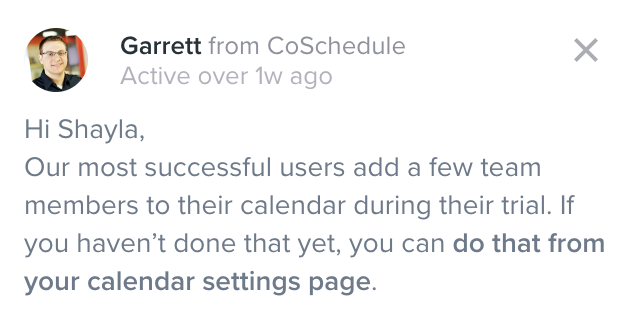
The CoSchedule team executes this strategy well. During the trial period, users receive tidbits on how to improve their experiences.
What’s also vital is celebrating small accomplishments with the user. A note of congratulations makes them feel part of your brand family. While the achievement is fresh on their minds, you also can ask users to complete another action.
Delivering ongoing value means setting expectations and understanding the user’s business goals. When tackling the onboarding process, strive to guide the user to a positive outcome.
2. Feature Product Updates
Alienating trial users is one mistake businesses make when interacting with this specific group. Giving them limited information won’t help them become customers faster.
While you may attempt to create exclusivity, trial users don’t like hearing the phrase: “Oh, you’re just a trial user. That’s unavailable to you.” Instead, look for ways to involve them in your brand community.
Work with your team—product, marketing, and sales—to include trial users in announcements about your application. It’s an effective way to show these potential customers that your product is constantly evolving, and you want them to be part of your growth.
Broadcast new product features within the application to encourage immediate use. Make sure to give specific instructions on how to use the feature and how it will benefit the individual. If not, you risk them ignoring every message you send.
Try giving simple examples to exhibit the ease of use. Depending on the complexity of the feature, you may want to add screenshots or a short video tutorial.
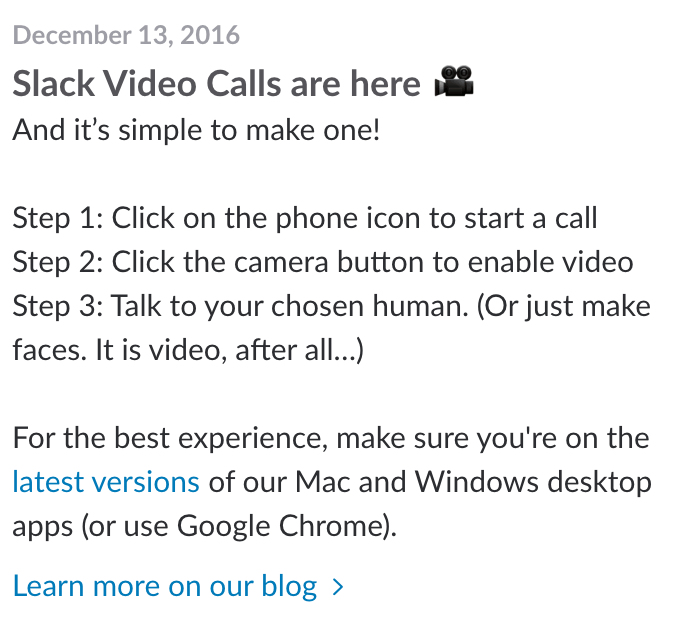
Check out the example below from Slack. When the company announced its video call feature, the message contained simple steps for users to follow.
Moreover, invite users to ask questions or report bugs regarding the new feature. It helps your team improve the product, and trial users know that their concerns are addressed.
3. Provide Educational Training
Education is the foundation of converting trial users into loyal customers. You need to properly train users how to gain value from your product. Without it, people will get frustrated and decide to churn.
SaaS companies must ensure that the learning curve isn’t too steep for their audiences. No one wants to feel like they are taking an advanced math class. Plus, people don’t want to waste hours (or even days) learning how to get your platform to work correctly.
So it’s not good enough to just say your product is easy to operate. It actually has to fulfill that promise, or you risk losing your trial user to a competitor.
In-app messaging works as another distribution channel for your marketing team to teach trial users. You can deliver helpful content to guide people throughout the journey.
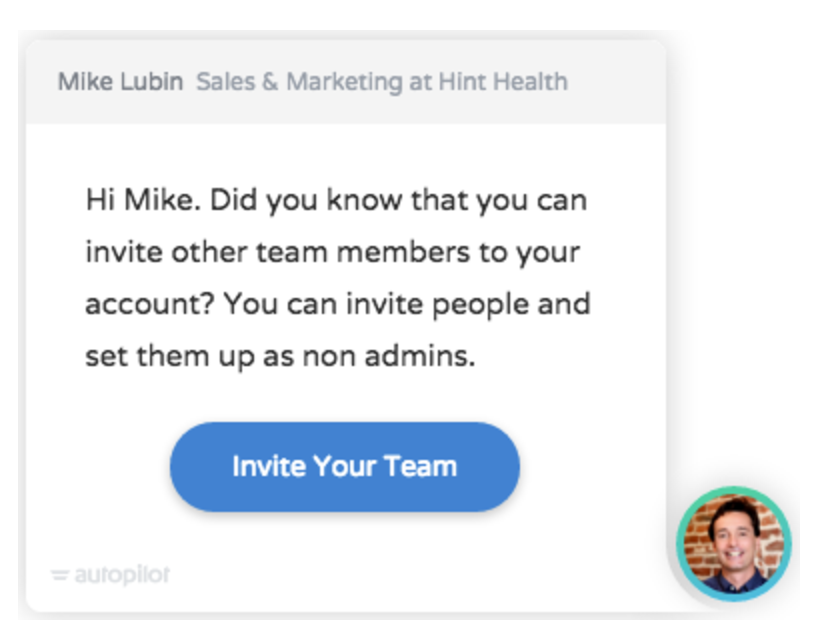
And you don’t have to explicitly say that your message is for educational purposes. In the screenshot below, Hint Health frames the message in a “Did You Know…” format.
With the power of data, your team also can decide who needs more training. Segmentation is an effective strategy to personalize the learning experience. That way, the advanced user isn’t getting bored with beginner content.
“One of the main benefits of in-app messages is the capability of hyper segmentation, so why wouldn’t SaaS companies take advantage of that? Sending the same message to every user without even knowing if they’re interested can be a huge shot in the foot,” says Gabriela Tanuri, Content Hacker at Pipz.
Be ready to train your trial users when they sign up, and customize the education to fit the user’s needs.
4. Gather User Feedback
In-app messaging is one of the best channels to collect user feedback. It’s a chance to speak directly with the user inside your platform.
You can learn about user challenges in real-time. So your team knows exactly when the individual used the specific feature and how the problem is affecting the user’s progress.
You’ll also gain insight on which benefits matter most to the user. Then, you can target more content resources around those particular benefits.
“From VIPs to free trial users and more, in-app messages have quickly become the best way for our team to get feedback from customers in the right place at the right time — and we’re noticing that the feedback is better when we can get really specific with both our targeting and messaging,” writes Dave Gerhardt, marketing at Drift.
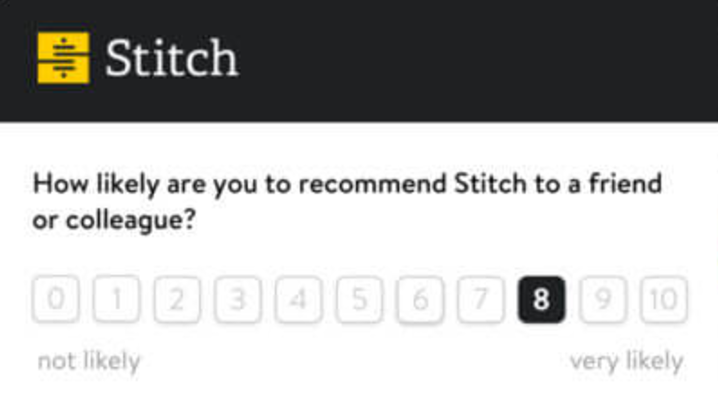
You can employ the 1-10 rating scale to get feedback from your users. It’s quick and easy for the person to participate, and your team receives qualitative data to improve the product.
Part of the sales process is listening to your users. Therefore, pay attention to user feedback to boost your revenue.
5. Leverage Sales Opportunities
Most companies want to create new channels to gain sales. In-app messaging helps facilitate the sales conversations with the trial user.
Like any sales call, there’s an appropriate time to ask users to explore your pricing plans. Avoid solely using in-app messaging to just convert users. Your audience will spot this tactic immediately and will start ignoring your messages.
If direct sales doesn’t work best for your company, try using it to take the conversation offline. Message users about setting up an appointment for a tutorial to demonstrate the product’s value. You also can offer special discounts or bonuses to this targeted group to clinch the sale.
Train your support team to spot opportunities to show trial users benefits only for paying customers. It’ll spark the user’s curiosity about upgrading his plan.
Another idea is to send customer success stories via the messaging platform. Users will become inspired to achieve similar results as their paying colleagues.
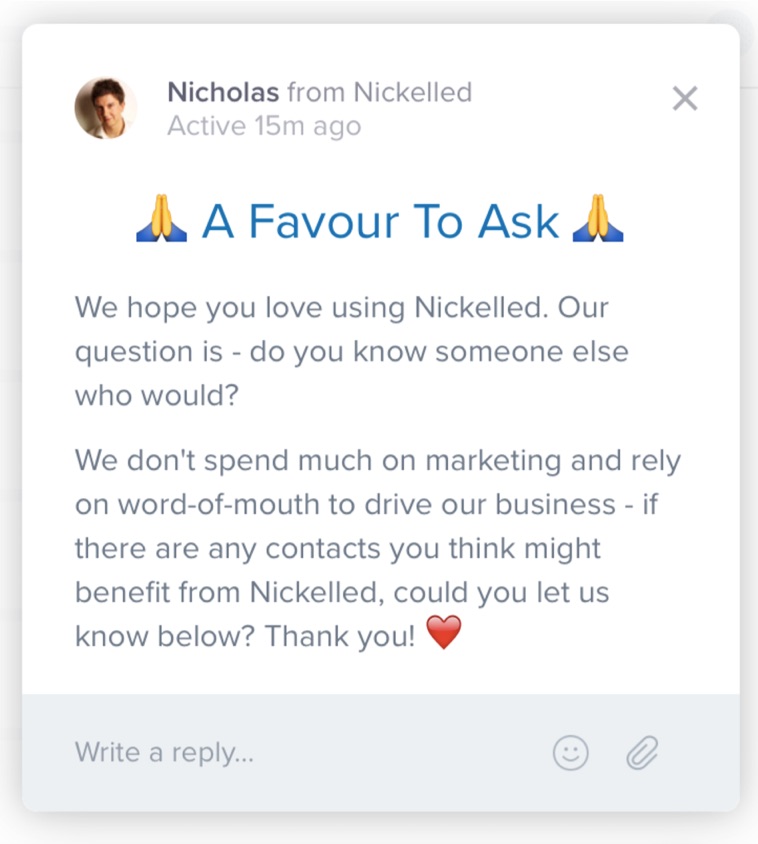
If the user doesn’t seem interested in buying at all, experiment with using in-app messaging to ask for referrals. Read this message from the Nickelled team:
Building quality relationships with your audience starts with communication. In-app messaging offers an opportunity to connect and support your trial users in the customer journey.
Strive to educate users about your product and respond to users’ concerns to improve the overall experience. In-app messaging is your pathway to more conversions.
About the Author: Shayla Price lives at the intersection of digital marketing, technology and social responsibility. Connect with her on Twitter @shaylaprice.
from The Kissmetrics Marketing Blog https://blog.kissmetrics.com/how-in-app-messaging-converts/
It’s 10:24 p.m. on Friday night after a long week on the road talking about the Engagement Economy. Instead of relaxing, I am attempting to chalk paint V-Bot, the mascot of Marketo’s LaunchPoint partner Vidyard, in time for my son’s 5th birthday party tomorrow morning.
So how on earth did I get here?
Well, I have been swayed by good swag, which has taught me several great marketing lessons that I’ll share with you in this blog.
Why Swag?
Throughout my 20 years in marketing, I have been to many conferences. Along the way, I’ve collected a bevy of swag–the good, the bad, and the boring. I will fully admit that I am a total swag hoarder. As an event marketer, swag can be a decent ticket item on your budget, but unlike, say, the upgrade to the carpet in your booth, it has greater potential to provide dividends after the conference ends.
Swag is a universal tool that can help drive brand affinity with customers and partners as well as create brand awareness with net-new prospects. Swag gives you a chance to show your brand’s personality, and it makes its way home with attendees if done well. It’s like free advertising.
At this point, you might be asking the style versus substance question: Should I bring good swag or good collateral? The answer? A mix of both. There is absolutely a time and place for distributing content at your booth, but in some cases, you’re better off keeping things short and sweet–welcoming the opportunity to engage and follow up with visitors post-event using your marketing platform. Far too many hard copy materials end up in hotel room recycling bins than make it home in attendees’ suitcases. But good swag has a way of finding its way home.
4 Elements of Good Swag
To accomplish #SwagGoals, finding the perfect items that are both right for your brand and a hit with your audience, aim to meet one or more of these branding goals:
1. Be memorable, fun, or useful. Any combination of these characteristics can land your swag right in the sweet spot and make a lasting impression that makes your brand human. Not to toot Marketo’s own purple horn, but one example is the Marketo munchkin we gave out last year. The little purple guys were adorable, but by naming it “Munchkin,” we also gave a playful insider’s nod to our Munchkin tracking code, a powerful feature of our product.
2. Get exposure immediately at your event. Wearable swag has immediate returns and can be leveraged to drive brand awareness or even foot traffic on-site. Consider giving way accessories, such as glasses, hats, and socks, since attendees already have their conference attire planned out. One big potential billboard you might want to target is conference badges. Everyone loves a little flare, and Marvel Marketers tapped into that and got free on-site exposure. For small surfaces, keep design elements simple so they stand out.
3. Amplify in social media channels. If you’re going to shell out the money for a higher ticket item like a photo booth, be sure to brand the printed images and encourage people to follow your company’s social media pages and share their photos with a hashtag that ties into your brand. Lattice Engines tapped into that with their #mktgnerd concept. This is also a great way to build your following.
4. Maximize post-event exposure. Providing attendees with practical swag increases the likelihood they will take it home–and your brand along with it. Jennifer Clegg, Marketing Nation veteran and 2017 Summit presenter, said the most useful swag she’s ever received is a luggage tag. In my case, as a road warrior and parent, anything cute that I can repurpose as a gift to my kids wins every time.
After my session at last year’s Marketing Nation Summit, I returned home with some fabulous swag from the killer Speakeasy Party thrown by our services partners Elixiter and Mambo. Perhaps feather boas and cigarette holders were not the best idea for 1- and 4-year-old boys, but it was hilarious. Fun? You bet. Memorable? Check.
Have a Plan B
Once you nail your concept for swag and your attendees are clamoring for it, you might end up running out. But this is a good problem to have—it presents a new opportunity for follow-up.
If you run out of swag, don’t close up shop. Make sure you capitalize on the booth traffic and engage with visitors to learn more about who they are. From there, you can give them something else at the booth or offer to send them something later. The latter offer is a judgment call you need to make since postage can get expensive. If you know the conference audience is right in your target sweet spot, it might make sense to go the extra mile across the board–or you could coach your booth staff to make the call on a case-by-case basis.
For example, at Marketing Nation Summit last year, Vidyard ran out of their very popular V-Bot stuffed toy by the time I visited. But they took my card and said they would send me one afterward. It arrived a week or so later, and it was my “gift” to my 4-year-old. You can guess where this is going, right?
Fast forward to a year later, and the only thing my son wants for his birthday is a robot party featuring his Marketing Nation robot friends. My swag-as-gift parenting move may have backfired on me–I now know swag hoarding is apparently hereditary, but it also proves the success of good swag.
Are You Going to Marketing Nation Summit?
This year’s Marketing Nation Summit is right around the corner, with visionary speakers, amazing partners, and a passionate tribe of thousands of marketers all gathered in one place. It is a firehose of cutting edge technology, a booster shot to your marketing chops, and has the vibe of the most fun family reunion ever.
For those coming to the event as a sponsor or partner, remember that you are marketing to marketers. Bring your A-game to cut through the noise and impress. Make the most of your field marketing spend–focus on not what is most expensive but what makes a memorable connection. And to my fellow swag hunters, there is sure to be some of the coolest stuff out there. I can’t wait!
So until then, what is the most creative swag you’ve gotten at a conference? Fellow working parents, anyone else pulled the swag-as-gift move?
If contributing guest posts is part of your content distribution and promotion strategy, you're probably familiar with the following scenario: You write a great article for a guest publication, and at the end, you’re compensated with a teeny, tiny paragraph about yourself.
Unless you wrote the article for purely altruistic reasons, this paragraph, though short, is quite critical. Not only does it connect you to the article on a level beyond your byline, but also, it provides space for links back to your website or social profiles. And who wouldn't want even that little bit of glory?
But what are you supposed to write in that brief paragraph, anyway? How do you make your author bio compelling, powerful, and effective -- without a whole lot of space?
As it turns out, there are quite a few seemingly small ways to approach your author bio that can help it have a much bigger impact. But what do they look like, exactly? Read on -- you’re about to find out.
How to Write an Author Bio
1) Write in the third person.
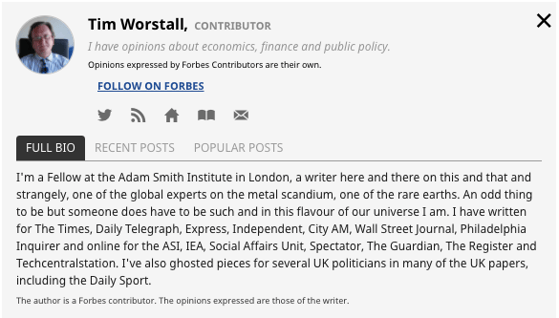
Different publications will have different standards -- Forbes, for example, seems to encourage guest contributors to write in the first person, as per below:
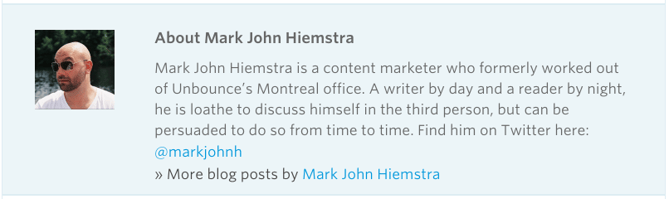
However, the general practice is to write your bio in the third person. If it feels a bit self-congratulatory, that's okay -- you can even turn it into a joke, like Mark John Hiemstra did in his bio for a post on the Unbounce blog:
Once you've written the bio, be sure to re-read it to make sure you're not overusing “he” or “she.” And if you are, try replacing some instances of these pronouns with your name to improve the flow.
2) Remember: It's not really about you.
Even though this paragraph is allegedly about the author, it’s not actually about you. It’s about your reader, and what that person is looking to learn or gain from your article. It helps to think of this setup as a well-composed sentence -- you're the object, and the reader is the subject.
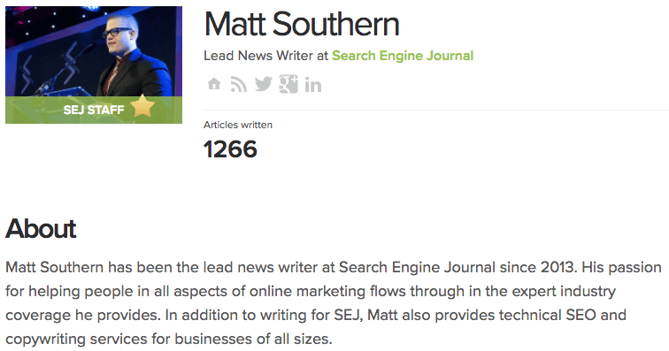
That concept can be a bit confusing without context, so have a look at how Matt Southern pulled that off below:
Notice how Southern's bio focuses on both himself and the reader. By explaining that his real passion is to help marketers, it serves as a nod to his readership -- after all, your readers are the ones who ultimately decide if your piece is worth sticking around until the end, sharing, or discussing. Write for them.
3) Establish credibility -- truthfully.
As the digital landscape only becomes increasingly crowded, it's important to have a prepared, accurate way to answer the masses asking, "Why should I listen to you?"
Readers are right to ask that question, especially with many now questioning the accuracy and reliability of news. So, in your bio, establish your credibility, and be honest. Why are you qualified to write on this subject? Why should readers believe you?
If you write about conversion optimization, for example, explain what kind of experience you have with it. If you have academic degrees, list them -- but only if they're relevant to the publication or article. A bachelor's degree might not be considered outstanding enough to warrant a mention in your bio, though there are exceptions to that rule. Let's say you're writing about women's issues. If you attended a women's college, it might be worth mentioning in that particular instance.
Let's have a look at how this concept looks "in the wild."
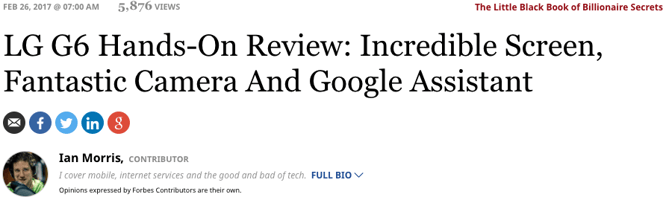
When Forbes contributor Ian Morris wrote the above article on a mobile device, he used his one-line bio to explain why he's qualified to write on that subject. "I cover mobile," he explains, as well as "internet services and the good and bad of tech.” And in his full bio, he expanded even further on that:
4) And while you're at it, explain what you do.
It's the inevitable -- and often dreaded -- question of any social or networking gathering. "What do you do?"
Chances are, someone reading your work will have the same question -- it goes along the same lines of explaining why you're credible enough to be writing about a certain topic. So think of your bio as an opportunity to answer it -- after all, it’s a meaningful fact about you, and it deserves a line.
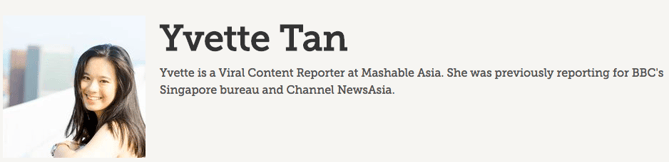
Notice how Yvette Tan immediately addresses that question in the first sentence of both her author and Twitter bio, highlighting the importance of keeping information consistent across different channels:
You've probably come across the occasional author bio that features a personal tidbit thrown in, like "cat lover" or "coffee addict." But when is that okay or smart -- or even more important, appropriate?
To answer that question, you need to think about where your article is appearing, and who's likely reading it. Not every publication, for instance, is going to be the best fit for a quip about your affinity for craft beer. That said, it's also good to remind readers that you're human, especially among your professional credentials. Still, keep it to a minimum -- readers are only marginally interested in your personal life, so your bio isn't the place to divulge a lot of those details.
Buffer's Alfred Lua uses his bio to share his hobbies like swimming. But by keeping it short, and sandwiching his personal interests between his job title and his personal one, he's able to show personality, while maintaining his credibility:
It can be tempting to turn your bio into a celebratory display of your interests and accomplishments -- you’ve won awards, started a billion companies, and have been published in top journals. But readers, more often than not, might be responding with, "Who cares?"
That's because they want to know what's in it for them. By putting content out there, you're essentially asking readers to borrow their time for what you've written. Sure, your status might be impressive, but they don’t really care unless they have something to gain from it. That’s where the idea of value comes in.
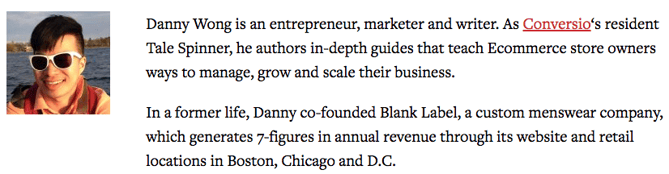
Use your bio to communicate that bio, and what you can do for your readers. Danny Wong does that well in his guest bio on ConversionXL's blog:
Notice the key word in the second sentence: "Teach." That’s the kind of value that might help Wong connect in a meaningful way -- by telling them, "I teach people, and I can teach you, too."
After he explains the value he can provide to readers, he uses the opportunity to mention a pretty big accomplishment: Founding what sounds like a highly profitable business.
When done correctly -- like Wong did above, by combining it with a value proposition -- bragging can be both effective and appropriate. But it might be easier to do so in the third person. "She co-founded a multi-million dollar company" sounds a bit more humble than, "I co-founded a multi-million dollar company."
Don't be afraid to toss out a few awards that make you the proudest -- just make sure that they’re relevant to the subject matter and the publication.
8) Avoid writing something obnoxiously long.
Just as you want to avoid bragging too much, you should probably avoid saying too much in general. Writing a super long bio might make you seem less than humble -- if all the other authors on the site have three lines and you have thirty, it only emphasizes your sense of self-importance, even if that's not what you intended.
Author Richard Ridley recommends that authors “keep it brief.” Here’s how he explains it:
Brevity is the soul of wit. Even if you're William Shakespeare, you don't want to write an author bio that fills up the entire back cover. In an odd twist of logic, the more accomplished you are as an author, the shorter your author bio can be."
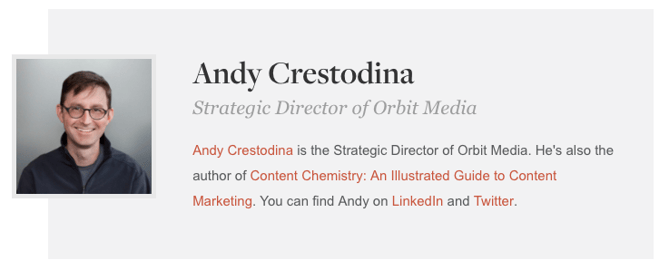
It's okay -- we all have an ego. We just have to keep it in check sometimes. Here's a great example of a short-and-sweet bio from Orbit Media's Andy Crestodina:
If the publication allows you to occasionally update your bio according to the season, take advantage of the ability to customize it. A universal bio that you copy/paste everywhere is okay, but tailoring it to a specific scenario can help enhance it for a particular outlet.
By fine-tuning it to resonate with the season, your bio stands out against some generic messaging you might be used to seeing.
10) Add a CTA.
Ah, the call to action, or CTA. It's a powerful force in the marketing world, and it’s no different in your bio.
After your audience reads about you, they should take further action -- but what action do you want them to take? Most often, it's reading more of your material, or following you on social media.
In those cases, common CTAs would be to follow you on Twitter, or visit your blog. And while these options are effective, make sure the CTA is strategic within the given context.
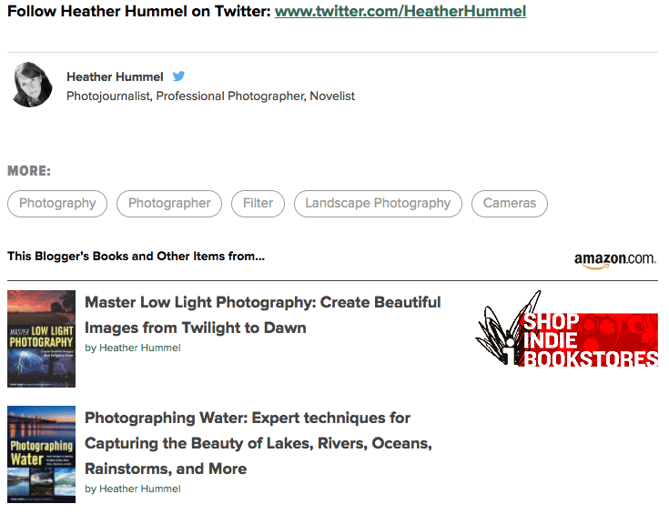
For example, when Heather Hummel's work is syndicated by Huffington Post, her author bio contains a CTA to check out her books, creating a source of possible sales:
Of course, some outlets might not have the bandwidth or allow such a full-scale dedication to this kind of CTA within an author bio. But if the opportunity is available, use it to your advantage.
11) Steer clear of the word "freelance."
Freelance writers are an exceptional group of people who are skillful, qualified, and expertly positioned to write great content. But there's something about the word "freelance" that, for whatever reason, can chip away at credibility. It suggests that you might be more of a generalist, and less of an expert -- which, while not necessarily true, has grown to connote that while you might be good at writing, you might not excel at a particular subject.
If you’re a freelance writer, we tip our hats to you. But in your bio, there are ways to replace the word “freelance,” for the reasons above. Here are some examples:
"Fred is a conversion optimization writer, specializing in split testing best practices and cognitive biases."
"Angie, a Portland-based author, helps people unleash their inner interior designer."
"As a marketing writer, Todd’s favorite place to publish uncensored marketing content is his own blog."
Ready to Write?
The best way to create a meaningful bio is to write it with care and intention. Think about your readers, establish your credibility, and make it memorable. But go ahead and have some fun with it -- you want to prove that you’re human, too.
At the end of the day, your little bio matters. People care. They’re going to read it. Make it count.
And please -- don’t judge me by my bio.
Editor’s Note: This post was originally published in July 2015 and has been updated for accuracy and comprehensiveness.
from HubSpot Marketing Blog https://blog.hubspot.com/marketing/how-to-write-a-bio
There's a reason most children's books are filled with pictures.
Sure, the pictures help parents keep their children still and quiet for the few minutes they're reading to them. And that's largely because visuals are engaging and help explain complicated concepts better than text alone.
Whether you're reading The Very Hungry Caterpillar or a blog post, the lesson remains the same. For one, visual content increases memory recall. What's more, articles with images every 75-100 words tended to get double the social media shares of articles with fewer images in a BuzzSumo analysis. So needless to say, visuals such as infographics, videos, or images should be integrated into your content marketing strategy.
There are a few hurdles to creating and promoting visual content, but there are big payoffs, too. Venngage surveyed 300 marketers to learn about their visual content marketing strategies in 2016 to predict trends for 2017. Overall, the marketers surveyed recognize the immense value of creating visuals to increase content quality and engagement but struggle with finding the time and resources to do it well. Read more marketing statistics and trends for the year ahead in the infographic below.
from HubSpot Marketing Blog https://blog.hubspot.com/marketing/visual-content-marketing-2017
It took three months to launch that marketing campaign from start-to-finish. Yes, there were many hurdles along the way, but you pulled it together with the help of your team and even launched on time. You pop the champagne and toast to a job well done.
A week goes by. There is a little bit of action...maybe a top of the funnel (TOFU) form fill or two, but nothing to write home about. After all, you’ve not collected nearly enough data to start compiling reports and making decisions.
A month passes. The campaign numbers still aren’t great. Panic starts to set in. Your client, your boss, and your team are getting antsy. But has your campaign even run for long enough at this point to know whether or not it is performing well? What does “long enough” mean? Hell, what does “performing well” even mean?
Let’s get acclimated
Now, before we jump into campaign optimization or how to analyze performance, let’s make sure we’re talking apples to apples. I will start by defining what I mean by a “campaign” and touch on the evolution (and importance) of the buyer’s journey.
Let’s get aligned on this whole campaign idea. The word “campaign” is defined differently depending on your industry and your typical marketing practices. To set a baseline, here is a definition that I like to use:
Campaign (n.): A multi-touch digital ecosystem, aligned with the buyer’s journey, that helps marketers capture lead information, nurture and qualify leads, and finally empowers both the lead and the salesperson for a sales conversation.
Here are the key parts:
1) Multi-touch:
Your campaign should live across the various channels where your target personas spend their time (i.e. your website, paid advertising platforms, social media platforms, etc.) and include multiple touch points per channel. One form on a single landing page is not a campaign.
2) Digital ecosystem
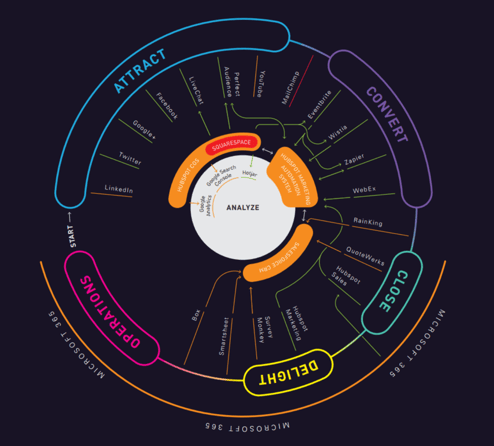
All pieces of your campaign should work together and constantly communicate with one another. Ideally, the pieces are strategically managed via a clearly defined marketing-technology stack. Check out the example below:
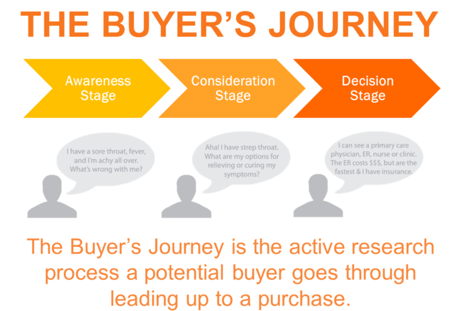
3) Aligned with the buyer’s journey
Your campaign should facilitate a seamless buyer’s journey, and more importantly, a journey that a consumer actuallywants to go through.
4) Capture lead information
A typical lead capture transaction occurs when the marketer provides something of value to the potential lead in exchange for their contact information.
5) Nurture and qualify leads
This is the most complex part of a campaign (so we found a video to better explain below). A good measure of how well you are doing with nurturing is the quality of your sales conversations. The golden rule is: not everybody is ready to buy because they gave you their email, and you shouldn’t sell to somebody just because they are interested in your product.
6) Empowers both the lead and salesperson
Primarily, your objective as a marketer is to prepare the lead for a sales conversation. Secondly, to prepare your salesperson to have an effective sales conversation catered towards the potential buyer’s objectives (depending on your average sales cycle this process can take a day or several months).
If your campaign meets the above criteria, fantastic! We are aligned. If it doesn’t quite match up, no worries, I promise there are still plenty of valuable takeaways (including a free campaign optimization checklist).
Why should you care about the buyer’s journey?
If your campaign does not support the way your target persona wants to buy, it will be nearly impossible to see positive results.
The buyer’s journey has fundamentally changed. Think about it, compare how you would buy a car today compared to ten years ago? Or even how your parents bought their first car?
Things are changing in the world of buying and selling, and they’re changing at an exponential rate.
But why?
Two words: access & information. One of my favorite marketing/sales influencers, Daniel Pink, sums it up nicely in his book “To Sell is Human.”
Pink sums up his argument with the term “information asymmetry.” Essentially, the cause of the change in buyer behavior is a result of the gradual shift of an informational advantage from the seller to the buyer. In today’s economy, the buyer has all the power!
What does this mean for our marketing? Well, we need to ensure that our campaign is aligned with the way modern consumers make purchases. If not, it is destined to fail. So, before you worry about optimization, ensure your campaign assets and tone reflect this “seller beware” world.
For more information on how the buyer’s journey is evolving, and what we should do as marketers and salespeople, take a moment to watch the video below:
What should I do before my campaign launches?
Before a campaign ever launches it’s imperative to get our ducks in a row from an expectation standpoint. Aligned expectations will improve the likelihood of a successful campaign.
The first step is to establish your campaign benchmarks—what you expect/desire to happen. These are your “expected values.” There are a several sources you can use to determine those benchmarks.
1) Your company’s historical campaign data (preferred)
No two businesses or industries are the same, so what better to use as a benchmark than your own company’s past performance?
2) Your closest competitor’s data
If you are fortunate enough to have access to this information, it's a huge competitive advantage. There are also tools out there, like SpyFu, to help you gather some key data points.
3) An Industry Standard
While industry averages are often grossly simplified, they are better than nothing at all!
Bonus: HubSpot recently launched a great tool that allows you to get benchmark data for email open rate across various industries.
4) Your best guesstimate
This is your last resort, but if necessary, make your best guess based on heuristics and what you know. Here is a cool article on how heuristics can be applied to marketing.
What should you benchmark?
You should establish benchmarks for all key campaign metrics. Some examples include: email open rate, form conversion rate, social media impressions, average time on page, etc. However, they will vary based your specific campaign’s infrastructure.
The golden rule: If a metric can be analyzed and potentially contribute to the success of a campaign’s objective, benchmark it!
Speaking of Campaign Objectives…
Yes, it’s true that most businesses market with the intention of increasing revenue. But, not all campaigns are designed with this as the primary intention. Other campaign objectives include increasing brand awareness, event attendance, asset downloads, and more. Before determining the tactics and building the campaign infrastructure, ensure that all the stakeholders are aligned on its objectives.
Now, there are a few different values that will help you determine if you’ve reached your campaign objectives:
2) Expected values – an accurate prediction of your campaign performance metrics
Hint: these are your benchmarks established in the “What should I do before my campaign launches?” section
3) Observed values – the real-world metrics you observe from your campaign
Let’s put numbers two and three aside for now, we’ll need them for statistical analysis later, and discuss establishing goal value statements. Although it may be a little cliché, assure your goal statements meet the criteria of the tried and true S.M.A.R.T acronym.
Long story short, if your goal value statements match the S.M.A.R.T framework, you are off to a good start. Rather than bore you with the gory details (here is a crash course on SMART goals), I’ll provide you with a quick example instead.
A bad goal value statement is: Achieve a good email click-through-rate for campaign nurture emails.
A good goal value statement is: Achieve a click-through-rate of 2% on nurture email #3 within 90 days of campaign launch.
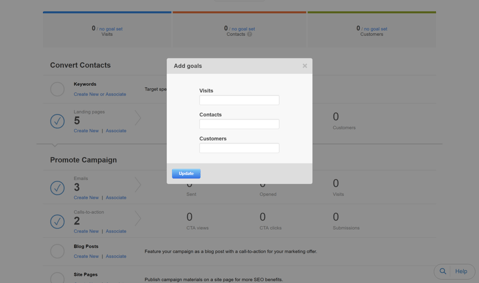
After you have established all the necessary goal value statements, be certain your stakeholders are also aware of them. You can do document these in your marketing automation software portal. If you are a HubSpot customer, you’re in luck - there is a built in goal setting feature for campaigns.
Now can we see if my campaign needs to be optimized?!
Yes, let’s get to it! First, you need to determine if your campaign needs optimization by comparing our observed results to what we expected (our benchmarks). We are going to use the chi-square goodness of fit statistical test to compare these two values. Here’s the formula to calculate Chi-square:
Assuming you already launched your campaign (and completed the recommended pre-launch work) you should have all the variables needed. (O is observed value and E is expected value, or your benchmark)
For more in depth coverage of using this test you can watch the tutorial below.
Let’s jump into an example to make this more concrete. We’ll use the same numbers in the video walkthrough below for consistency. As a marketing strategist, you want to know if a recent campaign email is performing well, or if you should take action to optimize it.
Let’s say you sent a campaign related email to 1000 people and 3% of people clicked through the email to your landing page.
This gives you an observed value of 30 or O = 30
Since this is your first campaign, you are comparing your email performance to industry benchmarks. After doing some research, the industry benchmark you found is 1.1% for email click through rate. If we sent an email to a 1000 people in our industry, we would expect 11 to click through.
This gives you an expected value of 11 or E = 11
Now, plug it into the formula and solve!
Get 33.18? Great, but we’re not finished yet.
Now, to see if the campaign email needs to be optimized, we need to compare our observed chi-square to a critical value for chi-square critical. Looking at those old handy chi-square distribution tables I see the critical value is 3.84 at with a significance level of .05 (recommended).
33.18 > 3.84
Result: Your email is significantly outperforming your established benchmark so you should not focus on optimizing it at this time and spend your resources elsewhere.
Understand that you only analyzed one specific part of your campaign, but this methodology can be applied to nearly any measurable campaign statistic with a discrete outcome (i.e., convert vs did not convert).
Now you can be confident that you are spending your resources on optimizing the right campaign piece.
OK, I have a list of what I should optimize, where do I start?
With our nifty campaign optimization checklist of course! You may be thinking, “but I have several underperforming pieces, how do I prioritize them?” A good place to start at the beginning of the buyer’s journey, starting from from left to right. Or, in HubSpot terms, optimize the campaign assets associated with the Awareness Stage first, then the Consideration Stage, and finally the Decision Stage. Which makes sense. If your awareness stage is broken, most people aren’t converting to the Consideration Stage in the first place. Why optimize something for such a small subset of your potential leads?
Another way to think about optimization priorities is to order them by potential positive impact on campaign results. While this is good in theory, it doesn’t account for other important variables such as the time and effort it would take to complete the task. Fortunately, to set priorities, you can use a process that is simple as P.I.E.
P.I.E stands for Potential (what is the potential positive impact on the campaign results), Importance (how critical is it to your overall business objectives), and Ease (how difficult is the task to complete).
In order to determine the priority order of your campaign optimization task list, assign each letter of P.I.E. a score of 1-10, then take the average of those three numbers. Organize those averaged numbers by activity from largest to smallest, you will have your list of priorities!
Campaign Optimization Checklist
When analyzing campaign performance, it is easy to get lost in the weeds. Always remember the big picture! If you are worried about your campaign’s performance, likely you are experiencing one of the following challenges:
1) You do not have enough eyeballs on your campaign.
2) You aren’t converting those who do engage with your campaign into leads.
3) You aren’t properly nurturing and qualifying leads for sales conversations.
The Campaign Optimization Checklist was built, and even color-coded, with these three challenges in mind. As a bonus for making it all the way to the end of this article, I have included the first pages here. There are even more tips and tricks in the full version!
Remember that pressing the launch button is never the final step in a campaign. There is always an email subject line to improve, a form to optimize, and a nurture workflow to refine.















 We’ve all been there.